Showing posts with label Tim LeFebvre. Show all posts

Wednesday, August 3, 2022

Recollections of past experiences :The Michael Wollny Trio: Ghosts


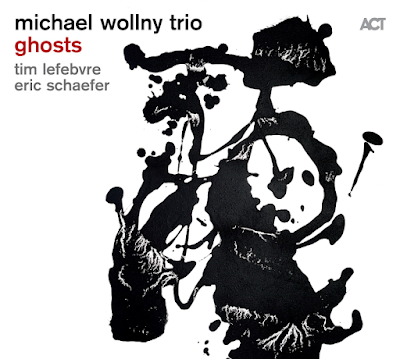
Michael Wollny Trio: Ghosts ACT 9956-2

Michael Wollny and his trio have recently released their latest album, Ghosts, on ACT recordsThe album reunites the German pianist with the progressive American bassist Tim Lefebvre and the spatial percussionist Eric Shaefer. Together these three made quite an impressive debut on their first outing together in the 2013 title Weltentraum. The album set a high-water mark in the pianist’s career and established Wollny with this trio as a creative force that could conjure up a body of music that could excite and intoxicate the listener. Wollny describes the trio’s unique simpatico, "The three of us are aligned in a special, inexplicable way. It‘s hard to describe but the effect is massive."

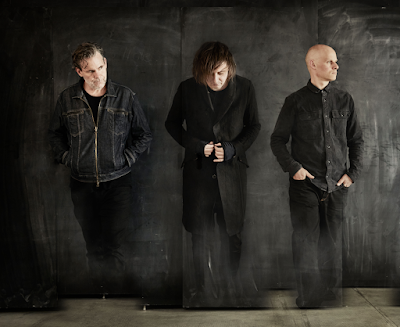
Tim Lefebdre, Michael Wollny & Eric Shaefer (photo credit Gregor Hohenberg)
Wollny develops inspiration for his musical adventures utilizing off-beat themes. In Weltentraum, the album was based on night songs or dreams. In Ghosts, Wollny describes his concept of how some songs are possessed by spirits, spirits of remembrance. "As an improviser, you often find that it‘s not the compositions themselves you‘re playing, but your own memories of them. And as these memories come back to you in the moment…” On Ghosts, the artist chose a diverse selection of songs, each with a distinct memory for him that personalizes his interpretation of them. There is a logic to the way Wollny cleverly links all these compositions by what he views as their unifying factors. Lost love, forgotten love, loss of simplicity, sentimental recollections, yearning, fragility, sadness, these are the ghosts that linger in the music long after.  The album includes Gershwin’s bittersweet  “I Loves You Porgy,” a traditional Irish folk song “She Moved Through the Fair,” Shubert’s "Erlkönig," Nick Cave & Warren Ellis’ “Hand of God”, Duke Ellington’s “In a Sentimental Way,” Paul Giovanni’s “Willow’s Song,” from the horror movie Wicker Man,  Timber Timbres’ “Beat the Drum Slowly” and “Ghosts” by David Sylvian, along with two of Wollny’s own theme derived compositions “Hauntalogy” and “Monsters Never Breathe.”

The trio offers a dynamism that is quite captivating, with the music making its musical impact in tight, often brief, precisely executed cuts. Wollny‘s piano sets the tone establishing ostinato grooves or fleet arpeggios that carry you with energy and authority. Lefebvre’s bass bellows with facile, vibrant lines that carry the pulse with a sometimes-tempestuous quality; especially impressive is his lead-in to “Hand of God.” Check out the loping lines of Lefebvre’s bass on Wollny’s “Monsters Never Breathe.”  Shaefer’s drums can wrap the sound in a cirrus-like whisp of atmosphere or erupt with a cauldron-like boil of intensity.

Wollny has assembled an excellent trio that can take long familiar compositions and re-imagine them in new and surprising ways. Gershwin’s “I Loves You Porgy” erupts with drive before stating the beautiful melody with passion. There is a poignancy to this song and these three interpret in a contemporary way, creating a drive that never erases the sentiment. Shubert’s "Erlkönig" is modernized by the group into a new century. How would Ellington have imagined his “In a Sentimental Way” being played so barely and in such an expansive, cadenced way? Perhaps the Irish folk song “In a Sentimental Way” retains the most melodicism in the set while still being brought forward in the group’s own inimitable way. Timber Timbre’s “Beat the Drum” features shimmering cymbals by Schaefer and a cadenced piano line by Wollny, as Lefebvre’s bass pulses with a heartbeat consistency.

Take a listen to this album and see if you too are not drawn into the dynamic, entrancing world these three musicians create with Ghosts


Unfortunately, I couldn't find any videos of this new music, but here is the same group from their 2015 performance at the Jazz Baltica. Enjoy!


Sunday, September 9, 2012

Casting for Gravity Donny McCaslin's Adventurous Journey into the Unknown


"Casting for Gravity" GRE=1028


The saxophonist Donny McCaslin has been steadily adding to a body of work that is firmly establishing him as a powerful voice in modern creative music. As a in-demand sideman on such interesting recent efforts like Ryan Truesdale’s Gil Evans Project Centennial , a valued member of trumpeter Dave Douglas’s Quintet and Maria Schneider’s Orchestra, or on his own recent impressive efforts as a leader on albums like Recommended Tools, Declaration and PerpetualMotion,  watching McCaslin mature is  like watching a seedling develop into a mighty oak.  As with any artist who is pushing his boundaries there are moments of brilliance and moments of disappointment, but for the most part McCaslin has consistently moved the bar higher and higher.

If music as art has the higher purpose to move its audience, than certainly McCaslin is a successful artist, as he seems to do so with a force of nature approach to his instrument. His latest offering Castingfor Gravity is a case in point. After dipping his toe in the waters of electro/acoustic music in his last album Perpetual Motion, McCaslin has decided to explore what full integration into electronica can bring to his musical palette. He wants to make music that can utilize, as he says, “…more sonic layers” which he hopes will challenge him into deeper exploratory terrain. It may also be a way for him to expand his following by tapping into more modern musical influences and fusing them with his own brand of artistry. Lord knows jazz needs to expand its musical audience.

He is joined here by the keyboardist Jason Lindner, the electric bassist Tim LeFebvre and the cyclonic drummer Mark Guiliana.  The visionary alto saxophonist and producer David Binney adds a composition, vocals and synthesizers to the mix. These musicians bring their own kind of ionically charged energy to this album.


McCaslin claims influence for some of this album came from Britiish electronica musician Richard D. James, who performs under the pseudonym of Aphex Twin and from the Scottish duo Boards of Canada whose song “Alpha and Omega” he uses as the jumping off point for his own jet fueled excursion.

I am particularly taken by McCaslin and Guiliana together in such pieces like the ever ascending “Stadium Jazz” and the staccato “Tension”. It is as if these two atomic reactors combine in harmonic resonance creating a fusion like implosion of energy.. Lindner’s driving piano and synthesizer and Lefebvre pulsing bass work in lock step to produce the firm rhythmic background that allows these two seemingly unstoppable forces to probe forward into the abyss.
“Losing Track of Daylight” is perhaps the most groove-based of the compositions, with LeFebvre’s pliant bass lines leading the way behind Guiliana’s in-the-pocket playing. Lindner’s expansive keyboard creates an airy, floating sound that dances over cloud like layers of shimmering cymbals and snapping snares. McCaslin honks his way in a playful but penetrating display of horn dynamics.

The multilayered “Alpha and Omega” is a demonstration of “the layered sound” that McCaslin is trying to create. With its repeating saxophone and synthesizer motif setting the landscape for Guiliana’s explosive drum outbursts the mood created is eerily hypnotic.

On Binney’s crescendo building “Praia Grande” the group dynamic is at its most unified and McCaslin’s tenor soars with unrestrained energy and unbridled passion.

The title track “Casting for Gravity” has LeFebvre playing the opening line on his electric bass in a guitar-like riff with Guiliana’s cadenced drum work reminiscent of the early electronica group Portishead.  McCaslin slowly enters with a repeating serpentine saxophone call that pre-dominates the rest of the tune to its coda.

“Henry” is a softer more introspective piece named after McCaslin’s infant son. Sensitively played by Lindner on a electric piano with a distinctively dreamy sound. The group seem to find an inner gentleness on this one that is quite compelling. McCaslin’s warm, probing sound is fluid and emotive; a father’s tender call out to his son. As the group warms up to the increased tempo, the intensity follows but never upstages the underlying love that seems to pour from McCaslin’s horn.

In many ways McCaslin’s journey into electronica is like a journey into the unknown. He is Casting for Gravity when he goes into this realm and it will not be for everyone, but it courageous and a powerful musical statement that has moments of brilliance and maybe prove to be an important  portal for expanding the shrinking jazz audience


Musicians: Donny McCaslin, Tenor Saxophone; Jason Lindner, Electric and Acoustic Pianos, Synthesizers; Tim Lefebvre, Electric Bass; Mark Guiliana Drums, David Binney, vocals and additional sythesizers.