Showing posts with label Scott Colley. Show all posts

Wednesday, October 1, 2025

Wolfgang Muthspiel with Scott Colley and Brian Blade: TOKYO- Playing to the purpose of the music.

Wolfgang Musthpiel Scott Colley  Brian Blade-TOKYO- ECM 

The Austrian guitarist Wolfgang Muthspiel has just released a new trio album this September titled Tokyo on ECM records and it was well worth the wait. This is a continuation of sorts, the third release from this dynamic trio, which includes the bassist Scott Colley and the drummer Brian Blade. The previous, releases Angular Blues from 2020, and Dance of the Elders from 2023, both on ECM, feature this same trio, with Muthspiel as the leader and composer. Both were wonderfully received albums. Muthspiel is an accomplished guitarist that is equally comfortable on both acoustic and electric guitar formats. His compositional work uses elements of folk and classical music as inspiration and his judicious use of electronics brings in yet  another subtle color to his creative palette. 

For those who are unaware of Musthpiel's guitar work, the Vienna based artist studied with and befriended guitar guru Mick Goodrick at the New England Conservatory of Music in Boston, and while at Berklee the guitarist toured with vibraphonist Gary Burton and his Quintet in the early nineties. Muthspiel worked with the late drummer Paul Motian in his The Electric BeBop Band and was a member of Motian's album Reincarnation of a Love Bird  from 1994.  He was also a member of the second generation of bassist Marc Johnson's Right Brain Patrol on the album Magic Labryinth from 1995. 

Curiosity and drive found Muthspiel playing with pop star Rebekka Bakken and led him into an electronic duo with his brother trombonist Christian along the way. In 2009, Muthspiel helped form the trio of Muthpiel, guitar-master Ralph Towner, and the Khazahstan/Austrian classical guitarist Slava Grigoryan, recording the album Form a Dream. The second acclaimed album of these three guitar virtuosos was released as Travel Guide  in 2013. Further associations brought Muthspiel's guitar together with other jazz players like Brad Mehldau, Ambrose Akinmusire, Larry Grenadier and Peter Erskine to name just a few.

Muthpiel is also an active educator who has since 2004, led the guitar program of the Basel University of Music FHNW.


Scott Colley, Brian Blade , Wolfgang Muthspiel (photo credit unknown)

This recent release came about when the trio was on tour performing at the Cotton Club in Tokyo in 2024, which lent the title's name. When talking about pairing recording in a studio while you are actively performing on a tour, Muthspiel has previously stated "The idea was (is) to capture the live flow from the concert, playing music in the moment, with as little editing as possible. That's what jazz is all about." His intent to produce a recording that is as vibrant and spontaneous as a live performance, is obviously a top consideration for this artist. On Tokyo, there is little doubt that he and his bandmates have certainly been successful in recreating the vibe, excitement and spontaneity of a live performance on this excellent studio album.

The album's ten tracks, eight of which are Muthspiel compositions, are bookended purposefully. It opens with Keith Jarrett's "Lisbon Stomp," originally on Jarett's 1968 album Between the Exit Signs. This energetic piece openss with Muthspiel's fluid electric guitar laying out the head before the group opens up into a free improvisational tour of the possibilities. His guitar lines appear like fresh water from a spring, joyful and inquisitive. Colley's bass is plucky in the mid-range, providing intuitive counterpoint and an inspired pizzicato solo. Blade provides an almost rhythm-less accompaniment, wisps of cumulus clouds that float over the proceeding. These guys always play to the purpose of the song. There is musical symbiosis, always bringing fresh interplay to the music without seeking to bring attention to the individual. 

The beautiful ballad "Pradela" was written by Muthspiel while hiking on the Camino de Santiago, in Spain. The guitar sings on this rubato-played piece,  Colley's bass warmly resonates in synch, as Blades subtle accompaniment is almost feather-like in his approach. There is a folk-inspiration to this composition. It feels like Muthspiel's time playing with guitarist Ralph Towner has certainly made its impression on the Austrian and this one is just gorgeous.

"Flight" is another Muthspiel composition, and one of my favorites. The guitarist  said that he had Colley's bass in mind when he wrote this one. The guitarist's classical-style finger-picking on his acoustic guitar is delicate but vibrant. He creates a repeating rhythmic pattern that he likens to the sound of a ride cymbal. Its a whoosh of rhythm and it hauntingly works so well. Colley's bass takes the lead, laying down the line, beautifully played like singing, commanding the mid-range. Muthspiel overdubs his electric guitar and enters the mix ringing through in a higher range like a clarion voice in the wind. The melodicism is stunningly creative as the two match each other lines with precision, tonally distinct yet in simpatico. Blades gently drum work propels the music in the background. Muthspiel orchestrates this music so well. He creates a tableaux skillfully meshing the highs, the lows and every tone in between. The music creates drama, as Colley's bass strings hum with beauty, and the trio brings the music to a powerful conclusion at the coda.

"Roll" opens with Blades pointedly cadenced trap work, before Muthspiel's acoustic guitar-picking and aggressive rhythmic strumming offers a rock-inspired  drive that forcefully flows. The guitarist once observed that Pat Metheny is particularly good at using dramatic strumming effectively. This one, and the other song "Strumming," demonstrates how an inspired Muthspiel can use strumming to create drama and drive. Colley's ostinato bass adds his own urgency to this one. The music is infectious, a musical romp that gets you rolling!

"Christa's Dream," finds Muthspiel's electric guitar accentuated with some tasty  use of chorus and tremelo, creating  a dreamlike aura. Blade's drum and cymbal work embellishes on the atmospheric feel. Colley's bass provides his own buoyant touches to make this one a musical walk in the ether.

"Diminished Augmented" has a modernistic feel with its angular lines complimented by some fleet finger-picking guitar work that just follows it's own muse. Patterns shift, meters change, as Colley's bass work mimics Muthspiels' lines even though its hard to predict where they are going. Blade somehow seems to find his own way, adding precise rhythmic pushes and pulls magically. If you ever doubted these guys possess telepathic powers, this one should put all doubts to rest.

"Traversia" is the second of the compositions Muthspiel penned on that Spanish hike. His work on the acoustic guitar is precise, warm and melodic. Colley's arco bass swells with cello-like beauty, as Muthspiel's classical-like finger-picking shines brightly.

"Strumming" finds Muthspiels' guitar rhythmically strumming energetically creating a whirl of movement, an eddy current of action. Colley's bass bows a moaning counter offer that touches your heart, and Blade's drum anchors the motion. The music wraps you in its intensity with excitement and pathos. Muthspiel's electric guitar lines can excite you or caress you. His probing fluidity and relentless strumming can be mesmerizing.

"Weill You Wait" is a beautiful chamber jazz-like homage to the writing of the composer Kurt Weill, who had a prolific career. His most famous work was "Three Penny Opera" and it's famous song "Mack the Knife" became a pop and jazz standard. Muthspiel was an admirer of Weill's musical compositions and he has said this piece was inspired by Weill's music and by the singing of Lottev Lenya, Weill's wife. 

The closing bookend of this set of music, features a song, "Abacus," a piece composed by the drummer Paul Motian. Muthspiel was inspired by the drummer's unique approach to rhythm.  He has called Motian "...THEE master of rubato." The music is built on the theory that music doesn't always require a set rhythmic base. The music opens with the guitarist and the bassist in a free improvisational conversation. Muthspiel explores lines that inspire his bandmates to free associate in ways that are not predictable, but somehow these guys are in synch. Mid way through, the music fades before Colley's bass takes the lead. The music ends with a gently played finger-picked statement that is responded in like by the bass and the drums to the coda.


Saturday, January 27, 2024

Andres Koppel's Mulberry Street Symphony: A symphonic/saxophone concerto in the tradition of some of the best.

Mulberry Street Symphony: Cowbell Music
Andres Koppel, Benjamin Koppel, Scott Colley, Brian Blade, 
Martin Yates & the Odense SymphonyOrchestra

I recently took the time to listen to a Symphonic/Saxophone concerto released back in February of 2022- Yeah, I know what took me so long?- Danish composer Anders Koppel's splendid Mulberry Street Symphony which was actually recorded in October of 2017. This glorious music is in the tradition of some of other jazz/symphony collaborations like Duke Ellington's Black, Brown, and Beige, Miles Davis/Gil Evans Sketches of Spain, Stan Getz/Eddie Sauter's Focus, Claus Ogerman/Michael Brecker's Cityscape and even Michel LeGrand/Phil Woods/Images.  

Anders Koppel (photo credit unknown)

The now, seventy-seven-year-old, Anders Koppel, a new name to me, is an accomplished composer whose extensive work includes music for cinema, theater, ballet, and over one hundred and fifty classical scores for orchestra. 

The inspiration for his Mulberry Street Symphony came from viewing a retrospective of the photos of a fellow Dane, Jacob Riis'. The inquisitive lens of Riis captured the expressive,  poignant, sometimes unhealthy, and often desperate conditions of European immigrants who fled the hardships of their homelands to settle in the Lower East Side of Manhattan in the late eighteen hundreds. Riis's photography became part of his important 1890 book "How the Other Half Lives."  

Jacob Riis

It's no surprise that Koppel-himself the product of a Jewish family lineage that fled Russian-controlled Poland and made their way to a temporary refuge in Denmark, before having to again relocate to Sweden from the Nazi occupation- would find such artistic simpatico with the refugees of Riis' moving photographs.

When art finds a compelling story, the artist often finds inspiration for creative expression, and Koppel's Mulberry  Street Symphony certainly is a testament to that creative process being inspired by real life. The piece includes seven movements based on seven specific Riis photographs that, in the hands of Koppel, create their own aural story to complement the moving images.

Benjamin Koppel (photo credit unknown)


To create this emotionally charged piece, Koppel enlisted his own son, Benjamin Koppel, as the lead alto saxophonist of the three-piece jazz-oriented trio that is the primary improvisational aspect of the symphony. This talented, multi-reed player, studied with Cuban saxophonist Paquito D' Rivera. He credits his mellifluous, liquid tone as coming from influences that include Cannonball Adderley and Johnny Hodges, his heroes. Besides being active in the improvisational world of jazz, he has performed with such current and past luminaries of the saxophone as Joe Lovano, Chris Potter, Phil Woods, and Lee Konitz to name a few. He is also proficient in playing in the classical music world. Benjamin Koppel brings a unique cross-genre expertise to this project.

The rhythm section of the trio includes two superb musicians. Bassist Scott Colley and drummer Brian Blade bring to this music their own unique, extremely virtuosic, and highly attuned sensitives to this symphony. Colley is an American double bassist and composer who has lent his talents to groups that include Joe Henderson, Herbie Hancock, Jim Hall, Bobby Hutcherson, and Toots Thielmans to name just a few. Brian Blade, the American Louisana-born drummer, is perhaps the leading jazz drummer in the world today. Besides his award-winning group The Fellowship Band, Blade is the preferred drummer on a countless number of albums led by such notables as Wayne Shorter, Mark Turner, Billy Childs, and Joni Mitchell among others. 

Scott Colley and Brian Blade (photo credit unknown)


The other piece to this Symphony is the Danish Odense Symphony Orchestra led by conductor Martin Yates. This Odense, Denmark-based orchestra has its roots dating back to the 1800s and presently has seventy-three musicians from seventeen different countries. Anders Koppel has written for this orchestra on multiple occasions.

"Stranded in the Strange City" is based on a picture of an immigrant standing, stiff, hat in hand, anxiously staring with his one unpatched eye at the camera in a dimly lit tenement hallway. The music is cinematic and ranges from the cautiously walking sound of Colley's deep-toned bass making its way into an unknown environment. Koppel's alto and the orchestra's swelling sounds create the tension of bustling activity. Blade's percussive accents add to the scene in perfect sympathy which ultimately rises into a feeling of hopeful optimism. 

"Minding the Baby" is based on a gritty portrait of a young child minding his younger sibling outside on what appears to be a flagstone sidewalk. The two stare at the lens with a bleary-eyed gaze that is both inquisitive and careful. The music is like a lullaby to the two. Koppel's fluid alto playing is emotive, soothing, and at times majestic. Colley and Blade together create an extraordinarily intuitive pastiche under Koppel and the through-written work of the orchestra. 

"Tommy the Shoeshine Boy" captures a ragged young entrepreneur who stands against a soot-stained, white-washed brick wall in his dirty, unkempt clothes. His wooden shoeshine box is loosely slung over his left shoulder with his cocked stovepipe hat. His eyes are presumably squinted closed to protect them from the coming photographer's flash. The music runs for almost twenty minutes as it builds from an orchestral ebb and swell that creates a building tension. There is beauty and frantic kineticism to this as Koppel's improvising alto soars in ascending flights. There is a beautiful section midway in the piece that finds Blade's drum work, Colley's bass, and Koppel's beautiful alto all finding a common expressive connection as the orchestra creates the palette on which they create. This can't be written but just happens at the moment when intuitive musicians find their way to a common strain of creativity. As the orchestra creates a boil in the music, Blade is featured for a brief but combustive eruption that completes that section with authority. 

This is what Anders was hoping for in creating Mulberry Street Symphony when he says

"The piece is a meeting between a meticulously worked-out score, written with the discipline and care of the classical tradition, and the open, highly sophisticated and organic improvised lines played by the trio."

The cover photo of the album features  "The Blind Man," perhaps one of the most expressive of the Riis' pictures that inspired this music. A tall blind man is dressed in a long black coat and doffed in a black derby. He is leaning on a street lampost for both support and protection. There is a two-horse-drawn wagon and piles of bricks dumped on the filth-filled street behind him. He holds an open cigar box in one hand and a bunch of pencils in the other to a peering crowd off the picture. He is hoping to elicit some charity from any passersby who might be moved by his condition.  The music is a sober, melancholic tone poem that conjures up the loneliness, isolation, and darkness that awaits this man's daily struggle for life. A man who Anders says represents "a man who is very much himself, apart from society." 

"The Last Mulberry" is a revelation to me. The picture is of what became Little Italy in the Lower East Side of Manhattan. The alleyway shows the encroaching squalor of an alleyway between two bustling tenements. A line of washed clothes is hanging on a slacked rope tied between buildings in the background. Trash sheds line the left side wall of the alley. Midway down, a lone crown of a spindly tree can be seen, its outline against the rear background of another row of tenement buildings and an upper sky. It's a solitary mulberry tree- once a part or descendant of a one-time mulberry tree grove of the revolutionary times- now the sole organic survivor of the humanity-impacted area. The music that Koppel creates has a blues sensibility. A requiem of sorts for the lost tree and to juxtapose that with the loss of innocence. The tolling bell, the cadenced processional rhythm, the counterpoint strings, Koppel's pleading alto, Colley's plucky bass lines, and Blade's impressionistic drum work all rejoice in the celebration of organic life even amongst squalor and the celebration of its memory.

"Bandit's Roost" is like a scene from a Scorcese gangster film. Riis' photo captures the neighborhood "hang." A small side street whose flagstones separate the entry stoops of four or five tenements. The Immigrant men- supposedly young Italian thugs- hang out like members of a gang, propped up on railings and standing on stoop platforms or in the street. Communing, maybe plotting, awaiting their next move. Koppel's music erupts with kineticism and swinging swagger. The music finds Koppel's alto loose and freewheeling, as Colley and Blade stir the pot with nervous energy that coincides with testosterone-driven energy that may have possessed the young men in the picture. The orchestra builds the scene's tension and later maintains a joyful, proud, strut-like feel that celebrates the fun that can come from male camaraderie and mischief. 

"The New House" is a picture that is counter to most of the other Riis photos in this suite of songs. It pictures a new structure created to house orphans and homeless children. The house sits on a rise in what appears to be a countryside setting that must have been some distance from the crowding sprawl of the Lower East Side. According to the composer it represents "...the hope and knowledge that...things will change-and it matters what you do."  His music naturally brings the suite to a positive and uplifting conclusion. Out of the squalor and hopelessness, the overcrowding and poverty, the fear and anxiety, people can rise above their lot and aspire to a life that offers them and their children a new future. Koppel's alto offers a Phil Woods-like solo that is gorgeously expressive as Colley's bass rings out with tonal richness and the orchestra fades out to the coda.

There is bonus track at the end of the album, titled "Puerto Rican Rumble" that doesn't relate to the Suite but finds the elder Koppel on organ, and in a live concert with the trio of his son, Colley and Blade. Just pure fun.

Andres Koppel's Mulberry Street Symphony is a modern tour de force and like any good music tells a story that is compelling to anyone, especially those of us who have emigration in our historical ancestry.

Wednesday, May 24, 2023

Energy and elegance: Billy Childs' "The Wind of Change"

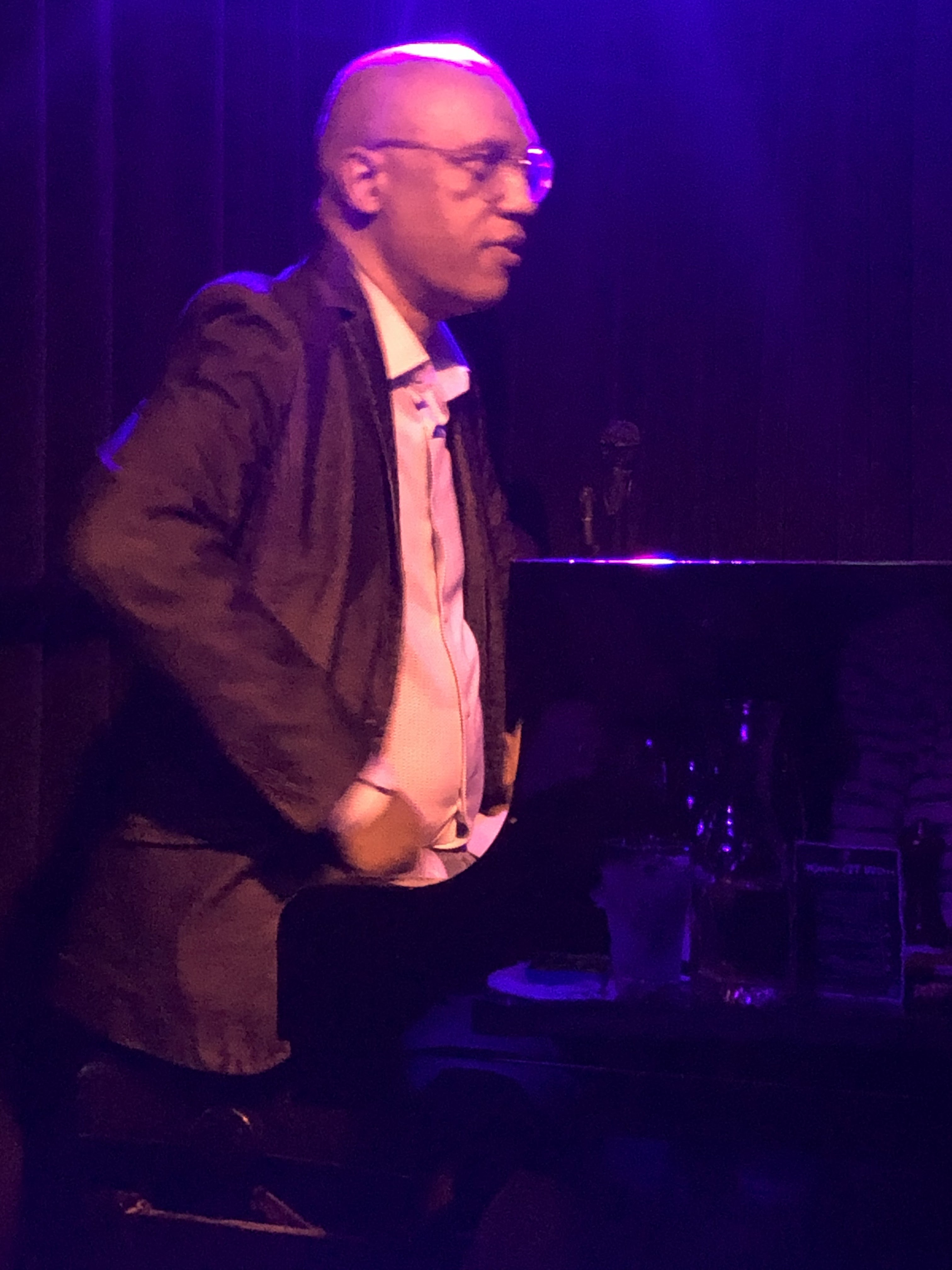
Billy Childs at 1905 in Portland May 4, 2023

I've seen the pianist Billy Childs perform live recently at Portland's 1905 jazz club. He is an elegant musician who is always dressed impeccably and with style and he always brings that same elegance and sophistication to his music. For his Portland gig, Childs brought with him the fiery trumpeter Sean Jones, the bassist Hans Glauswig and the drummer Chris Eumon. More about this at a later date.

BillyChilds with Sean Jones at Portland's 1905 Jazz Club May 4, 2023

I have admired the artist's works over the last several years and his release Rebirth from 2017 was, to my way of thinking, one of the best jazz releases of that year. 


Childs's new releases are always anxiously anticipated, as was his latest The Winds of Change, which was released in March of 2023. The album is a compilation of seven beautiful and inspired vehicles of expression. They include a hallowed and gorgeous version of the late Chick Corea's haunting "Crystal Silence," "Black Angel," a Kenny Barron composition first heard as Freddie Hubbard's title cut from the 1970 album of the same name and five of Childs' own narrative and cinematically inspired musical compositions. 

The pianist/composer assembled a superbly intuitive group for the recording of this album. The excellent bassist Scott Colley and brilliant colorist Brian Blade on drums set the rhythmic pulse. The trumpet chameleon Ambrose Akinmusire is Childs' main front-line foil and collaborator.  The band on The Winds of Change is emotive, flexible, and possesses a telepathic sensitivity to executing Childs' musical demands and the results are spectacular.

On "Crystal Silence," after a beautifully thought-out piano intro, Childs utilizes Akinmusire's plaintive, slurring trumpet sounds to spell out the familiar melody in an expressive, humanistic way. Bassist Colley offers a moving resonant, deep-toned solo of his own and Blade adds the colors of his soft rhythmic brushes to the mix. There was a lot of reverence in the way Childs et al presents this song, a heartfelt dedication to the past composer.

Childs' ballad "I Thought I Know" was played as a trio. The contemplative melody had a swaying feel with Colley offering a moving bass solo and Blade's tight snare accompaniment setting the mood.  "Masters of the Game" Childs reunites with Akinmusire. The two are excellent foils, with Childs' sensitive, classically inspired pianistic thoughts countered by Akinmusire's fluttery, often slurring accents that add excitement and slight disruption to the beautifully inspired formality of Childs' composition.

"The Black Angel" is a dynamic vehicle to include here. The tune invites comparison of the language differences between how Hubbard once played this with Barron, the composer, on the original, and how Akinmusire interprets Childs' vision of the same composition. Childs chooses a more angular, less lilting, more cadenced approach and the trumpeters have two distinct approaches to how they deliver the melody. Hubbard is brighter, lyrical, more athletically dynamic, and precise- softened by Spalding's flute- and Akinmusire's trumpet feels organic, elastic, and more liquid. Childs' playing is dynamic, gorgeously developed with inherent beauty flowing from within, accented precisely by Colley and Blade's intuitive accompaniment. This one is just an example of how in-tune this band is here.

The album includes the captivating, "The End of Innocence" which could easily be seen as a cinematic score. Childs, a lifetime LA resident, claims to have been inspired by some of the great scorers of film like Michel Legrand and Jerry Goldsmith and you see the link. The music is beautifully played by Childs-inspired story-telling piano and his band. Akinmusire's trumpet lingers on long sustained tones that he slurs and screechers to great effect. His playing has an earthy, primal sense sound and what would be more representative of  what Childs is expressing in his "The Ending of Innocence."

Following in the film noir tract and cinematic approaches to music, Childs composed his "The Great Western Loop" with the scenery it evokes in mind. At the Portland gig, Childs spoke of this Pacific Northwest trail several hundred miles long that inspired this song. With a staccato intro, Childs' piano fills the room with a sense of urgency. The group then plays a synchronic serpentine line in unison that demands precision and is executed with razor sharpness. His piano serves up copious lines that flow out of him like an eruption of spring-fed ideas. Blade is particularly propulsive during the statements of repeated lines in unison. The colorful drummer is perhaps the present-day Monet of the era on his kit. 

The album ends with the title cut "The Winds of Change." In my mind, this is the jewel of the album. Childs related that the tune was originally written for the late trumpeter Roy Hargrove and an orchestra. The film influence here seems strongest. I am reminded of Michel LeGrand's work on the theme of The Thomas Crown Affair or perhaps Jerry  Goldmsith's work on the theme to Chinatown that featured Uan Rasey's celebrated trumpet work. Memorable movie music has been permanently tattooed into our cerebellum and rightfully so!

Childs' playing can be so elegant, emotive, and resplendent. The music is a feast of sounds and emotions and I am particularly drawn to the tumultuous tom work by Blade at several apex moments, Akinmusire's superbly emotive trumpet work, Colley's buoyant bass, and Childs' superlative piano and compositional work here. If you are drawn to the majesty that film score work can bring to you, this one is just breathtaking!

Billy Child' The Winds of Change is clearly one of this year's best albums.


Wednesday, March 7, 2018

Julian Lage and Trio Debut His Latest Album "Modern Lore" at East Atlanta's The Earl

Julian Lage's Modern Lore Mack Avenue Records MAC 1131
On Tuesday March 1, 2018 at an East Atlanta club called The Earl, the guitarist Julian Lage brought his touring band of Jorge Roeder on bass and Eric Doob on drums in support of his latest release Modern Lore which was released on Mack Avenue Records on February 2, 2018.

The Earl has a neighborhood-like bar front room and a rear room that can reportedly accommodate up to two hundred and fifty standing patrons. It has a distinctively punk, rock and roll, maybe even shit-kicking country vibe. Lage apparently played there previously and liked the vibe so he returns this time with his trio.

Lage has made his reputation as a serious crossover guitarist who can play comfortably in many genres. From his work with progressive guitarists like Nels Cline of Wilco fame-they did an interesting album titled Room from 2013- or his contemporary folk/bluegrass music with singer/guitarist Chris Eldridge of the band Punch Brothers; or his jazz duo work with the pianist Fred Hersch; or his more “out” work with the avant-gardist John Zorn;  or his own lyrical guitar work on albums like Gladwell, World’s Fair and Arclight. He has found a niche in a zone that straddles country, folk, rock, jazz, bluegrass and American roots music all mixed up in his own neo-classical style. He joins a pantheon of artists that have followed similar paths, artists like Bela Fleck, David Grisman, Alison Krauss, Chris Thile and perhaps more closely, fellow guitarists Pat Metheny and Bill Frisell. Like these other great musicians, he has prodigious technique and an inherent lyricism.

I introduced myself to the guitarist backstage before the show and he was extremely warm and engaging without a hint of pretension or self-importance. That’s quite impressive for a musician who has been lauded from an early age as a wunderkind.  At eight years old he was the subject of an Oscar nominated documentary Jules at Eight. By the age of nine he was playing live on stage with the likes of Carlos Santana trading licks on the acid rock “Maggot Brain.”  He was introduced to the world on record in 1999 at the age of eleven in a duo with mandolin virtuoso David Grisman on the song “Old Souls.”


The humble, now seasoned, thirty-year-old guitarist has always found inspiration from many different sources. On Modern Lore he seems to be mining his rock and country roots, lacing it with his filigreed guitar work and occasionally a smidgen of folksy twang to produce a very enjoyable suite of music.

On the band’s opener, which I believe was “Activate” from his album Arclight, Lage struck a distinctively rock posture on his Telecaster that warmed up the mostly twenty-something crowd. On the second selection, “Atlantic Limited,” Jorge Roeder led off the sauntering tune with his loping bass line (played on the album by Scott Colley). Lage’s guitar turned to a fractious power chord opening for “Roger the Dodger.” Lage’s ability to weave complex lines and to dazzle the audience with his fretboard facility was fully on display. He is an ebullient player, bouncing on the toes of his feet, raising his head skyward while he is playing in blissful community with his bandmates. You can just feel the energy surging through this guy’s body when he is playing. Doob, who replaces veteran drummer Kenny Wollesen from the album, was especially powerful with his roiling drum work as Lage and Roeder powered on.

Julian Lage
After a brief announcement naming the members of his group, Lage and company took off on the frenetic “Persian Rug,” a country cooker that is credited to Charlie Daniels and Gus Kahn and that Lage first recorded on his 2016 album Arclight. The amazing facility that this man has was quite impressive to see in person as his fingers flew across the fretboard like fluttering fireflies. The audience stood in awe and respect and gave the band a rousing ovation.

The next selection was the roots- based, Spike Hughes tune “Nocturne” also from Lage’s fine Arclight. Lage and group proved that they could work the dynamics of a song to perfection, building crescendos of sound to erupting apexes before abruptly changing direction with a purposeful time change or a hushed interlude.

The Julian Lage Trio w Jorge Roeder (b) and Eric Doob (dr)
Lage went right into an extended version of his wistful composition “40’s” from his solo album World’s Fair released in 2015. The song featured a powerful and lengthy probing bass solo by Roeder and an exploratory solo by Lage that went way outside the box before returning to the main theme of the song.  Toward the end of the song the three musicians created a mélange of free improvisations that somehow worked, tying it all together with an explosive Doob solo at the coda.

The group continued with “Splendor Riot” from the new album. Lage’s ability to play repeated lines in rapid succession flawlessly and his penchant for rapidly and repeatedly sliding into and out of notes is emblematic of his individualistic style. He played what appeared to be an old Fender Telecaster exclusively for this gig and his tone was often set in treble mode producing a fair amount of twang that he used to great effect.

“Whatever You Say, Henry,” again from the new album, featured Jorge Roeder on his acoustic bass, bending and plucking notes pizzicato as Lage strummed chords softly behind and a stick-less Doob used his bare hands to create a soft back beat. When Lage did take a solo, it had a country music feel until he started to play some quick lines that were from another world. At one point he strummed his guitar much like a banjo creating an unusual effect.

The evening continued with the experimental free sounding “Earth Science,” also from the new album. The three musicians trading ideas in a seemingly unbridled exchange of on the spot improvisational stream of consciousness.

After a lengthy abstract solo by Lage, he changed the mood entirely by introducing the familiar lyrical sounds of Sammy Fain’s classic “I’ll Be Seeing You.”  If there was any thought that Lage has left his jazz guitar tradition behind, then this left the purists satiated. It’s quite moving to listen to this master take a familiar song like this and embellish it in his own inimitable way. The only negative, Doob’s drums could have been a bit more sedate for my liking.

The finale was the lead off song from the new album and is titled “The Ramble.”

It was a near capacity crowd of approximately two hundred people, mostly young and receptive to Lage’s unique, genre-less style, a pastiche of multiple influences that somehow just works.  He is an engaging artist of immense talent and one who seems to be able to expand the audience for those who are curious and open minded about contemporary extemporaneously improvised music. He is an artist we all should continue to watch closely.

Thursday, January 18, 2018

A Voice to be Savored on Sinne Eeg's "Dreams"

Sinne Eeg Dreams  Artist Share AS0153

At forty years of age, the Danish singer Sinne Eeg is among that rare breed vocalists that can take anything they sing and make it their own. She has a voice to be savored. A force to be reckoned with in her native Scandinavia, her work is little known here in the US. The most recent recording Dreams is just her second release here despite nine outings as a leader. What immediately grabs you about her voice is the natural effortlessness with which she sings. Eeg has a warm supple tone, a wide range, exquisite control and an inherent sense of swing and phrasing that is impeccable. She cites Betty Carter, Nancy Wilson and Sarah Vaughn as influences, and one can certainly find some traces of their styles in her voice, but make no mistake, she is clearly on her own path and it is a refreshing one at that.

Her first US release was a duo album Eeg-Fonnesbaek from 2015 that she did with accomplished Danish double-bassist Thomas Fonnesbaek. The album’s darkly sparse treatment of some of the classics from the Great American Songbook, with Eeg’s gloriously fluid and tonally transcendent voice playing off Fonnesbaek’s warm, bellowing bass was deservedly well received.

Dreams, which just came out in December, took a different tact. It was recorded in Brooklyn, NY in January of 2017. It utilizes the multiple voices of  a very talented backing quartet.  The musicians are some of jazz’s crème de la crème, with the stellar rhythm section of bassist Scott Colley and drummer Joey Baron, the always tasty Larry Koonse on guitar and her longtime collaborator fellow Dane, Jacob Christoffersen holding down the piano chair. If Eeg was hoping to expand her audience on this side of the pond or for that matter around the world, then Dreams should certainly go a long way to achieving that goal.

Of the ten featured songs on the album, two are by Cole Porter, one by Rodgers and Hart and one by Gene De Paul, the remaining six are all Eeg originals and quite compelling.  The opener “The Bitter End” is a slow-cooked, funky blues that features Colley’s bass and Christoffersen’s piano, with Eeg’s expressive voice shining through with authenticity and feeling.

The perky “Head Over High Heels,” written by Eeg and Mads Mathias, has a musical theater, dance-like quality to it.  Eeg’s considerable scat abilities are on display as she and Colley parry in a complementary dialogue that is both slippery and simpatico.

Eeg’s “Love Song” is a torchy ballad that is gorgeously sung with a melancholic expressiveness and also features a gossamer guitar solo by Larry Koonse.

Listening to Eeg and drummer Joey Baron on the imaginative intro to the well-worn Porter standard “What is This Thing Called Love,” is to hear the song with new ears. The walking bass of Colley and the swinging piano of Christoffersen enter the fray with just enough juice to re-energize this classic. Baron’s traps are buoyant and Eeg’s vocals are facile and flawless.

On Richard Rodgers “Falling in Love with Love,” the singer, bassist and guitarist play like a well-oiled trio of seasoned instrumentalists.  Eeg’s vocal scatting is glass-like, so integrated with the music as to be seamless- sliding in and out of the group interplay with ease- you almost forget she’s singing until she returns to the lyrics. Koonse picks another masterful solo.

On the title song “Dreams,” Eeg goes totally wordless, instead using impressionistic vocalization. The song has a nebulous feel to it and Christoffersen’s piano has a  Jarrett influence to it, lightly skipping over the melody, with the rhythm section gently pushing the music along.

As if being such an accomplished vocalist isn’t enough, Eeg’s “Aleppo,” a song she wrote inspired by seeing images of the child victim who was tragically washed up on the seashore while trying to flee the Syrian conflict, is a moving political statement and a testament to this woman’s compositional skills. The evocative music is reverently somber, and her lyrics are sung with an emotional pathos that is quite moving. She proves herself to be a formidable story-teller, a forgotten talent few modern singers seem to have cultivated.  The slow beating bass line, the muted strings on Koonse’s guitar and the delicately sparse Christofferssen piano accompaniment are perfect complements to Eeg’s sincere plaintive verse. “At least we cry for the victims of war and let those children cry no more.”

There is a contemporary pop feel to Eeg’s “Time to Go,” probably my least favorite song on the album.

The arrangement of Gene De Paul’s “I’ll Remember April” is satiny and sleek. Eeg’s voice modulates with a calm assurance, like the steely nerve of an accomplished tightrope walker who works without a net. Her intonations are clear, unstrained and sinewy. Eeg has an abundance of “chops” but what is thoroughly refreshing is her astute awareness of when and how to use them. There is never even a hint of over the top showmanship that seems to be de rigueur with today’s female divas who revel is showing off their range or raspiness. Instead we find nuance, spacing and silky smooth transitions.

The finale is a sparse upbeat duo version of Porter’s “Anything Goes” featuring Sinne’s lilting voice and her accomplished pianist Christoffersen. The two musically dance with each other and around the melody in a comfortable rendering that accentuates the Porter wit.


If Dreams doesn’t make this Danish wonder woman, Sinne Eeg, into a familiar name in the world of jazz music than people are simply not listening.