Showing posts with label Jimmy Smith. Show all posts

Wednesday, April 15, 2026

Roberto Magris/Denis Razz Quartet on "In Action": Music that Delights and Suprises


Roberto Magris Denis Razz Quartet- In Action- JMood Records

At the end of 2025, pianist Roberto Magris, who resides in the northeastern Italian seaport city of Trieste, released a wonderful quartet collaboration with the Croatian based saxophonist Denis Razumovic. The album is a two-disc release titled In Action on J Mood records. This adventurous collection of well-curated music features compositions from masters like John Coltrane, Wayne Shorter, McCoy Tyner, Yusef Lateef, Mal Waldron and Sun Ra, in addition to several promising works by Razumovic and Magris and a Blues by B3 master Jimmy Smith, where Magris shows his Hammond organ skills.


I became a fan and ardent follower of Magris for quite some time. I first came upon some his work with his Europlane orchestra with the cooking album Check In from 2005. Since then, I have followed this pianist’s growth as found him collaborating with both top-tier European musicians as well as some established ex-patriot American jazz artists that still had something to say. In the subsequent years, I’ve listened to and sometimes reviewed some of Magris’ releases that found the pianist working with such notable musicians as saxophonists Tony Lakatos and Herb Geller, multi-reed and trumpeter Ira Sullivan, French guitarist master Philip Catherine, bassists Art Davis and Eric Hochenberg, drummers Albert “Tootie” Heath and Idris Muhammad, and trumpeter Brian Lynch to to name a few.

Magris has said “I am an Italian of non-Italian culture…so I am an expert at looking ahead to tradition.” This skilled pianist has absorbed some of the music’s traditions before pushing forward. As a player, Magris has developed a wide range of colors on his pianistic palette. He can pull from skills like the bebopper fluidity that recalls Powell; the melodicism from Flanagan and Evans; the rhythmic drive and aggressive attack from Tyner and Pullen, and the harmonic and rhythmic adventurism of Hill and Bley. This makes Magris’ music a bit like a wrapped gift box; you never precisely know what you are getting until you open it.

On 
In Action, Magris is joined by three talented Croatian musicians Dennis Razz (Razumovic) on alto and soprano saxophones and flute; Karlo Ilić on acoustic bass electric guitar and oud; and Rajko Ergić on drums, percussion and soprano saxophone on two cuts. Magris uses both acoustic and electric pianos, keyboards, Hammond organ, and Mexican whistles to complete the instrumentation. When the listener opens this gift, you get a potpourri of music that delights and surprises.


Magris mentions that vibrant saxophonist Dennis Razz, who is a local Croatian hero with limited exposure to the world of global jazz, “…is a passionate jazz musician with a big heart and soul.” That same heart, passion and soul are the common qualities that all these musicians possess; the secret sauce they bring out in each other when they operate together as a very intuitive, expressive group. This group was originally thought of as an informal and temporary band formed post COVID, but if this album is any indication, these guys have many more inventive roads to travel.

There are eighteen cuts on the album, close to two hours of music, that offers something for almost everyone-inventive, energetic, soulful, swinging, melodic, avant-garde leaning or blues based and unpredictable music.

You can groove to John Coltrane’s “Some Other Blues” with Razz’s fluid alto and Magris’ Wynton Kelly-like piano solo and a nice pizzicato solo by bassist Ilić. Dennis Razz’s “In Umbria” a promising two chord-based piece. It reveals a compositional skill allowing the altoist to show his melodic side as Magris’ electric piano floats in the background with aplomb, and Ergić’s intuitive drum work adds to the mix. Wayne Shorter’s composition “Blue Nile” is another favorite, as Magris and Razz raise the temperature of the set with driving kineticism driven by the potent rhythm section and Razz alto searing and soaring with authority. Ergić’s polyrhythmic solo is another treat.

Magris and Ilić is an avant-garde original “Double Helix” which finds the bassist picking up his electric guitar and having what feels like a spontaneous atonal interaction.

“Il Mare a Fiume,” another Magris original, opens with a synth-driven keyboard setting the stratospheric opening before the music morphs into a soulful shuffle. Magris is on electric piano, Ilić on electric bass, and Ergić’s provides the sauntering drums, as Razz’s soprano soars in the clouds like a falcon.

McCoy Tyner’s “You Taught My Heart To Sing” is a beautiful ballad that brings great melodicism to the set. Magris’ piano lines are liquid and heartfelt, offering a tip of his hat to Tyner, and Razz’s alto evokes a sweet sound that reminds me of Johnny Hodges.

Yusef Lateef’s Middle Eastern inspired “The Plum Blossom” is a trip into another world. To create this world the group uses the unique instrumentation of Ilić’s oud playing sinewy lines against Magris’ acoustic piano probing, Ergić’s tambourine and Razz’s drone-like soprano saxophone work.

The second disc has its own highlights. The free form “Spirits of the Wild” with Razz’s flute work, Ilić’s bowed bass and Magris on Mexican whistles. A swinging version of Sun Ra’s “Discipline 27-11” that shows off Razz’s expressive dynamism on the alto.

The title track, Magris’ “In Action” is a Coltrane inspired composition that opens with a driving ostinato line that is the perfect vehicle for this group to let loose. Magris’ piano lines are very reminiscent of Tyner’s aggressive keyboard attack; percussive and stabing. Razz’s alto ignites the music further like a splash of gasoline on a raging fire. His horn is taking no prisoners as Ergić’s drum work propels the music and offers a dynamic solo of his own.

Sun Ra’s “Lanquidity,” opens with Magris’ dissonant acoustic piano countered by Ilić’s electric guitar probing before Razz’s soprano enters.

Mal Waldron’s “Left Alone” is played with great feeling by Razz and Magris that it just sweeps you away with the song’s inherent pathos; just beautiful. Magris’s piano solo explores the edges of the tune, as Ilić’s bass maintains the pulse with Ergić’s brush work and Razz’s alto states the theme with an open heart.

Razz’s composition for his daughter, “‘A’ Means Antonia” has a bright feeling and finds the altoist in top form. Magris adds some tasty electric piano that reminds me a little of the work of Jeff Lorber.

The album follows with Magris using his Hammond organ chops on the Jimmy Smith blues “You’ll See” and then the classic “My Foolish Heart” ends the set with a familiar, slow shuffling feeling good coda. 


Saturday, September 2, 2017

Twenty-five + Great Jazz/Blues Organ Performances


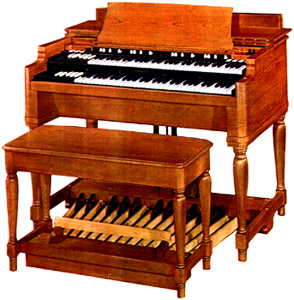
The Hammond B3 is a beast of an instrument and the jazz-organ-trio format is a staple of the jazz idiom.

Tracings its origins back to a wind driven instrument-compressed air being pushed through multiple length tubes to sound various notes-the pipe-organ made its way into western religious ceremonies in the eighth century when Charlemagne installed one in his chapel in Aachen. For centuries since, the organ has been the musical instrument of choice in churches, temples and synagogues.
Laurens Hammond

Then came along came Laurens Hammond. Hammond was a mechanical engineer and he developed a patent in 1934 for an “electrical musical instrument” that was based on using tonewheel generators to produce sounds. His goal was to offer a cheaper alternative to the pipe organ for churches and places of worship and he succeeded with the introduction of his Hammond model A console organ in 1935. The low cost, much more compact electric organ was wildly successful and by the end of the nineteen thirty’s Hammond was producing two hundred of these organs a month. It wasn’t until 1954 that the B3, the prominent instrument used in jazz organ trios, was introduced by Hammond. The B3 added an additional percussive harmonic feature and its popularity with jazz and progressive rock artists was legendary, especially when paired with the rotating Leslie speaker system which produced a warbling, tremelo sound. The B3 model was modified in 1967 and has gone through numerous electronic iterations including a new XB3 that was made by Hammond-Suzuki and purportedly faithfully simulates the original tonewheel sound through electronics, but the original tonewheel generator B3 had a distinctive sound and feel and is the model most prized by aficionados.
The Hammon B3 Organ

It is speculation, but I suspect  that it wasn’t until organists, in predominantly Black churches, found themselves trying to musically simulate some of the fiery rhetoric and gospel sway of their preachers, that the instrument began to take on its powerfully soulful, danceable feel. The B3 would eventually be brought out of the church and into secular world and become a staple of the jazz tradition.

This list of twenty-five + great jazz/blues organ performances is an attempt to honor and celebrate some of the beautiful, soulful, swinging, adventurous music that has been made using the Hammond B3 organ. It is chronological staring with Waller and ending with Charette, but it easily could have been more inclusive given enough space and time. Some artists deserve more than one feature because of their exceptional body of work ( Jimmy Smith and Larry Young each have two selections), but space didn’t allow for additional selections. There will undoubtedly be some musicians who are missing entirely from the list and deserve to be included and for that I apologize.This is a very subjective list and lists by their nature are stupid ( as listmaker and jazz pianist/blogger Ethan Iverson has said), but somehow we are compelled to compile them, if only to ellicit some kind of response. and hopefully subsequent discussion.   subjective and I have limited space. Many thanks go to Mathew Kaminski the organist for the Atlanta Braves and a hullva fine jazzz organist himself, for his astute input. So for better or worse here is my list of twenty-five + great jazz/blues organ performances.

The organ tradition in jazz, is said to have started with Thomas “Fats” Waller, his playing steeped in gospel and intermingled with stride. The music had a certain bounce to it, a calliope sounding celebration. It was played on an Estey pipe organ, so it doesn't technically belong in a list of B3 performances, but it is the germ from which all subsequent jazz organ performances grew. So for historical reference, here is a sample from a 1927 recording of Waller at Trinity Church Studios in Camden, NJ.

Thomas “Fats” Waller: 1927 on the Estey Pipe Organ Camden, New Jersey “Stompin’ the Bug” 3min 39 secs
 

Using an organ was also seen by the club owners as a cheaper alternative  to the expense of hiring a seventeen-piece big band.

With its combined use of chorus and single line notes, the organ could create a bigger, broader sound. A deft technician could use creative positioning of his draw bars to mimic other instruments. It was like having a band in a box. Here Count Basie uses his organ technique to play his “KC Organ Blues” with his band reduced quintet.

1.       William James “Count” Basie: “K C Organ Blues” from the 1954 release Count Basie Sextet with Paul Quinchette (tenor), Freddie Green (gtr), Gene Ramey (bass), Buddy Rich (drms).    2min 52 secs
       

The innovators of the jazz organ trio sound could be heard percolating by the nineteen fifties with the formation of an influential jazz organ trio under the keyboard artistry of William Starthem “Wild Bill “Davis as heard on his 1957 release “Wild Blues.”

2.       . “Wild Bill” Davis: “Wild Blues” originally released as a single in 1957 with Wally Richardson (gtr) and unknown drummer                                                      2min 16 secs
       

By the late nineteen fifties Hollywood was already being influenced by the alluring sound of the jazz organ and one of my first exposures to a jazz style organ was on Henry Mancini’s arrangements for the silky Blake Edwards TV series Mr. Lucky from 1959. While technically not a traditional jazz or even a B3 performance ( the organ used was a Wurlitzer Theater Organ,) Mancini did intorduce the organ's lush, jazzy possibilities to a wider audience. I know it had a lasting effect on me. Here we hear Mancini’s deft use of studio musician Buddy Cole on this unforgettable tune.

3.       Buddy Cole: Wurlitzer Theater Organ on “Mr. Lucky from the 1960 album” Music from Mr. Lucky by Henry Mancini and his Orchestra.  2 min 2secs

In the fifties, on a parallel course to Wild Bill Davis in pioneering the use of the organ in the jazz trio format, was Missouri born Milton Brent “Milt” Buckner. Buckner is credited with developing the parallel chords style. Here he is heard playing with guitarist Kenny Burrell. The use of a guitarist as the other voice in the jazz organ trio became a popular format for the form.

4.       Milt Buckner: “Mighty High” from his album from 1960 Mighty High with Kenny Burrell 9gtr) Joe Benjamin (bass), Maurice Sinclaire (drms)              2 min 48 secs


Undoubtedly one of the most influential of all the Hammond B3 practitioners was “The Monster,” James Oscar “Jimmy” Smith. He switched to organ after hearing Wild Bill Davis in 1954. By 1956 he was offered a recording contract with Alfred Lion’s Blue Note Label after the impresario heard him in a Philadelphia club. Smith developed his own distinctive setting on the pull bars and along his percussive attack, this technique became known as the Jimmy Smith signature sound. He was also a facile improviser and was adept as using his bass pedals to simulate the sound of a walking string bass. Here is an early example of Smith’s indelible sound.

5.       Jimmy “The Monster” Smith: “The Sermon” from the 1959 album The Sermon with Lee Morgan(trpt), Kenny Burrell (gtr), Art Blakey (drms), Lou Donaldson (alto), Tina Brooks (tenor)
 20m 12 secs.
      

"Organ Grinder Swing" from the 1965 album Organ Grinder Swing with Kenny Burell (gtr) and Grady Tate (drms) 2 min 10 secs features Smith in his prime.


Smith was touring in Europe when German guitarist Paulo Morello asked him what it was like to work with such famous guitarist like Wes Montgomery, George Benson and Pat Martino. Smith was quoted as telling Morello “Listen man-I teach guitar.”   In fact, Smith played with many of the most notable jazz guitarists of his time including the aforementioned, Montgomery, Benson, Morello and Martino as well as Kenny Burrell, Grant Green and other fine players. He also played with horn players like Lou Donaldson, Lee Morgan and Tina Brooks.

After Jimmy Smith, there were whole legions of players who were undeniably influenced by his style on the B3. While many took on their own unique sound leaning more on soul, blues or funk, it wasn’t until Larry Young that the organ was taken into a completely different and more modern direction. Here are some of my remaining choices for most memorable performances on the instrument all the way into the modern day.

6.       James Harrell “Jimmy” McGriff: “All About My Girl” from MG Blues 1962    drummer unknown                                                                                           3min 54 secs
       

7.       “Brother” Jack McDuff :  “That’s A Goodun” from the 1963 album Live with George Benson (gtr),         Red Holloway (tenor). Joe Dukes (drms).   8min 16 sec
       

Don Patterson had arguably some of the most memorable performances on the B3, I choose this one.

8.       Don Patterson: “Hip Cake Walk” from the 1964 album Hip Cake Walk with Leonard Houston (tenor), Billy James (drms).                                                 16 min 40 sec
      

9.       Larry Young: aka Khalid Yasin “Luny Tune” on Grant Green’s 1964 Talkin’ About! With Grant Green (gtr), Elvin Jones (drms).     7 min 43 secs
       
Later on his brilliant 1966 album Unity with Elvin Jones (drms) "Monk's Dream."

10.   Richard “Groove” Holmes: “Misty” from the 1965 release Soul Message with George Randall (gtr) and Jimmie Smith (drms).  6min 1 sec 
      

11.   Shirley Scott : “Rapid Shave” from Queen of the Organ  live at the Front Room, Newark, NJ 1965.  with Stanley Turrentine (tenor), Bob Cranshaw (bs), Otis Finch (drms).   8 min 23 secs
       

12.   Charles “The Mighty Burner” Earland: “More Today Than Yesterday” from Black Talk  1969 with Melvin Sparks (gtr), Idris Muhammad (drms), Buddy Caldwell (congas), Houston Person ( tenor), Virgil Jones (trmpt).                             11 min 12sec 

The next selection is my tip of the hat to the whole generation of prog rockers that took up the mantle of the B3. While not truly jazz players, they did make the organ a memorable part of the music of the sixties, seventies and beyond. Lee Michaels played one of the best, most animated Blues organ solos I have ever heard “live.” He just rocked the house on that B3 and his playing was more traditionally rooted in the B3 jazz /blues sound, so I have used him as a surrogate for all those guys who rocked the B3. That list includes Keith Emerson, Jon Lord, Rod Argent, Brian Auger, Stevie Winwood, Greg Allman, Greg Rolei, Rick Wakeman, Booker T. Jones, Billy Preston, Mark Stien, Ray Manzarek, Garth Hudson, Mathew Fisher and Al Kooper.

13.   Lee Michaels “Stormy Monday” Blues from Lee Michaels 1969 with “Frosty” Bartholomew                     Eugene Frost-Smith   5 min 15secs
       

For many United States B3 followers the French organist Eddie Louiss will be a new name and many thanks to Noah Baerman at http://blog.noahjazz.com for pointing this fine artist out to me.

14.   Eddy Louiss: “Bohemia After Dark” from the 1972 album Bohemia After Dark with Jimmy Gourley (gtr), Guy Pederson (bass), Kenny Clarke (drms).   5min 53 secs


15.   Joey DeFrancesco: “Work Songfrom the 1993 Live at the Five Spot with Robert Landham (alto),  Paul Bollenback (gtr), Byron “Wookie” Landham (drms), Grover Washington Jr. (tenor), Jim Henry (trmpt). 9 min 33 secs
      

16.   Larry Goldings: “The Acrobat” from Peter Bernstein’s 1998 Earthtones with Peter Berntstein (gtr) and Bill Stewart (drms).     9 min 59 secs
       

17.   Barbara Dennerlein and Rhoda “Barefoot Lady” Scott : “Nova” from a live performance in Switzerland in 2002 with Felix Simtaine (drms).  8min 22 secs
       

18.   Sam Yahel: “Truth and Beauty” from his 2005 album Truth and Beauty with Joshua Redman (tenor) and Brian Blade (drms.)       7min 59 secs
       

19.   Pat Bianchi: “Theme for Ernie” from his 2006 album East Coast Roots with Mark Whitfield (grt), Bryon Landham (drms)
       

20.   Vince “The Prince” Seneri: “Overdrive” from the 2007 album The Prince’s Groove with Randy Brecker (trpt), Paul Bollenback (gtr), Gary Fritz (perc), Buddy Williams (drms).   4 min 33 secs
       

21.   Tony Monaco: “S’About” from his 2008 album Tony Monaco Live at the Orbit Room  with Ted Quinlan (gtr), Vito Rezza (drms).    11 min 49 secs
       

22.   Dr. Lonnie Smith: “A Matterapat” from his Up!  from 2009 with Peter Bernstein (gtr), Donald Harrison (alto), Herlin Riley (drms).                             6min 47 secs 

23.   Mike LeDonne: “Bopsolete” from his 2010 release The Groover with Eric Alexander (tenor), Peter Bernstein (gtr), Joe Farnsworth (drms).   6 min 5 secs
       

24.    Jared Gold: “Shadowboxing” from his 2013 release Intuition with Dave Stryker (gtr) and McCLenty    Hunter (drms).                   5 min 5 secs
      

25.   Brian Charette: “Aiight!!” from 2014 release Square_One with Yotam Silberstein (gtr) and Mark Ferber (drms).      3 min 23 secs
       

Lest we forget anyone not mentioned above. honorable mentions go out to John Medeski, Will Blades, Big John Patton, Greg Allman, Clare Fischer, Peter Levin, Radam Schwartz,  Hank Marr, Reuben Wilson, Leon Spencer Jr., Lou Bennett, Johnny Hammond Smith, T. Lavitz, Dave Seibel, Robert Walter, Neal Evans, Gary Versace, Don Pullen and Booker T. Jones and all the other  prog rock B3 players that were mentioned above.


Sunday, July 30, 2017

Brian Charette's "Kurrent" : Futuristic Circuit Bent Organ Trio


Brian Charette's Kurrent

Having grown up in the golden era of the soulful, hard-bop jazz organ trio, I have particularly fond memories of hearing this style of music that was so prevelant in the sixties and early seventies, when almost every lounge on the east coast had a B3 on its stage. Jimmy Smith, Don Patterson, Charles Earland and Jack McDuff were but a few of the names that created some memorable sounds on their B3's with those rotating Leslie speakers. But the basic sound of the organ trio has barely changed since Larry Young started to move in a new more progressive Coltrane-inspired direction in the seventies, before his untimely dealth. Now along comes Brian Charette.

Keyboard artist Brain Charette originally hails from Meriden, CT, where he was influenced to play the piano at an early age by his mother, herself an excellent pianist. He studied music at the University of CT where he received his BA and toured Europe as a working musician. He was drawn to the culture and jazz scene in Prague and lived in the Czech Republic for a time. As early as age seventeen, Charrette was working with jazz legends like Houston Person and Lou Donaldson. He took up the organ more seriously in the 1990s when he was finding more work playing organ than playing piano. For the past several years he has made the East Village of New York City his home and he can be often seen in New York accompanying other artists whenever an organist is required.  His keyboard skills have been recognized and utilized by such top tier pop artist as Chaka Khan, Joni Mitchell and Paul Simon.

On his latest self-released album Kǘrrent, Charette is joined by guitarist Ben Monder and drummer Jordan Young. Reportedly, the trio has been working on this original music for the last two years and it shows by the groups tight and intuitive interaction. Charette has labeled the group a “futuristic circuit bent organ trio,” with the intention of preserving the core tradition of the organ-guitar-drums jazz-trio format and extending it into modernity with the addition of electronics and by conceiving more contemporary compositions.

The group starts off with “Doll Fin,” a catchy rythmically driven song, with Charette providing a driving bass line,(presumably with his B3 foot pedals or on a loop), then inserting a mechanistic, almost robotic sounding ostinato keyboard line. You can almost imagine the cool efficiency of an assembly-line of robotic arms working in musical unison. Monder’s guitar lines enter and eventually morph into a ripping, more distorted solo as Young provides skillfully placed crashes and splashes. Charette returns with a more traditional sounding B3 solo before reprising his robotic synth work and Monder’s repeating guitar lines. The song ends in a flurry by Young as Charette and Monder play a unison, electronic drone that decays at the finale. Welcome to the future of organ trios.

Kurrent: Jordan Young, Ben Monder & Brian Charette
Other songs that employ a more traditional organ trio sound include the bouncy “Time Changes” and the memorable ballad “Honeymoon Phase,” although Charette manages to include a synthetic harpsichord and some spacey electronic accents at the end of “Time Changes.” 

Charette and company always keep the music moving and the keyboardist is quite adept at using his Hammond pull bars to create just the right sound. Monder shows a beautiful harmonic sense in his deft accompaniments and Young is equally atuned to the group effort.

“Mano Y Mano” features some vocoder tempered vocals and some raw guitar work by Monder. The otherwise atmospheric “Shooby’s Riff” contains a strange repeated, electronically altered vocal riff that is indecipherable to my ears and that breaks the mood and rhythm of the song. There is a sci-fi element to this one that conjures up images of space travelers encountering looped transmissions from alien life.

There are three, short “Intermezzos;” small musical vignettes that seem like free improvisations that use electronically altered, textural interplay between keyboard, guitar, voice and drums.

The synth and organ driven “Conquistador” is like a musical journey to places that seem at once familiar and at the same time strangely foreign. Juxtaposing sounds that combine the weird and fanciful with the exotic, Charette and company are able to transport you into a Lucas-like world reminiscent of the bizarre alien bar scene from the original Star Wars.  Back to the Future indeed.

The futuristically funky “5th Base” is a driving vamp that allows Monder to shred a little with a nasty, distorted sound that pierces through your flesh. Charette has obviously been influenced Larry Young’s forward thinking style, but he has also been influenced by some of the synth masters of years gone by, as I hear elements of Keith Emerson and Rick Wakeman in his playing on this wild electronic jaunt.

There is a Minuet quality to the opening of “The Shape of Green,” Charette and Monder trading lines in a formal dance of notes behind the cadenced traps of Young. Eventually the song breaks into a repeating vamp, then opens up to a Monder guitar solo that pierces through clouds of electronic sounds that rainmaker Charette conjures up like a weather shaman.

The finale is a song titled “Catfish Sandwich,” and has a Monkish sounding line to it. This leads to an adrenaline driven electronic disco beat. Monder lets loose as Charette and Young provide the rhythmic drive. Charette changes over to the traditional B3 sound and the trio starts to percolate as he plays some of the most inspired straight organ soloing on the album. The intensity builds to a frenzy at the coda with Young providing a bombardment of traps, toms and cymbals to the end.

By mastering the myriad of possibilities that can be produced on a Hammond B3, incorporating synthesized and electronic effects tastefully and utilizing inventive arrangements, Charette, Monder and Young have managed to create a hybrid jazz-organ-trio sound that rockets into the future. Their music just might be the natural heir apparent to the progressive legacy of organist Larry Young. 

Thursday, October 20, 2016

Mike LeDonne's Groover Quartet with "That Feelin'"


As I have always been a sucker for the captivatingly diverse sound a good Hammond B3 can deliver under the right hands, I thought I would listen to the recent release by organ magician Mike LeDonne and his well-established Groover Quartet titled That Feelin’. Le Donne is one of those journeymen that has been around honing and plying his craft for years and it shows in his complete mastery of the complex piece of electro-mechanical equipment known as the Hammond B3. Mike and his quartet have been playing a regular residency for years at the upper west side jazz haunt Smoke. His bandmates include tenor saxophonist Eric Alexander, guitarist Peter Bernstein and drummer Joe Farnsworth, each a talented player in his own right. Together under Le Donne’s leadership these guys have developed a finely calibrated musical machine that just hums along making the art of cooking look deceptively easy. But that’s exactly what playing weekly in a steady residency produces. Sadly, there are not enough of these residency-type gigs around for musicians. If you are in the City and you can  catch these guys at one of their weekly sessions you will not be disappointed.

On That Feelin’ LeDonne and company lay down some pretty incendiary tracks. The cd opens with two of LeDonne’s compositions “I’d Never Change a Thing About You,”  a song written by LeDonne for his twelve year old daughter who has multiple disabilities, and the title cut “That Feelin’.” On the first, the music pulses with an assured confidence. LeDonne’s fluidity is on par with the great ones on the instrument and Farnsworth knows how to maintain that swing with the best of them. When Alexander enters with his deep throaty tenor the music pops. Guest altoist Vincent Herring, another Smoke alumnus, adds his own soulful sound to the mix. Facile guitarist Bernstein lets loose with his own slick solo and Farnsworth is giving a brief chance to show off some of his thunderous chops.

“That Feelin’” is a bluesy, jaunt that is in the Jimmy Smith tradition. Bernstein’s gritty guitar work is both tasty and soulful. Alexander’s rasp on the saxophone cries out with attitude.  LeDonne’s marvelous mastery of the multiple pull bar variations of his keyboard are on display here and they are a treat to behold. LeDonne’s personal experience of having to deal with people who look at the disabled as somehow “defective,” as he states in his liner notes, has steeled him. His reaction is to make music that percolates with joy and attitude. The music says; look at me, I maybe different but I’ve got “That Feelin’"

The Groover Quartet takes on the Delfonics R & B classic, “La La Means I Love You.” Farnsworth’s reliably steady backbeat is the backbone of this one. LeDonne again shows his plethora of ideas on his keyboard. His use of sustained pedal point is marvelous as he modulates the sound introducing a whirring fusillade of notes and changing it up with multiple pull bar variations.

Donald Byrd’s “Fly Little Bird Fly” is a cooking, double time speedster. Alexander has his work cut out for him as he solos over LeDonne’s quick paced left foot driving bass line. Guitarist Bernstein is no stranger to speed and he navigates this road race gracefully with an easy aplomb.


On bassist Ray Brown’s gutsy “Gravy Blues” we again have the two horn front line with guest Vincent Herring joining the quartet. His Cannonball-like alto is featured as the first solo and he does a marvelous job of evoking a feeling of rawness and sensuous soul. Alexander follows on tenor with an equally compelling voice. Bernstein’s guitar offers the mellower side of the blues, and Le Donne returns for one last round using a “dirty” sound that contrasts perfectly with Bernstein’s more refined tone.

LeDonne’s “Sweet Papa Lou” is another double timed composition dedicated to saxophone legend Lou Donaldson, again featuring the two horn line of Alexander and guest altoist Vincent Herring.  Another   R& B classic, “At Last,” made famous by Etta James, is given a Groover quartet treatment. Arranged by LeDonne as a slow shuffle, it is a beautiful song and the perfect ballad to give guitarist Bernstein a chance to show off some of his tasteful chops. LeDonne is also given some room to expound on the theme with his multiple voices to great effect.
Keeping with the R & B feel of the whole album, the group does an arrangement of “This Will Be An Everlasting Love.” The group has fun with this one. Farnsworth lays down the beat as LeDonne works his magic around the changes. As with much of the music on this album the songs just swing their butts off with a genuine joy of cooking.

The finale is “A Lot of Living’ to Do” a burner that features Alexander’s tempestuous tenor showing why he is one of those players that can realty turn it on when he wants to with no discernible loss of clarity at any speed. Farnsworth tumultuous traps and dinging cymbals pulse the beat forward flawlessly. Bernstein is pushed to fleetness as the group keeps on a tear. Le Donne seems at home with cookers like this, high speed challenges that test the mettle and vitality of the players. With That Feelin’ Mike LeDonne has indeed made a “feel good” album that he and his fellow groovers can be proud of.