Showing posts with label #jazzcdreview. Show all posts

Tuesday, August 21, 2018

Vocalist Kate Reid shows some backbone and style on "The Heart Already Knows"


Kate Reid :The Heart Already Knows 


Despite a plethora of female jazz vocalists who release albums on any given week, rarely do I hear what I consider to be a voice that catches my ear, a voice clearly distinguishable from a sea of pedestrian singers out there desperately trying to gain recognition. To separate themselves from the pack, many singers hire top name musicians or employ lush orchestrations to give them credibility or to hide their vocal deficiencies. Along comes Kate Reid. I have never heard of her and admit to picking up her latest cd The Heart Already Knows with a bit of skepticism. Yes, she employed some of the most accomplished musicians to accompany her on this outing, but instead of hiding behind their virtuosity or employing a big band with over the top arrangements, she daringly chooses to lay herself bare, performing in a series of duets with just her voice and either a piano or guitar accompaniment. There is no hiding in this format. You either have the goods or you don’t. Kate Reid’s The Heart Already Knows shows she is the real deal. Clearly, she chose her collaborators wisely, bringing in some of the cream of the crop to accompany her. Pianists Fred Hersch and Taylor Eigsti or guitarists Paul Meyers, Romero Lubambo and Larry Koonse all contribute admirably to the effort, but it is Kate Reid who shines.

Reid hails from the Cuyahoga Falls, Ohio and received her bachelor’s degree in Jazz Studies from Western Michigan University. She continued her education at the University of Miami where she received a masters and eventually a Doctor of Music Arts.  She moved to Los Angeles and continued as an educator, teaching music and voice at Cypress College also working with her own quartet around the LA area. She became a sought-after studio and session musician lending her voice to several notable films, network television soundtracks and commercials. She is presently a Director of Jazz Vocal Performance and Associate Professor of jazz voice at the Frost School of Music at her alma mater University of Miami. The woman clearly has the goods.

With such an esteemed career in the studio and academia it’s no wonder why many of us haven’t heard of her at the national level.  With her latest release, The Heart Already Knows, that should change.

Reid’s voice is smooth, sultry with a Julie London-like intimate quality, especially in this very pared down duet format. It’s as if she is singing to you personally. Her tone is warm, her delivery is polished, and she modulates between notes with effortless ease.  

The songs are not your usual fare, more contemporary than the run of the mill standards from the Great American Songbook, but they have their own charm and certainly suit her voice.  She sings Strayhorn’s “Something to Live For” like a wizened storyteller and with tender poignancy, accompanied by Paul Taylor’s nimble guitar. Taylor’s guitar accompaniment also shines on the Ellington Blues “Just a Lucky So and So” where Reid’s velvety voice floats on top of the melody like a dollop of ice cream on a root beer float.

The masterful guitarist Larry Koonse’s weaves his magic on “Confessin’” laying down the perfect backdrop for Reid to soulfully scat to the melody. Reid also uses Koonse’s filigreed guitar work on Joni Mitchell’s “Two Grey Rooms.” Koonse plays the chord changes on an acoustic guitar and overdubs some superb harmony lines on a western-tinged electric guitar. Reid’s voice is clear and impassioned by the Mitchell lyrics and at times, although her voice has a lower timber, she almost sounds like Joni.

The pianist Fred Hersch can be heard accompanying Reid on the haunting Billie Holiday song “No More” which she sings with her own sense of pathos. He also accompanies Reid on a song sung by Nina Simone “If I Should Lose You” which is done with an up tempo beat and again on Hersch’s own languid composition “Lazin’ Around.”

The Brazilian guitarist Romero Lubambo lends his exquisite mastery and gives Fred Hersch’s” Endless Stars” a samba beat. Reid sings the Norma Winestone lyrics with an easy lilt. Later the two return on the Ivan Lins’ composition “Minds of Their Own” with lyrics by producer Peter Eldridge.

Perhaps the most synergistic combination on the album is Reid with the pianist Taylor Eigsti on the Peter Eldridge song “Busy Being Blue.”  Reid’s voice rings with a sense of having lived the lyrics and Eigsti’s accompaniment is perceptive and lyrical. Reid’s delivery is so natural and unforced that it draws you into the melancholy of the song without ever becoming maudlin. Eigsti also accompanies Reid’s on the James Taylor classic “Secret of Life.”

As Producer Peter Eldridge says in the liner notes, the duet “…concept could either send chills down your spine or reveal a backbone you never knew you had.” I think its safe to say that with The Heart Already Knows, vocalist Kate Reid 's backbone is alive and well. 


Sunday, August 5, 2018

Mike DiRubbo Quartet live at Smalls; Patience pays

Mike DiRubbo Quartet Live at Smalls  Sl-0058
The alto saxophonist Mike DiRubbo has been on the verge of a breakout for some time.  The now forty-eight-year-old alto saxophonist has a clean, biting sound. One is reminded of one of his mentors, the late Jackie McLean. DiRubbo began his musical studies on clarinet and eventually moved to his instrument of choice, the alto, when he was twelve.  A life changing experience with the Mitchell-Ruff group while he was still in high school convinced him that music was his life’s calling. After high school, DiRubbo studied at McLean’s Hartt School of Music at the University of Hartford in his home state of Connecticut. McLean saw something in the young man’s playing that reminded him of himself. The master’s intuition has proven to be prophetic.  DiRubbo graduated from Hartt in 1992 and after working for a couple of years with local musicians in Connecticut, he eventually made his way to the Mecca of jazz, New York City, in 1997.

DiRubbo has sharpened his skills on the whetstone of gigging with some of New York’s premier jazz players like Al Foster, Jimmy Cobb, Harold Mabern, Eddie Henderson, John Hicks, Peter Washington and Carl Allen to name a few. His hard work has paid off giving him a distinctive hard-edged sound that both honors the tradition and launches the music into the era of modernity.  The critics have noticed. DiRubbo has been a nominee for Downbeat’s Rising Star on Alto Saxophone for the last six years running.

He has worked extensively as a sideman on albums led by modern artists like  trombonist Steve Davis, keyboardist Brian Charette, trumpeter Jim Rotondi and bassist Mario Pavone. The altoist has released several albums as a leader and started his own record label, Ksanti in 2011. Ksanti means “patience” in Sanskrit and with such an impressive resume and his latest release, Mike DiRubbo Quartet Live at Smalls, that patience may finally be rewarded with the accompanying recognition that he so richly deserves.

As the title implies this is a “live’ recording, capturing the moment of spontaneity and excitement that happens when a group is in sync and spurred on by an appreciative audience. This release is very current having been recorded at Smalls Jazz Club in Greenwich Village in December of 2017. The group is stellar. Pianist Brian Charette sheds his organ and synthesizers for a night of acoustic piano and the results are impressive. The rhythm section of Ugonna Okegwo and Jonkuk Kim keep the energy high and pulsing.  Smalls, ans an intimate, basement club that has a capacity of sixty, is the perfect venue to listen to and appreciate a group like this. You get a chance to get upfront and personal with the band. A chance to listen and watch undistracted as DiRubbo and his group explore the possibilities of the compositions that they play.

The music is straight-ahead post-Coltrane, hard-bop and it is delivered with a raw edged authenticity that captures your attention. All the songs are written by DiRubbo- the one exception is John Abercrombie’s beautiful ballad “As it Stands,” and to be fair ,“Pent-Up Steps” is a take on Coltrane’s “Giant Steps”

From the driving opening bars of “Hope” you get the sense that this is going to be a special set of music. There is a Coltrane intensity and DiRubbo’s horn, at times almost sounds like a tenor; sharp, sometimes ragged, ripping through the lines like a serrated knife through crusty bread.Okegwo’s pulsating bass lines lead the way.Charette’s piano comps are thoughtful and measured and he offers a shimmering solo of cascading notes. Drummer Kim is a bundle of cacophony that keeps the proceedings percolating just to the brink of a boil.

“Details” uses a repeating rhythmic motif over which DiRubbo’s alto blows, first stating the line and then exploring its modal possibilities. You can hear the strong influence of his mentor Jackie McLean here. His notes are articulated like short staccato stabs, often accentuated with snare drum jabs by drummer Kim. When the altoist goes off, his cutting sound connects longer runs of notes played with a force that implies urgency. Charette takes an inspired solo that features a flow of notes that pour from his keyboard like the water of rushing stream before setting up for a pensive bass solo by Okewgo. As the song closes DiRubbo reaches the higher register with intense wailing sounds that are reminiscent of some of Pharoah Sanders’ plaintive cries.

The cd continues with “A Blues.”  The song has a swinging feel and each musician takes a turn in the solo spotlight. Okewgo’s bass is strong and pulsing and Charette's musings hold your interest with an economy of notes and some nice tremolo effects. DiRubbo’s alto is sinewy, his facility always at the ready to produce a flurry of notes when the mood suits him, or he will dynamically leave some space when effective.

“Moving In” is a soulful, ruminative ballad that features some of DiRubbo’s most sensitive playing. The rhythm section holds down the waltz-like pace as the altoist is given a chance to wander around the melody expressing a variety of ideas that all have an emotional appeal. His horn pleading in its tone and phrasing. Okwego’s bass is robust, dancing around the rhythm in a free-spirited prance that is loose but never loses the tempo.

“Pent-up Steps” is a derivative of Coltrane’s “Giant Steps” and shows the group in top form. DiRubbo’s alto navigates the changes with a slipstream ease. Gushes of sound come pouring out of his horn in deluge of ideas, building in intensity, surging with screeching, high-register notes at the apex of his solo. The rhythm section keeps the pace and defines the changes.  Pianist Charette artfully offers a series of beautifully executed ascending and descending runs. Drummer Kim, given his chance to shine, produces a polyphony of beats accented by some shimmering cymbal work, before the group heads for the exit at the coda.

The late guitarist John Abercrombie had a way of composing endearing music that often had a touch of introspective melancholy to it.  It’s no wonder that the group rises to the occasion and delivers one of their most memorable performances on his composition “As it Stands.” DiRubbo’s alto is particularly moving, his tone and attack delivering the pensive, moody feel with great insight and authentic feeling. Charette’s poignant solo is a highlight and Okwego’s bass sings with its own sense of deeply felt emotion.

The final song of the cd is “Archangel.” DiRubbo uses the thumping beat of Okwego’s bass, the roiling drums of Kim and the deftly placed comp chords of Charette to go off in an intense, ‘sheets of sound’ deluge of notes on his horn.
As the record memorializes,this is a group that thrives in the intimate setting of a club like Smalls. The chemistry is potent and DiRubbo delivers a set of  powerful music that relishes intensity while still leaving room for the sensitivity that a good ballad requires.


Thursday, July 26, 2018

The Interwoven Guitar Mastery of "Kreisberg meets Veras"

Nelson Veras and Jonathan Kreisberg: Kreisberg Meets Veras NFM 0005


There have been some stellar guitar collaborations over the years; some come to mind- Coryell and McLaughlin, Herb Ellis and Joe Pass, Jim Hall and Pat Metheny and John Abercrombie and Ralph Towner to name just a few. The latest duo of note is Jonathan Kreisberg and Nelson Veras as heard on their latest release Kreisberg meets Veras. These two are a revelation. They have an interwoven sound that is remarkably attuned to each other's instincts. A collaboration that deserves further exploration.

Born in New York City, Jonathan Kreisberg studied at The University of Miami from 1990-1994. He returned to his hometown in 1998 after playing an assortment of musical genres mostly centered on prog-rock and jazz fusion.  He immersed himself into the more traditional aspects of jazz guitar, eschewing his Stratocaster in favor of the rounder, mellower sound of a Gibson hollow-bodied guitar. He built up his chops finding work with artists like drummer Lenny White, saxophonist Joel Frahm and organist Dr. Lonnie Smith. He also formed a trio with drummer Ari Hoenig and bassist Johannes Weidenmueller. I first caught wind of this guitarist after hearing his album Shadowless from 2010 and later his solo album One from 2013, both excellent outings.

Brazilian guitarist Nelson Veras is new to me. He was apparently “discovered” by Pat Metheny when the then adolescent had moved from his native Salvador de Bahia, Brazil to France. Veras playing is rooted in the lilting Brazilian guitar-style of Joao Gilberto with a touch of Baden Powell’s fleet fingering.

Kreisberg plays electric guitar and Veras plays nylon-stringed guitar so the two sounds are tonally complimentary, never clashing with each other.“Lina Rising” is a marvelously layered composition by Kreisberg that allows these two string-masters to dance with each other in a delicate but swaying movement. It is thoroughly enjoyable to listen to the two exchange vastly different ideas on the same theme.

“Until You Know” has a faint hint of gypsy-jazz guitar feel to it. The two play synchronous lines with effortless ease. Kreisberg’s lines are particularly fluid, complex and harmonically aggressive and Veras comps behind him with polished aplomb. When Veras solos, his warmer sound is precise and a bit more romantic in its approach.

The third Kresiberg original, “Every Person is a Story,” is a dreamlike gemstone. Kreisberg’s guitar is made to sound like a harp descended from heaven. Played with exquisite sensitivity, it shimmers with a beauty that is hard not to be moved by.

The duo continues with some more familiar compositions like Monk’s “Bye-Yah,” a twisted exchange of ideas around the quirky Monk melody. Veras’ solo is particularly inventive with unexpected chicanery.  

Milton Nascimento's “Milagre Dos Pleixes” is right in Veras’ wheelhouse. He sets the scene with a miniature intro of classically inspired six-string beauty. The two guitarists latch onto the filigreed melody with some gorgeous finger-picked lines by Veras before Kreisberg launches into a dazzling saxophone-like solo that soars with inspiration.

Charlie Mingus’ “Goodbye Pork Pie Hat” is probably one of the most played jazz standards in the canon and for good reason, it is a nostalgic homage to a past master, Lester Young. The two guitarists play it with appropriate reverence. Veras takes the first solo and simply plays so beautifully and with so much feeling that you can’t help but be moved. When Kreisberg solos, he adds crescendos of notes that descend from the air-like freshly fallen snow, lingering for just a second before evaporating into the atmosphere.

Chick Corea’s classic “Windows,” a perfect vehicle for the two guitarists feature a quick-paced and changing rhythm that is the ideal backdrop on which to improvise. The exchange never reaches the fever pitch of the Coryell/McLaughlin duel on the album Spaces, but then these two seem more content to seamlessly integrate the music of their respective instruments into a coherent whole rather than make a show of speed for speed’s sake.

The final cut on this fine album is an obscure Wayne Shorter composition “Face on The Barroom Floor.”  The piece is played at a slow deliberate tempo to allow the nuances of the two guitarist’s interplay to be fully appreciated. Veras lays down the beautiful chordal accompaniment as Kriesberg’s electric guitar simply takes us on a flight of fantasy. Toward the end, Kriesberg introduces a modulating electric sound on his guitar that is otherworldly, fading out at the coda like a sighing last breadth.

Jonathan Kreisberg and Nelson Veras are two of the finest contemporary guitarists on the scene today. Kreisberg meets Veras is an excellent guitar duo album that is destined to become a part of every serious guitarist’s treasured musical library. 


Friday, July 6, 2018

A Never Ending Search for the Groove: Drummer McClenty Hunter's "The Groove Hunter"


McClenty Hunter The Groove Hunter Strikezone Records 8816

The drummer McClenty Hunter Jr. is one of those timekeepers that has made a name for himself precisely because he can adapt his playing to suit almost any music. The cat swings on everything he does, whether it be in guitarist/producer Dave Stryker’s trio and larger ensembles, in saxophonist Kenny Garrett’s Grammy nominated quintet or as a valued sideman on other people’s projects.

He’s been on the New York scene for about ten years after having studied with Grady Tate at Morehouse College where he graduated in 2005, and later studying with Carl Allen at Julliard for his masters, which he received in 2007. He has worked with jazz icons like Lou Donaldson, Jimmy Heath, Cedar Walton and Curtis Fuller to name a few and has been recorded extensively.

His debut album as a leader, The Groove Hunter, says it all- he is a man always hunting for that perfect groove. Hunter’s seemingly effortless ability to adapt his style to compliment whatever music is at hand is impressive- his effort is always within the group context. With plenty of facility, he is somewhat selfless musician, an advocate of the total sound rather than promoting his own individual role.

The music begins with the fractious staccato movement in Herbie Nichols “Blue Chopsticks” where Hunter, pianist Eric Reed and bassist Cochran Holt lay down a powerful pace that Hunter accentuates with splashes, pops and crackle. Holt offers a fleet and mellifluous bass solo. This trio shows tremendous intuition and Hunter would be wise to maintain his connection to these like-minded musicians for future projects.

The music ups the ante adding three horns - Donald Harrison’s alto, Stacy Dillard’s tenor and Eddie Henderson’s trumpet-to the rhythm section of Holt, Hunter and Reed. The group pulses in hardbop splendor behind Hunter and Holt’s marvelous in-the-pocket groove. There is some scintillating horn work by these gentlemen on this one that on its own is worth the price of admission.

McClenty Hunter (photo credit unknown)

Hunter proves himself to be a sensitive composer, shown here by his work with Dillard, Reed and Holt  on his composition “Autumn.” Reed’s fluid piano work is a delight. Holt’s bass sings with great sonority. This man has the sound of a mature master. Stacy Dillard is increasingly becoming an important voice on the saxophone. Here he plays with a breezy lightness that nonetheless preserves a sense of poignancy and power. All the while Hunter is quietly in command, the cement that binds them all together.

Hunter enlists bandmate and producer/guitarist Dave Stryker along with piano phenom Christian Sands and bassist Eric Wheeler for a rousing rendition of Stevie Wonder’s “That Girl.”  The trapmaster anchors the tune with a soulful shuffle that has you tapping your feet from the very beginning. Stryker’s guitar is in classic swing mode ala Wes Montgomery, and Sands piano solo is splendidly creative. If this one doesn’t get you moving, call a doctor and check your pulse.

Another Hunter original is the soulful “My Love,” once again played with Reed on piano and Holt on bass. Hunter’s shimmering cymbal work giving the barest accompaniment on the intro until the song erupts into a Coltrane-inspired modal chant. Dillard providing the exploratory tenor solo and Hunter’s exploding drums showing Elvin-like polyphony. Reed’s Tyner-like piano solo is another marvel of absorption and Holt powers full-throated through it all.


“Sack Full of Dreams” is Hunter’s homage to teacher and mentor Grady Tate. Guitarist Stryker sets his tone to mellow and bassist Wheeler struts strongly. Pianist Christian Sands returns for a thoughtful solo before Stryker lays down some sweet lines and octaves that just melt into the fabric of the song.

Hunter follows with another original “I Remember When,” this time with just Sands and Wheeler. Sands has studied his history and sometimes sounds Garner-esque in his embellishments. Hunter’s brush work carries the rhythm with a gossamer touch before he responds to Sands breakout solo- a fountainhead of pianistic elegance-with his own rhythmic retorts.

John Coltrane’s “Countdown” features some rabid playing by Hunter, Reed and Holt-altoist Donald Harrison offering an incendiary solo that honors the master without copying him. This one cooks and Hunter’s rhythmic drive is impressively unrelenting.

The finale is Hunter’s dreamy “Give Thanks.”  Here he plays toms and cymbals with mallets in a cadence that is particularly alluring. Reed's piano gently comps as Stacy Dillard’s voluptuous soprano work lulls you luxuriously to another place. Cochran Holt’s bass solo is big, round and probing and Reed’s solo is the epitome of musicality.

McClenty Hunter's The Groove Hunter has established this young drummer as a force to be reckoned with. A triple threat as a musician, a composer and a leader. Producer Dave Stryker has once again shown himself to a shrewd judge of talent and his Strikezone record label is quickly becoming a label to watch.


Monday, July 2, 2018

"The Alchemy" A Serene New Offering from George Brooks and Elements

George Brooks and Elements The Alchemy

The saxophonist George Brooks is a West Coast based musician with a definitive sound that is strongly influenced by his affinity for Eastern and particularly Northern Indian classical music.

Brooks was originally from New York and studied saxophone with Count Basie alumnus Frank Foster. He attended the New England Conservatory of Music in the mid-seventies and studied with Jaki Byard, George Russell and Joe Allard. It was at NEC that he met Peter Row, a sitarist and ethnomusicologist at the school. Row introduced Brooks to some classical Indian music, especially the work of influential Northern Indian vocalist Pandit Pran Nath. Brooks went to India to study with Nath, eventually indenturing himself to the master, cooking and caring for him in exchange for being permitted to absorb his knowledge. He also met sitarists Krishna Bhatt and composer Terry Riley, a relationship that would carry on when Brooks returned to the United States and settled in California.
Gharana, a term derived from an Indian word meaning house, is the specific School of Indian music that Brooks focused his studies on. It emphasized the expression of a raga took precedence over the more rhythmic aspects of the music. The eighth century text, The Brihaddeshi describes raga as " a combination of tones which, with beautiful illuminating graces, pleases the people in general." 

Brooks association with Terry Riley, the influential minimalist pianist/composer and early advocate of the use of tape delay technology would last for thirty years. During his early years in California, Brooks found himself participating in the vivid and expansive Bay area music scene. Besides his work with Riley, he was tapped to lead the horn sections of blues greats Albert Collins, Johnny Taylor and Etta James. His continuing study of Indian Classical music of both the Northern Hindustani and Southern Carnatic styles and its fusion with Western traditions of jazz improvisation brought him into collaborations with tabla master Zakir Hussain, the drummer Steve Smith from Journey, the fusion guitarists Larry Coryell and John McLaughlin, the bassist Kai Eckhardt and the Doors keyboardist Ray Manzarek. His Indian collaborators are too numerous to mention but are some of the most celebrated musicians in the Indian tradition.

Brooks latest project, a trio titled Elements, combines Brooks’ artful soprano and tenor saxophone work with the Hindustani virtuoso Kala Ramnath’s haunting violin and Dutch harpist Gwyneth Wentik in an eastern influenced chamber music setting. The album aptly titled The Alchemy is just that, a transformational fusion of Eastern and Western musical traditions. An album of deep beauty and quietude, if you allow it the music fosters a spiritual connection to your inner self.

Elements: George Brooks, Kala Ramnath, Gwyneth Wentik
The opener cut “To the Light” starts with a quick-paced synchronous line that is played in unison by the two string instruments, one plucked the other bowed, and Brooks floating soprano. Wentik’s harp provides the plucked background as Ramnath’s bow work pierces the air and Brooks’ soprano soars above the clouds. Brooks soprano work is some of the finest in almost any genre- light, fluid and precise and it is surprising that he doesn’t receive greater recognition for his work in annual polls.

Wentik’s harp gives the music a celestial feel on the beautiful “Karuna.” Ramanth’s violin work is some of the most poignant I’ve heard.  There is a Elysian quality to it that is  quite moving. She manages to produce sounds that ache with sorrow or soar with joy. Brooks’ plays tenor on this and his sound is no less compelling on this instrument.   

The music is peaceful, meditative, serene. Any inner tension I might have been holding onto melted away as I listened to “Travelling Music for Ann” with the ostinato harp of Wentik setting the stage, Brooks’ breezy soprano soaring and swooping and Ramanth’s plaintive, undulating voice all adding to a sense of inner calm.

“Singara” starts out with a call and response between Brooks’ soprano and Ramnath’s aching violin before Wentik’s harp sets the rhythmic stage. On “Lemon Pickle” the kanjira is played by Selvaganesh Vinayakram. This rhythmic instrument from the Southern Indian Carnatic tradition is a tambourine-like drum that creates a plunging like sound. The group plays fast paced lines in unison as the kanjira sets a tonal pace.

 “Ambika” is another showcase for Ramnath’s expressive violin work. You can almost visualize her instrument weeping at times. Wentik’s harp work is gentle like a summer breeze and Brook’s soprano is weightless.

 “To Be or Not,” one of the more melodic songs on the album, is the final song presented by the trio. This time they include Kai Eckhardt’s bass to the mix to set the song on a firm footing. You seem to forget that for the most of this album there is no percussive instrument present.

The remainder of the album is a three-song suite that features the solo harp work of Wentik, a formidable musician on an instrument that is not often featured as a solo instrument. She concludes the program  with songs like “The Gift” The Longing” and “The Promise."

Let’s be clear as with much of the new music that I receive this music is not jazz per se but more like jazz and world-influenced chamber music. It is expertly played and if you would occasionally welcome a peaceful respite from your everyday hustle, or even if you want a gorgeous, serene soundtrack to meditate  or do Yoga to than The Alchemy will fit that bill nicely.


Saturday, June 23, 2018

Jamie Baum's "Bridges" Spans the gap between Multiple Musical Traditions

Jamie Baum's Septet + Bridges : Sunnyside SSC-1502
The New York based flautist Jamie Baum has made a name for herself as both an accomplished musician and a formidable composer/arranger. Her composing for mid-sized groups is some of the finest and most creative on the contemorry music scene. I've been a fan of her music since I first heard her brilliant 2008 record Solace

Despite some changes in personnel over the years, with her Septet+,she has always managed to assemble and lead a group of talented, like-minded musicians that each bring something special to her musical table. With Baum's music, she downplays her own individual viruosity, never seeming to have the inclination to feature herself in her work, content instead to let the whole of her musical compositions speak as a unified vision. 

On her latest album, aptly titled Bridges, she has released an album of nine original compositions that feature the unique musical skills of her seven bandmates. The music is a the result of a Guggenheim fellowship that allows artists such as Baum the time and resources to create. The instrumentation is itself a bit unusual- flute, trumpet, saxophone and bass clarinet, French horn, electric guitar, piano, upright bass, drums and even a Tibetan singing bowl. Special guests bring additional percussion, voice and tanpura to the mix.

The album is a adroit mixture, with elements of Middle-Eastern or Maqam, Jewish, Indian and Nepalese, Southeast Asian, rock, chamber music and jazz. 

Starting out with the driving “From the Well” the group shows how well this instrumentation can tackle this complicated frenzied beat. The music accelerates like a darting roadrunner across the desert sand until Baum’s flute emerges. Her lines flow like bubbling spring water from an oasis. Sam Sidigursky’s bass clarinet offers a sinewy, snake charmer-like solo before Amir ElSaffar’s clarion trumpet rings over the horizon like a cry to action.

Baum employs ElSaffar’s distinct voice to sing her poignant “Song Without Words,” which is a dedication to her late father. ElSaffar’s voice drips with emotional content. Sidigursky’s bass clarinet solo is a masterwork of expressiveness. Baum’s own solo is soft and feathery, floating on the wings of her fond memories. Baum uses Comer’s distinctive French horn, an instrument not normally heard in jazz, to great effect here.

“There Are No Words” starts with a pedal point by pianist Escreet over which Baum and Sagdigursky play a weaving synchronous line. Bassist Zach Lober offers a deep toned solo, which leads into a Baum solo that features a subtle echo effect giving it a windswept sound. Pianist John Escreet has been on my radar for some time.  His facile keyboard work is harmonically complex, always unusual and played with the utmost sensitivity.

The album then proceeds into a five-part suite that Honors Nepal and commemorates the catastrophic Gorkha earthquake that occurred in April of 2015. The natural disaster took nearly nine thousand lives and injured another twenty-two thousand.

The suite starts with Part 1 “The Earthquake” with the peaceful drone of a Tibetan singing bell which permeates the air before a somber, almost funereal horn movement gently plays over it. Then all hell breaks loose. Brad Shepik’s distorted guitar wizardry recreates the havoc of the quake in all its electric kineticism as Jeff Hirshfield’s roiling drums boil underneath. The sounds are disturbing but recreate the chaos and trauma of the event.

Part 2 of the suite, entitled “Renewal,” is appropriately uplifting. The music is played brilliantly by Sadigursky on alto and Baum on flute with Escreet’s flittering piano work, all conjuring up images of Phoenix-like new growth making its purposeful way into the sunshine and through destruction of the aftermath of the earthquake.

Part 3 “Contemplation” is a gorgeous chamber piece with sounds of French Horn, Bass Clarinet and trumpet all intertwining with booming bass lines, subtle brush strokes and carefully placed piano notes to create a tapestry of sound. Escreet’s piano solo is superb in both its flawless execution and aural beauty.

“Joyful Lament” is perhaps the most memorable of the songs on the album. It is based on a melody by the Pakistani vocalist Nusrat Fateh Ali Kahan called “Lament.” Baum admits to having arranged the composition with guitarist Brad Shepik in mind and he does not disappoint. The band plays on as Shepik builds his own searing guitar lines into an ascension of sorts, taking his solo into the heavens with his own blend of rock-inspired shredding. This is an easy candidate for most inspired instrumental solo of the year.

“Mantra” is a drone-like creation that finds Baum’s echoed flute in interplay with Navin Chettri’s haunting  voice and twanging tanpura. The music is mystical and the lightly played gongs make it a meditative piece.

“U Cross Me” is the album’s finale and starts off with some syncopated piano notes by Escreet and percussion by Jamie Haddad. The horns and reeds play in a downwardly cascading pattern that is quite unusual. Then they all come together in a display of precise synchronicity. Hirshfield and Lober lay down a more traditional driving rhythmic structure over which the group plays. The syncopation continues as all the instruments find their voice in a cacophony of expression before Shepik’s guitar breaks it all open with another scorching solo.

With Bridges Jamie Baum has somehow managed to span the gap between multiple musical traditions and successfully integrate them all into a coherent genre that is all its own.

Friday, June 1, 2018

Multi-Reed Artist Ted Nash and his Quintet at Dizzy's Club Coca Cola

Ted Nash Qunitet live at Dizzy's Coca Cola  Plastic Sax Records
Often musicians come from musical families and so is the case with the saxophonist/composer/arranger Ted Nash. Both his father and uncle were accomplished jazz and west coast studio musicians. Father Richard “Dick” Nash’s work can be heard on albums by discriminating arranger/composers like Lalo Schifrin, John Williams and Pete Rugulo. Perhaps his most important association was as Henry Mancini’s favorite trombonist, playing with the maestro for over forty years from 1959 through 2000.  Ted’s uncle and namesake, Theodore Malcolm “Ted” Nash, was also a studio musician who played with Les Brown and was also favored sideman in Mancini’s band. Here is a recording the brothers did together.


With this pedigree, it is no wonder that our now modern-day Ted, a seasoned fifty-eight year old professional musician, should follow in these imposing footsteps. Not only has Nash made his own mark as a first call multi-reed artist - for the last nineteen years he has been a key member of Wynton Marsalis' Jazz at Lincoln Center Orchestra- He has established himself as a top rate composer and arranger. In 2010 Nash's Portraits in Seven Shades, a creative work of seven movements, each depicting the modern painters Chagall, Dali, Matisse, Monet, Picasso, Pollock and Van Gogh, was nominated for a Grammy. In 2017 his ambitious Presidential Suite: Eight Variations on Freedom won two Grammy awards, one for Best Large Jazz Ensemble Album and one for "Spoken At Midnight" for Best Instrumental Composition. 

Nash is the consummate musical explorer, he has never let his love for big band music get in the way of his playing creative improvised music in a myriad of settings. He has been an integral part of projects like his work with bassist Ben Allison on The Herbie Nichols Project or the trio with Allison and guitarist Steve Cardenas that celebrates the music of Jim Hall and Jimmy Giuffre on Quiet Revolution.  Not to be pigeonholed as a pure traditionalist he made his own free jazz explorations of the music of Ornette Coleman on his Quartet album The Creep.

With such an unquenchable thirst for ever expanding his musical horizons its nice to hear Nash play “live” on his latest album Ted Nash Quintet live at Dizzy’s Club Coca-Cola. The line up is superb with trailblazers like Warren Wolf on vibes, Gary Versace on piano, Matt Wilson on drums and the glue that holds it all together the veteran bassist Rufus Reid.

Nash and company offers up seven delightful compositions two of which, the opener “Organized Crime” and the next to last song “Sisters” are Nash originals. The remaining fare is a thoughtful assembly of songs by Chick Corea, Herbie Nichols, Thelonious Monk, Johnny Mandel and Henry Mancini.

The pace quickens right from the opening lines of Nash’s “Organized Crime.” Reid’s bulbous bass notes accentuating the rhythm under Wilson’s polyphony of bombs and crashes. Wolf offers a distinctive solo before Nash plays a searing, Coleman-esque alto solo.  Wilson’s playful antics are fill the air with electricity. The energy is palpable.

The band moves on to Corea’s masterpiece “Windows,” this time with Nash on flute reminiscent of the work on this by the great Hubert Laws. Wolf’s vibes and Versace’s piano lend an airy feel to this as Reid’s steady hand is probing with authority. Nash has wonderful intonation on the instrument. Versace, a pianist who deserves greater recognition, dances with superb sensitivity along with Reid in a gorgeous display of intuitive grace that is a highlight of the album.

Herbie Nichols, a cult figure on the piano known for his unique style, composed the next tune “Spinning Song.” Nash on alto and Wolf on vibes play the main theme in step. As the song changes to a slow swing Wolf again shows why he is a master of invention. The song has interesting breaks which the group navigates with effortless polish. Nash’s alto tone is rich and luscious as he trades notes with a lone Reid holding the line. Nash finds a delicate balance between a classic and modern tone. His playing brings you to the precipice at times but you never feel like you re in danger of falling off. 

What would a set list be without at least one Monk tune. The one Nash chooses is “Epistrophy,” brilliantly lead off by Wilson and Reid and played in unison by Versace, Wolf and Nash on alto. Monk would be shaking his leg in approval. Nash wails on his alto expressing a deep affection for the changes here and showing how well he has absorbed the tradition. Wolf loosens up the tune with his own excursion, a fountainhead of ideas, while Reid relentlessly lays down the powerful bass line. Versace’s piano solo is a marvelously twisted piece of invention as Wilson lands bombs and crashes behind him. This one is just a delight.

Nash takes to the microphone to explain how the next piece, Johnny Mandel’s beautiful ballad “Emily” is a dedication to his transgender daughter once Emily now Elias. This is a special moment for Nash, a man publicly acknowledging his unconditional love for his child. Played gorgeously by Gary Versace in duo with Nash’s transcendent clarinet, this one is special. Nash and Versace make beautiful music together and from Nash’s reaction that is caught on mic, Versace surprises him at times with his spontaneous and nuanced inventiveness. 
I recently praised a duo album by Fred Hersch and Anat Cohen using the same isntrumentation where I thought the two showed remarkable afinity for each other. Nash and Versace reach that same unfathomable simpatico here and it is just a treat to behold. You can tell by the complete and utter silence that the two command the room. The audience is spell bound. Bravo gentlemen!


Another Nash original, "Sisters," finds the saxophonist returning to his alto with relish and gusto on this quick paced swinger. Reid's bass line is in double time and flawless. Nash, Wolf and Versace all take turns burning down the house with their fleet, adreniline-paced inventions. 

The Nash-Mancini connection is inescapable and so it was appropriate to end the set with Mancini's playful "Baby Elephant's Walk." Nash plays the piccolo, an instrument rarely heard in jazz. Like the legendary Pied Piper, Nash leads the group on this rousing blues with joyful abandon, ending the show and the album on the perfect high note.

Live albums can at times be spoty or unisnpired, but Ted Nash Quintet live at Dizzy's Coca Cola is one of those rare recordings that has captiured a special moment in time, a moment when all things were working at the highest level and the only regret is that you weren't there to witness this for yourself.


Sunday, April 22, 2018

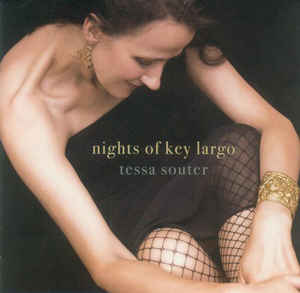
Utterly Enjoyable: Tessa Souter's "Night of Key Largo"

Tessa Souter Nights of Key Largo Venus 


I was recently sent a copy of Nights of Key Largo, an album from the vocalist Tessa Souter. The album was originally released on the Venus label in Japan in 2008 and was re-released here in the United States this year.

Ms. Souter is a London born singer who took to singing late after a successful career as a copy editor, a freelance journalist and a mother. She moved to the US in 1992 and attended the Manhattan School of Music meeting and later being mentored by the late great Mark Murphy for four years. She has also studied with the NEA master vocalist Sheila Jordan.

Ms. Souter’s work is marked by one of the most natural voices in jazz today. Her delivery is clean, honest and emotionally sincere. She has what musicians call great ears and a superb taste when choosing material to cover. She often finds inspiration in re-imagining songs that do not fall into the repertoire that is generally associated with jazz. Some splendid examples of this woman’s musical creativity include her flamenco-fused version of Cream’s “White Room” and her treatment of the Beatles classic “Eleanor Rigby” both from here 2009 album titled Obsession. She extended her musical boundaries venturing into a successful fusion of jazz, pop and classical on her fine 2012 album Beyond the Blue, putting her own lyrics to jazz versions of Beethoven, Rodrigo and Chopin. 

On Nights of Key Largo, Ms.  Souter, along with producers Tetsuo Hara and Todd Barkan, assembled an intuitive group of musicians to accompany her on this outing. The inimitable Kenny Werner on piano and I assume arrangements, bassist extraordinaire Jay Leonhart, guitarist Romaro Lubambo, saxophonist Joel Frahm and drummer Billy Drummond all add significantly to the overall success of this effort.

Souter again finds some hidden gems that other singers seem to miss. There is something for everyone who loves great music on this album. Notable compositions  include Ivan Lins romantic “The Island,” where Ms. Souter’s breezy vocal and Frahm’s mellow tenor wrap you in a sensuous blanket.

Van Morrison’s folk/jazz/blues classic “Moon Dance,” is given to a jaunty treatment featuring Leonhart’s buoyant bass. 

Lubambo’s lush guitar chording is the perfect complement to Souter’s liquid vocal on “So Many Stars.” 

Werner’s beautiful piano accompaniment on Bachrach’s “Look of Love” is just transcendent and Souter knows how to make the most of it with her unadorned approach. 

On the cinematic John Barry theme to James Bond “You Only Live Twice,” Souter’s voice floats over Lubambo’s gentle guitar picking.

The oft neglected Benny Carter composition “Key Largo” features Ms. Souter’s voice at it’s most sultry.  This is adult contemporary at its best. Werner is superlative and Leonhart and Drummond keep the walking time impeccably.

Lubambo’s delicate guitar and Drummond’s shimmering cymbals introduce the Mancini classic “Slow Hot Wind” before Souter comes in with her telling reading of the evocative lyrics, as Frahm offers a sensitive tenor solo.  

The album continues with the lovely “Moon and Sand,” “I’m Glad There is You” -with an exceptionally  swinging solo by Frahm- “All or Nothing at All”, “Morning of the Carnival” -with some beautiful arco work by Leonhart- and ending with John Lennon’s wistful and hopeful “Imagine.”

I've listened to this album several times now and it is utterly enjoyable. If her previous work hasn’t convinced you to pay attention to this fine vocalist than the re-release of this hidden gem Nights of Key Largo should be all you need to sit down, listen and enjoy the compelling sound of Tessa Souter.


Tuesday, April 3, 2018

The Many Facets of Bassist Martin Wind on his latest: " Light Blue"


Martin Wind Light Blue  Laika Records
Martin Wind is a classically trained bassist with impeccable tone and a polished arco technique. Consequently he has become an  in-demand sideman and sought after musical collaborator. His credits include his duo work with  guitar great Philip Catherine and current collaborations with fellow German and long time friend, guitarist Ulf Meyer. He is a member of the trios of vocalists Dena DeRosa and Anne Hampton Callaway; a member of the trios of pianists Bill Cunliffe, Ted Rosenthal, and Bill Mays  and a member of drummer Matt Wilson’s Arts and  Crafts Group. Wind has been a first-call session musician whose work can be heard on several films and if that wasn't enough he is educator on the faculty of both NYU and Hofstra Universities.

With all that work as a sideman, educator and collaborator, its hard to imagine him finding the time to both compose and lead his own group, but that’s exactly what this industrious bassist has done. His last album was an ambitious undertaking that re-imagined the work of Bill Evans. Titled Bring Out the Stars, the album featured Wind’s own quartet in concert with the Orchestra Filarmonica Marchigiana and was a joyous feast of sound.

On Wind’s latest release LightBlue, the bassist is joined by a stellar cast musicians including the clarinetist Anat Cohen, the multi-reed artist Scott Robinson, the trumpeter Ingrid Jensen,  the pianists Bill Cunliffe and Gary Versace, the vocalist Maucha Adnet and the drummers Matt Wilson and Duduka Fonseca. 

LightBlue is a revealing look into the versatility of this accomplished bassist and in the compositional inventiveness department it is anything but light. We are treated to ten original Wind compositions that show just how far he has come since his days of  studying composition and performance with such luminaries as Mike Richmond, Jim McNeely, Kenny Werner and Mike Holober.

The record is divided into two groups, the first half of the album, the more adventurous and daring of the two, utilizes keyboard artist Gary Versace, trumpeter Ingrid Jensen, Scott Robinson on tenor, alto, taragota (A Hungarian instrument similar to a soprano saxophone but made of wood)  and bass saxophones, and drummer Matt Wilson, with clarinetist Cohen playing on just one cut. The second half of the album features Wind's more  Brazilian influenced, lyrical side. This lineup included clarinetist Cohen, Robinson on tenor, alto, bass saxophone and clarinet, pianist Bill Cunliffe, drummer Duduka Fonseca and the vocalist Maucha Adnet. Each side has its own distinct merits. 

The range of diversity in these compositions is quite impressive. Whether it be the opening bars of “While I’m Still Here,” with Versace’s wonderful cinematic sounding organ, or the raucous but jubilant “Power Chords,” with Wind’s rumbling bowing and Robinson’s bellowing bass saxophone solo creating a driving, almost metal-inspired sound, there is something here for almost anyone.

On his composition  “Rose,” the delightfully evocative taragota work of Scott Robinson is otherworldly and when played together with Jensen’s clarion trumpet, the group attains an admirable symbiosis.  Wind’s booming bass keeps the metronomic time whilevVersace dances intuitively between piano and organ. The music just cries out to be listened to, absorbed and enjoyed.

“Ten Minute Song” is a jaunty swinger that features the versatile Robinson’s wonderful bass saxophone work over Wilson’s shuffling brush strokes and Wind’s walking bass lines. A jabbing piano solo by Versace leads to a wispy Jensen trumpet solo and a reply by Cohen’s buoyant clarinet. Wilson offers his own playful solo before the group returns to a unified conclusion.

The often cold and dreary month “February” is represented here by a brooding ballad. Trumpeter Ingrid Jensen makes the most of the mood with a moving solo. Wind’s pizzicato intonation is remarkably precise and projects beautifully on his emotional solo. Versace’s tinkling piano musings  at the coda adds to the perfect ending.

Side two transitions into a more lyrical theme with the folk-inspired, “Genius and A Saint." Here the music features some of the best woodwind interplay I’ve heard in ages. The ubiquitous Cohen is a marvel on her instrument, but Robinson is an underappreciated master of the clarinet and he finds his harmonic groove in a graceful exchange with Cohen that can only be described as pure magic.

Brazilian vocalist Maucha Adnet lends her bossa authenticity to sing Wind’s breezy “Seven Steps to Rio.” Robinson creates a marvelous Getz-ian tenor sound clearly in the spirit of the master’s work with Jobim before putting his own spin on his solo. Cohen’s clarinet rises to new heights as Fonseca’s animated drums add some percussive accents to this catchy tune.

“A Sad Story” finds Wind’s emotive arco-playing merging with Cohens’s soulful clarinet opening this aching lament. Adnet’s voice is charged with the sorrow and regret that the lyrics portray.

“De Norte A Sul” (From North to South) finds Wind and Fonseca laying down a samba inspired beat and features darting solos by Cohen, a soulful vocal by Adnet and an inspired solo by pianist Bill Cunliffe.

Wind rediscovered this closing melody, “Longing,” while researching material for this album. Cohen’s signature woody sound floats over the changes in graceful communion with the backing rhythm. Wind’s bass is again featured on a pizzicato solo that is accompanied by Fonseca’s ever so light touch on his cymbal and by Cunliffe’s thoughtful chording. Adnet’s vocal stylings are splendid.


Friday, March 30, 2018

Renee Rosnes "Beloved of the Sky"


Renee Rosnes Beloved of the Sky Smoke SSR-1801


The stark cover art on pianist Renee (pronounced Ree Nee) Rosnes latest album Beloved of the Sky features a tall, spindly, yet singularly defiant pine standing in a field of stumps; remnants of its clear-cut brethren. The painting is titled Scorned as Timber, Beloved of the Sky and was painted by Northwest Canadian artist named Emily Carr back in 1935 when the artist was sixty-five years old; some say at the peak of her creative powers.

The painting was the source of inspiration for another Pacific Northwest born and raised Canadian, the pianist Renee Rosnes, who at fifty-six is showing signs of entering her own peak of creative powers as an impressive instrumentalist, a formidable composer and a leader in her own right. She is joined by a powerhouse group of like-minded innovators including scarily talented multi-reed artist Chris Potter, the sublime vibraphonist Steve Nelson, stalwart bassist Peter Washington and driving drummer Lenny White.

I first heard Rosnes on a great JJ Johnson album titled Heroes from 1998 where her playing just blew me away. I’ve been a fan ever since. In a year where we  are finally celebrating the talented women in jazz, Rosnes is a clear leading lady in this genre.

Renee Rosnes (Photo credit unknown)
If you have any doubt about the creative forces bubbling out of this woman just listen to the driving opener titled “Elephant Dust,” a reference to an allergic reaction to petting a circus elephant.  The music is a supercharged composition that is utterly original, pinning you to your seat from the very start. Many songs have a powerful drive, but few challenge conventions so effectively with the marvelous use of fractured, staccato changes that Rosnes employs and which the group navigates with graceful aplomb. The irrepressible Potter’s frenetic lead tenor intertwining brilliantly with Rosnes piano and Nelson’s buoyant vibes as Washington and White lay down a roiling rumble. Rosnes can play with the best of them, her splendid solo just a sample of this woman’s chops. This song is a joy and one can just imagine how much fun the musicians had laying this breathless track down.

“Scorned as Timber, Beloved of the Sky” is the most representative composition of Rosnes thoughtful rumination on the subject matter of Carr’s cover painting. Potter’s lilting soprano rises above Rosnes' resonating piano lines like the lone pine that stands in lonely defiance of its blighted surroundings. There is a somber grace here that has elements of classical music somehow woven with nativist underpinnings. Washington’s bass often providing a booming backdrop in concert with Rosnes piano.  When the pianist offers a brief solo it is a gorgeous interlude that bespeaks of the great natural beauty that is being so recklessly dismissed in the name of progress. Potters soprano solo soars on gossamer wings and Nelson’s tubular sound is reverential. An aural feast.

The album is filled with interesting music, often thematically connected by a sense of flow. “Mirror Image” was originally commissioned for the SF Jazz Collective of which Rosnes is a charter member. The song was composed as a feature for legendary vibraphonist Bobby Hutcherson and here features Steve Nelson and Chris Potter. Rosnes graceful composition is a series of shimmering reflections that ascend and descend with a fluidity that create the underpinning for the soloists to expand upon. Potter is particularly expansive on his tenor.

While recording this album, Rosnes must have been channeling the late Bobby Hutcherson, who she played with for more than twenty years. She takes a particularly reflective solo on the vibraphonist's delightful composition “Rosie.” Potter never seems to be short on ideas and once again his biting tenor steals the show, while Nelson’s reserved ringing tubes offer a warm counterpoint.

On Rosnes jet-fueled “Black Holes” we are treated to the rhythmic stylings of this powerful pianist. Drummer White is particularly potent here, but it is the dazzling interplay between Rosnes and Potter that is the highlight. Washington lays down some powerful bottom and White is propulsive while Rosnes ostinato prods an energetic exchange with Potter’s hair-raising tenor, bringing the music to new heights and a powerful coda.

The contemplative Rosnes composition “The Flame and the Lotus”  features the melody line played in unison by Potter’s tenor and Nelson’s vibes, as White plays his toms in a cadenced march. After a brief Nelson solo, Rosnes takes a solo that gives us a taste of her bluesy side. Potter gives another rousing solo before the group returns back to the original melody line.

“Rhythm of the River” is another Rosnes composition that has a distinctive samba pulse. The group sounding to me like early Return to Forever and Potter’s flute sounding eerily like the great Joe Farrell’s at times. 

Alec Wilder’s “The Winter of My Discontent” is a ballad that Rosnes plays with great sensitivity. The pianist first heard this brooding melody as a teenager sung by the vocalist Helen Merrill and accompanied by the pianist Dick Katz.  Potter takes a gorgeously plaintive solo and Peter Washington’s bass gets to the core of the emotional poignancy of this song with a masterful pizzicato solo.

The closer is a pure swinger, "Let the Rumpus Start," whose pulse is given its swagger by this fabulous rhythm section of Washington and White. Rosnes is remarkably adept at fitting in some bubbling lines on her piano while the crew percolate behind her. Potter is no stranger to letting loose in front of a swinging section and Washington’s facile bass is given a chance to strut his stuff. The song ends with White taking turns at different rhythmic variations.

Renee Rosnes’ Belovedof the Sky, which will be released on Smoke Records on April 6th,  is simply a superlative session that stimulates the senses on so many levels and provokes serious and rewarding listening for those willing to take the time.