Showing posts with label JAck Wilkins. Show all posts

Monday, May 8, 2023

A look back at the Great Guitarist Jack Wilkins RIP June 4, 1944 -May 5, 2023

Jack Wilkins (photo courtesy of Jack Wilkins)


Jack Rivers Lewis, better known to the music world as guitarist Jack Wilkins, passed away this past Friday, May 5, 2023, in New York City. Wilkins was seventy-eight years of age. Details and planned services as of this date are not yet made public.

Jack Wilkins June 2015 

I had the privilege of interviewing this superb guitarist just shy of his seventieth birthday in June of 2014. The experience of speaking with Jack was one that I came to cherish. The three-part interview was a fascinating look into Jack's life as one of the premier jazz guitarists of the last fifty years. He was a brilliant artist on the guitar,  a dedicated, generous educator, and a genuinely humorous, thoughtful human being, who I learned had a soft spot for Sci-Fi movies.  You can read this three-part interview herehere, and here.

A year later, when I was frantically looking for a jazz trio that would be able to play at my wedding in Westchester, and importantly to do right by my jazz sensibilities, it was Jack who came to my rescue. He was gracious, professional, and a huge hit to all the attendees. The trio thoroughly amazed the crowd with the tasteful music of  three allstar jazz players Jack on guitar, bassist Andy McKee and drummer Mike Clark. Who could ask for anything more? 


Jack Wilkins Trio with Mike Clark (drums) and Andy McKee (bass) June 2015

Upon learning of his passing from a surprise and deeply sad post that I read from his long-time friend Mike Clark, I made a point to relisten to some of Jack's great music and to re-read the interview we did together from 2014. 

I recalled Jack's amazing speed and remember him telling me how guitarist Al DiMeola, no stranger to being blazingly fast on the fretboard himself, once told him admiringly how "Wow, man I never heard anybody play as fast as you!"  Peers always knew and respected Jack's excellence.

Though he briefly entered into the fusion side of things with his guitar in the seventies, he confidently quipped  "People don't know that, but I can play the tar out of fusion guitar.", he preferred the undistorted sonic purity of the traditional electric jazz semi-hollow guitar sound that he so expertly mastered throughout his career. Besides his quick, flowing single-note lines, his chordal work was exceptional.

As an educator, who has worked as an adjunct at the Manhattan School of Music and the New School. In his own humble honesty about the challenges of teaching jazz to his students, he said 

"It's difficult to try and teach 'jazz.' It's an expression, it's a feeling, it's something that really can't be taught..but you can teach the language."  

He took his calling as an educator and as an elder passing on the art of jazz guitar seriously, telling me

"When I can hear somebody starting to play better because of my helping them, I am very grateful...I want to help them because they so want to learn."

He was a musical history buff of sorts and spoke of his early influences -Charlie Christian, Django Reinhardt, and Johnny Smith. He admired his contemporaries like Tal Farlow, Jimmy Rainey,

Atilla Zoller, Jack Wilkins, and Jimmy Rainey (photo courtesy of Jack Wilkins)

Chuck Wayne, and trailblazers Billy Bean and Joe Pass. He astutely named blues master Lonnie Johnson as one of the true original innovators on the guitar. Speaking with Jack about the history of the jazz guitar was like getting an education from a true sage.

After his classic 1973 debut album Windows,  Jack landed a gig with drummer great Buddy Rich. The gig was five or six days a week for thirty-five to forty weeks a year for over two and a half years with Rich starting in 1974.  Despite the grueling schedule he never found it repetitive or unrewarding. He credited Rich with being more of an amazing drummer in person than even the legend that was built around him. Wilkins cherished his time with the turbulent drummer and rated his stay with him as an immeasurable learning experience of a lifetime.

Jack Wilkins with Buddy Rich and Sal Nistico: (photo courtesy of  Jack Wilkins)

Wilkins often accompanied vocalists and enjoyed working with the likes of Morgana King, Jay Clayton, and Sarah Vaughan to name a few. Jack worked effectively in all musical groups-big bands, trios, duets, and as a solo artist. 

Though Wilkins never chased the spotlight that many musicians with lesser abilities did, he was never jealous or resentful. He just played, played well and his reward was the knowledge that his musicianship was always appreciated by his colleagues and his fans. 

On his seventieth birthday celebration, held at the Jazz Standard in NYC, he was honored by some of his most esteemed colleagues, a who's who of jazz guitarists - John Abercrombie, Vic Juris, Larry Coryell, Howard Roberts, Joe Diorio, and Jack. Their mutual respect for him speaks volumes.

Abercrombie, Juris, Coryell, Roberts, Diorio, and Wilkins 1974 70th Birthday bash at Jazz Standard (photo courtesy of Jack Wilkins)


Listening to the feelings and expressions that are present in much of Jack's music, he always conveys a sense of artistry, commitment, excellence, and authenticity. For me, at this time of loss, his music evokes a sense of joy and condolence. 

Re-reading his words from the interview from 2014 reinforces Jack's humor, his humanity, and his generous thoughtfulness. 

Jack was not fond of listening to his own recorded music. "Music is like a portrait, you play something that you are feeling at one time in your life, and then you put it on wax, and it's recorded and it's there forever. It's really introspective when you listen to your own music. That's why I am not keen on listening to my own music."

Fortunately for the rest of us, we can all be grateful to have his recordings to listen to and cherish.

I am forever grateful for knowing him both as a brilliant musician- and although we were not close- I consider him a friend. Jack Wilkins will be sorely missed by those whose lives he touched with his musical excellence and his sincere and humorous humanity. RIP Jack. 

Here are two from Jack.


Friday, September 4, 2015

The Spirit of Shirley Horn: The Jack Wilkins Trio featuring Alexis Cole at the SCA Jazz Alley September 18, 2015


On Friday September 18, 2015 the Stamford Center for the Arts, will launch the first of its new jazz series at its Jazz Alley venue. The Jazz Alley is located on the second floor level of the Palace Theater; an intimate cabaret- setting .

Ms. Shirley Valerie Horn was a jazz pianist and vocalist, often compared to great jazz vocalists like Sarah Vaughan and Ella Fitzgerald. Although she never reached their popularity with the general public she was praised for her accomplished piano playing, her sensuous ballads and the deliberate phrasing of her vocals. Ms. Horn’s work was so admired by the great Miles Davis that he famously insisted she open for him at Max  Gordon’s Village Gate , refusing to play if Gordon didn’t acquiesce to his demand.  Davis saw in Horn a musician of similar sensibilities, who cherished  the space between sounds allowing songs to linger and breathe. She was a master of the slow burn. She once said of her singing  “ I want you to feel what I feel… I want you to be beside me. Be inside me. That’s the way I feel.”

 She was a principled person who balanced home life with her professional life refusing to tour far from her hometown of Washington, D.C. in favor of raising her daughter Rainy. These choices probably had an effect on her commercial success. But ultimately, Mr. Davis wasn’t the only one to realize Ms. Horn’s talent. Fittingly,. after being nominated nine times for a Grammy Awards, she won the Grammy 1998 for Best Jazz Vocal Performance for her  work on I Remember Miles, a tribute to her late friend and mentor.  She also received the NEA Jazz Masters Award, the highest honor the United States bestows upon jazz musicians, in 2005.

Ms. Horn passed at the age of seventy-one in October of 2005, but her music lives on in recordings and in the spirit she infused into every singer that has been influenced by her penetrating style.

Vocalist Alexis Cole has her own story to tell. After studying music at Miami University, William Patterson College, Queens College and a stint studying classical Indian Music at the Jazz Vocal Institute in Mumbai, Ms. Cole decided to join the Army.  There she auditioned and won the jazz vocalist position at the head of the West Point Jazz Knights band.  A finalist in the prestigious Sarah Vaughan vocal competition in 2012, she has recorded ten albums with some of contemporary jazz’s most celebrated instrumentalists. Her latest album is collaboration between her and eighty-nine year old guitarist extraordinaire Bucky Pizzarelli titled A Beautiful Friendship.  Well known Radio Host Jonathan Schwartz has said of Cole, she has “one of the great voices of today.” Stephen Holden of the New York Times called Ms Cole’s singing “exquisite.”

Ms. Cole has often patterned some of her vocal stylings after Ms. Horn and so felt  it would be fitting  to do a show using some of Ms. Horn’s material for this very special tribute.

Accompanying Ms. Cole is the virtuoso guitarist Jack Wilkins. In addition to being known as a master technician with blazing speed on the guitar, Mr. Wilkins has a long and storied history  playing behind world class jazz vocalists when he was with the great drummer Buddy Rich’s orchestra  Mr. Wilkins has played with Sarah Vaughan, Mel Tormḗ, Tony Bennett, Chris Connor and Morgana King to name just a few.  Forever  an admired  contemporary player, Wilkin’s version of Freddie Hubbard’s Classic   “Red Clay”  from his album “Windows” continues to fascinate modern listeners.

The rhythm section is comprised of two accomplished veterans. Bassist Andy McKee likes to say he went to the Elvin Jones School of music having played with John Coltrane’s  legendary drummer  for several years.  Drummer Mike Clark is a man who needs no introduction in the world of jazz and funk. Mr. Clark has played with legends like Chet Baker and Herbie Hancock and is probably one of the most sampled drummers by hip hop artists today.

Ms Cole ,Mr. Wilkins and company should make this opening evening at the Jazz Alley a night to remember.


 https://palacestamford.org/events/events-at-the-palace-stamford/event-details/1164-jazz-alley-alexis-cole-details

Saturday, November 8, 2014

A River Runs Through the Manhattan School of Music's Borden Auditorium


The MSM Jazz Philharmonic and Conductor Justin DiCioccio

On Friday November 7, 2014, the Manhattan School of Music School’s  Jazz Philharmonic Orchestra, under the able direction of maestro Justin DiCioccio, produced  a river of sound that washed through the school’s Borden auditorium to a packed house of music lovers.

The occasion was the  World premiere of University of South Florida’s distinguished professor Chuck Owen’s  masterful suite River Runs in its
entirety. The 2013 recording was among the nominees for the 2014 Grammy Awards in the categories of Best Instrumental Composition for Bound Away,and Best Instrumental Arrangement for Side Hikes: A Ridge Away. Both compositions are part  five-movement concerto, combining a full symphony orchestra with a jazz ensemble and jazz soloists on violin, guitar and saxophone. The soloists were the tenor saxophone firebrand Donny McCaslin, the sensitive violinist Sara Caswell and the masterful guitarist Jack Wilkins.

The music is an exhilarating compositional tour de force, combining the multiple musical voices, colors and timbres that a full orchestra can command with the individual jazz expressions of the featured solo instruments of electric guitar, tenor saxophone and violin.

On this night maestro DiCioccio was exuberant in his direction of the music, as his orchestra produced brilliant tones and waves of sound that swept over the audience in the music’s ebbs and flow. The music was conceived by Mr. Owen as a representation of multiple adventure trips he has taken canoeing and rafting down various rivers in this country. Each movement is a musical depiction of various aspects of these trips. 

The opening composition “Prologue: Dawn’s at River’s Edge” is an impressionistic  piece, all about the anticipation of waking up to nature in the early morning ready to embark on another challenging journey down the mysterious waters that lie ahead.

The Grammy nominated “Movement I: Bound Away” is a musical recollection of the shimmering light reflected off the rippling pools of the Greenbrier and New Rivers of West Virginia. The trip meanders through a gorge where the thunderous sound of the approaching rapids is the clarion call that Owens' music recreates.

“Movement II :Dark Waters , Slow Waters” is a representation of Owen's time on the Hillsborough River in Florida, A river edged with drooping cypress and lined with murky pools of ominous swampy waters. The music becomes much more tranquil as you go on a more languishing journey through the humid, moss covered banks of the Everglades. There is a sense of foreboding in this piece, an ominous feel of not really knowing what to expect around the next bend of the route.

“Movement III : Chutes and Wave Trains” is a depiction of Owen's time on the Chatooga River as he makes his way down through Georgia and South Carolina. The music compresses and swells at times, similar to the way the water is compressed when funneled through a restrictive chute carved out of the architecture of the river banks; building up pressure and speed, only to be released on the other side of the obstruction, into the opening calm.

“Movement IV: Side Hikes- A Ridge Away” This Grammy nominated composition is inspired from Owen's trips to the Green River in Utah and the Colorado River in Colorado,  and was also adapted from the CD Ridgelines, a recording made by the saxophonist Jack Wilkins ( no relation to the guest guitarist) who was the featured saxophonist on the original recording. The unifying factor in both pieces is the concept of reaching a nearby ridge for an overview of your surroundings. Finally reaching the ridge you see many other ridges in your horizon, many never to be experienced, always just a “Ridge Away” from your reach. The composition appropriately creates a wistful  sense of longing for the next great adventure.

“Movement V: Perhaps the Better Claim: The River  of No Return” With a line borrowed from Robert Frost’s haunting poem “A Road Not Taken”, Owen's chooses this title for a musical trip down Idaho’s Salmon River, a river known for its fierce rapids, its deep canyon, its treacherous terrain and its stunning scenery. The musical depiction sent the occupants of this auditorium-on-pontoons into a swirling and satisfying conclusion.

The music was masterfully played by the MSM’s Jazz Philharmonic, who conquered the suite's demanding musical nuances, creating the atmosphere that so brilliantly depicts the natural musical sounds of the river rafting experience.

The soloists were in top form. Ms. Caswell was particularly poignant when her violin was featured as a soloist and at times in counterpoint to her two fellow soloists. Saxophonist McCaslin is a firebrand of a player. He always brings a sense of energy and excitement to his work. He was particularly effective producing a "waves of sound” deluge that flowed from his horn much like the rapids of Owen's compositions. Guitarist Jack Wilkins was playing a Fender Telecaster through an amp and the sound was unfortunately somewhat muted from where I sat. Wilkins is one of those players whose technique is precise and immaculately clean; a consummate player whose melodic solos, (the ones I was I was able to hear clearly), were fluid, fleet and precise. His interplay with McCaslin was particularly noteworthy as the two fed off of each other brilliantly. 

Mr. Owen was in the audience for this performance and in speaking to him briefly afterwards he was obviously gratified to see his music performed so admirably.


To be able to imitate the sounds of nature; to be able to magically reproduce the rapturous feeling one can get from communing in the woods on such an endeavor as white river rafting or hiking is an extraordinary achievement.  I related to this album when I first reviewed it back in July of 2013 ( click here for a link to that review.) Now having seen it performed live by the MSM Jazz Philharmonic it only reinforces my original convictions. If you get a chance to see this work performed live and you enjoy commuting with nature you will not be disappointed with this brilliant piece of music.

Friday, July 25, 2014

Part Three of My Interview with Guitarist Jack Wilkins

Jack Wilkins, Billy Drummond, Harvie S and Sonny Fortune
photo courtesy of Jack Wilkins
The New York City based guitarist Jack Wilkins recently celebrated his seventieth birthday with a jam session at he Jazz Standard on July 1, 2014. In attendance, honoring the master musician, were his contemporaries Larry Coryell, Joe Diorio  Howard Alden, Vic Juris, Gene Bertoncini, Jimmy Bruno and John Abercrombie. By all accounts it was a wonderful evening of guitar wizardry and camaraderie. Wilkins was gracious enough to spend time with me on an extensive phone interview that spanned the gamut of music, history, musicians, education and anything else we could talk about. The experience both enlightening and thoroughly entertaining for me and I hope for my readers. This is the third and final part of that interview the other two parts can be found by linking to Part 1 here and Part 2 here. If this doesn't pique your interest and make you want to go out and see this fine musician perform than nothing will.  In this part we discuss playing with singers, music education, the state of the music business and recordings, his take on listening to himself on records and his obsession with fifties era Sci-Fi movies.

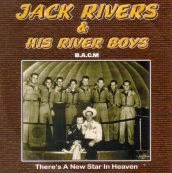
We discussed Jack's biological father, who he didn't originally know and who was himself a fairly famous guitar player, in the last part of this interview. Jack thought  a picture of his dad and one of his album covers from The River Boys might give a little insight into his innate  musical heritage.

Jack Rivers Lewis
photo courtesy of Jack Wilkins


Continuing our conversation:

NOJ: You have played with some great singers over the last forty years including Mel Torme, Sarah Vaughn, Chris Connor, Tony Bennett etc. How does playing for a singer differ from playing with a group?

JW: It’s not that different. With a singer there is more conscious dynamics and I think there are more conscious tempos too. Singer’s always want a tempo that they want. You can’t play All the Things You Are for example fast or slow or any tune for that matter, with a singer it has got to be in their tempo. I like playing with singers, when they are good of course.  One of the singers that I really enjoyed playing for was Morgana King. She was great. I loved her singing. Jay Clayton, Nancy Moreno, wow Sarah was wonderful;. I liked them all. They all had something special.
Sarah Vaughn
One guy that I wished I had played for was Nat King Cole. I played for his brother though, Freddy Cole.

NOJ: I did an interview with Freddy last year. He was great.

JW: Ah what a nice cat and I loved the way he sang. Very funny.

NOJ: He is very smooth. You know he never makes a set list before a show. Poor Randy Napoleon, his musical director has to be prepared for whatever he decides to play on the spot! He has an incredible memory of all these tunes even at his age. I think he is now eighty two.

JW: Yeah I know I played with him. That’s what he did, fortunately I knew the tunes. ( Laughter) He is terrific.

NOJ: Your teaching gigs include Manhattan School of Music, Long Island University, the New School and NYU?

JW: Well I’m an adjunct to all of them. Manhattan was my main school. There are not that many students at this point. I have plenty of private students, sometimes more than I need. I can handle what I have so it is not a burden. I like to teach.


NOJ: So what is it about teaching that you find most satisfying?

JW: When I can hear somebody starting to play better because of my helping them, I am very gratified about that. I am honored that they got something from my teaching. I am very pleased about that, very pleased. I want to help them because they so want to learn. Most of these students want to learn that it gives me great pleasure to help them.  They all usually have great attitudes and if they don’t I won’t take them a second time. They respect what I do and they ask me all the right questions and I am pretty honest.  I don’t hold anything back. That would not be helpful, if I said, that’s great see you next week.
They want the truth so I say your ‘comping is lousy, your single line is a little sporadic, you’re not playing on the right changes, your tone is shrill and your too loud. (Laughter) Your doing just fine.

NOJ: So go home now. (Laughter)

JW:  Sometimes I’d like to say that (Laughter) but seriously. With somebody so needy and so wanting to learn you’re not going to hurt their feelings. You like them and you want to help them.

NOJ:  And you don’t want to dampen their enthusiasm either, right?

JW: No. That is a very fine line.

NOJ: You have spoken in the past as to having learned very early on to play within the music, within the group as opposed to showcasing yourself on the bandstand. With the students you see coming up, is there an emphasis today on chops more than musicality?

JW: Oh, totally, absolutely.  It is sort of disturbing. It does not sit well with me. They are not concerned about the music, they are not concerned about playing the right changes, they’re not concerned about sound, and they are just concerned about their chops. It’s preposterous! Who cares! There is always somebody who can play faster. It is not about the speed, it’s about playing with the music.

Speed is fine if it is organic. A lot times they practice these runs at home and they get on the bandstand and they play exactly the same thing. You can’t do that when you’re playing with a bass player and a drummer that are in the moment. You have to be in the moment when you play music. It’ll happen if you have a good band and they are all playing together, but I had that experience too.  I was a kid, Mr. Hot Shot there, we have all done this. You get up there and you wail away and feel how fast and wonderful you are and then the next thing you know you’re there alone!  That has happened to me, it was an incredible experience. The whole band stopped playing after a while, and I said why did you stop playing?  They said “Oh we were listening to you.” A bell went off in my head.  I wasn’t listening to them is what they were saying.

NOJ: You have several albums out. The latest one is Until It’s Time from 2008.  Is that the last one or do you have a newer one out?

Jack Wilkins :Until It's Time
 Sample Jack's Music here

JW: I have a new one coming out. It is not out yet. I recorded it in Paris and I like it a lot, which is difficult for me to say, because usually I don’t like anything I record. It’s true I don’t. I can’t listen to anything I record, I just hate it.

NOJ: Really, you are that critical of yourself?

JW: Not critical, it’s not that it isn’t good or okay or whatever, it brings back too many memories of what  I was feeling or going through at the time in my life. What happens is it brings all the angst to the surface, again. That was a moment in time. Music is like a portrait, you play something that you are feeling at one time in your life, and then you put it on wax and it’s recorded and it’s there forever. As soon as you hear again, maybe ten years later and you go right back to that spot that you were in. You start reliving the past , you know I didn’t like this or that was great but that part is gone, or whatever.  You know it is a real introspective when you listen to your own music. That is why I am not keen on listening to my own music.

NOJ:  Tell me about the new recording.

JW: Yeah, it was done in Paris. I have a trio, bass and drums and we do a bunch of trio things plus we have a featured vibes player and a harmonica player who is wonderful. I don’t have all the information  but it is done. It is just being ordered and mastered and it should be ready in a few weeks. I’ll send you one when it is done.

NOJ: That would be great. You are now seventy and  have been playing professionally for over forty years. What advise do you have for aspiring musicians?

JW: That is a question that I am asked quite a lot. The answer is to learn the fundamentals. Be on time if you have a gig, don’t be an asshole.( Laughter) Learn as many tunes as you can, learn how to read. Develop your ears so you can play a tune that you don’t  know.  Be cooperative, don’t be nasty. If you don’t like something just don’t do it, don’t do it with an attitude.  All you can do is hone your professional skills, but  therein lies the problem. These kids don’t have a place to play anymore. There are not a lot of venues. I was having some sessions here at my place for my students but it turned out to be too much. There are places, Small’s has a jam session, Cleopatra’s Needle, the Zinc Bar has a session a couple of places in Brooklyn.

NOJ: You Used to have a residency up on the Upper West Side at an Italian joint called Bella Luna, but they don’t do that anymore, right?
Jack Wilkins, Ron Jackson and Tom Dempsey at Bella Luna
JW: No. We had a great run there seven or eight years.

NOJ:  You had a lot of great duos there.

JW: Oh the best. Bucky (Pizzarelli), Howard (Alden), Freddie Bryant, Ron Jackson, Paul Meyers, Carl Barry  the list goes on and on and on. It was fun that place. Then they moved and the new place didn’t last that long. There are places to play, but there are not as many as there used to be, and they not as warm and cozy as they used to be.

NOJ:  It must be humbling to have had all the players that you had at your birthday bash show up and want to honor you for your seventieth birthday celebration at the Jazz Standard? ( The Jam Session Celebration was held to a pack house on July 1, 2014.)

JW: Oh of course, I am beyond flattered.
Guitarist Jack Wilkins 70th Birthday Bash at the Jazz Standard w friends
John Abercrombie, VIc Juris, Larry Coryell, Joe Diorio, Howard Alden and Jack 
NOJ: One of the players that will be there for your celebration is John Abercrombie. I am a big fan of John and his music. His is one of my favorite players.


JW:  Me too, I love John. A wonderful player and a wonderful cat too. One of my favorite records he ever made was a record called Direct Flight.  It was with Peter Donald and George Mraz just a trio date while he was recording for ECM. People don’t realize how straight ahead when he wants to.

NOJ: When musicians are in sync it is an incredible experience and wonderful to behold.
You don’t always see that in performance. You said once in another interview that you are very big on listening and I can understand why, because if you don’t have the ears to listen to what the other players are playing, where they are taking it, then how can you tell where the music can possibly go?

JW: That is essential. That is almost elementary "1A" Be in tune. Listening is to me the most important aspect of playing. John \(Abercrombie) told me a long time ago, John in his inimitable way said “Yeah, listening is my meat and potatoes.” (Laughing loudly).  Couldn’t be more truthfully said.

NOJ:  What do you lies in the future for jazz guitar? 

JW: I think the economy is going to dictate where it goes. Things can become obsolete if no body wants to buy it. That holds true with just about everything. CDs are pretty much obsolete aren’t they?

NOJ: Well I like to get a lot of  hard copy of what I review. I like the packaging; reading about the artists;. how the music was made. Who wrote the tunes etc.
JW: A lot of the kids today they just download it.

NOJ: Yeah they just download the music, but how connected can you be to a digital download?

John Coltrane and Miles Davis

JW: Well, I have an interesting way of thinking about that. A few years ago I asked my students what they were listening to. They would tell me I’m listening to Coltrane, Miles Davis. I said wow, what phase of Coltrane do you listen to?  Because he has had a lot of phases,  you know and no of them are the same.  So they say to me “I don’t know I have this compilation that I listen to. “OK, so what are some of the tunes on that. “ Well they would tell me “ I don’t know.” That surprised me. I said “You mean you listen to Coltrane and you don’t know the name of the tune, you don’t know who is in the band?”  “Nah I just downloaded it.” Now I don’t think that is really learning anything.  You may like it but you’re not ‘going to remember it. I don’t think so. Maybe I am wrong about that. I don’t even know. It’s such a complicated issue, downloading and all that wizardry that goes on. It is so far out for a lot of people in my age group. If you are in your twenties that is all you have, that is what you have grown up with.

Students tell me “ I can’t remember tunes. I play a tune three or four times and it doesn't stick with me.”
I tell them I am not surprised. You didn’t grow up with this music. I did. When I was a kid, my step father and mother used to play Billie Holiday, Frank Sinatra, Nat Cole  and I knew all these tunes.  All the great singers, I grew up with this music.

NOJ: If you never grew up with this music how can you possibly embrace it. It goes back to heredity and environment.  Environmental influences can be so powerful. If you grow up exposed to something you are more likely to have an easier time absorbing it and will most likely enjoy it.

JW: It’s true. Interestingly enough, students from Europe and Japan are way more versed in the ( Great American Songbook) tunes then American Students are.

NOJ: Isn’t that funny. I have a theory about that. The Japanese have been very big jazz fans for decades and you wonder what it is that drew them to this music. Maybe it was the GIs that were stationed there after WWII during the reconstruction, listening to that music that laid the groundwork for the Japanese people’s affinity for the music. The same could be said for the American GI’s stationed in Europe during the Marshall Plan.
GI's dancing to Big Band music with Japanese girls in Japan 1945
JW: That is a great thought. I don’t know about that but that is very possible. The music was big band  with vocalists and they were around then after the war. The music is still around today.

NOJ: Any new player that really impresses you these days.

JW: I can’t even say new but Adam Rodgers is quite remarkable. I think he is just a brilliant, Jonathan Kriesberg, Ben Monder. These guys are not even new are they?  Like I said before, if you can play this instrument at all in a good way, you get my vote right there, because I know how hard it is to play this thing.

You know there are a lot of guitar players that I mentioned, like Barney and Tal and Jimmy and the rest but I would be remiss if I didn’t include Chuck Wayne in the pantheon of the greatest guitar players to have ever played the guitar. The technique that Frank Gambale uses, Chuck Wayne did that in the forties, of course Frank is playing different stuff, but Chuck called it alternate consecutive picking. It is simple to fathom but different to execute.


NOJ: Who is your most influential teacher?

JW: John Mehegan, pianist, and my early guitar teachers Sid Margolis, Joe Monte and Rodrigo Riera, he was my classical guitar teacher. He was amazing. I could never get that right flavor or feel for it.

NOJ:  You live in Manhattan and I understand that you are a SciFi fan. What is your favorite SciFi movie of all time?

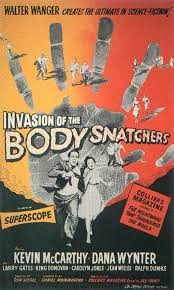
JW: How did you know that? I have several favorites. The Invasion of the Body Snatchers, Forbidden Planet, the first Time Machine, Them.  My girlfriend thinks I am nuts. It is very interesting that the way the world is going SciFi. In my apartment I have a big walk-in closet with maybe five hundred movies. They are copies.

The Original
 Invasion of the Body Snatchers
NOJ: What is your upcoming schedule for live performances after the July 1, 2014 Jazz Standard date?
JW: I am playing a duo with Carl Barry on July 26th at Grata Restaurant. On August 9th I am playing at the Bar Next Door and at the Kitano on  August 29th. Both gigs are with with Mike Clark on drums and Andy McKee on bass.

NOJ: I really appreciate  your time and I look forward to actually seeing you in person in the near future and hearing your new album.

You can hear link to Part 1 of this interview here and Part 2 of this interview here


Friday, July 18, 2014

Part Two of My Interview with Guitarist Jack Wilkins

Jack Wilkins
The guitarist Jack Wilkins has been on the musical scene, in and around New York for the past fifty years. He made his bones playing with the great drummer Buddy Rich. Despite growing up in the midst of the fusion era and dipping his toe in the electronic waters of fusion for a time, he never really dove too far astray from a mainstream approach to jazz guitar. He was always more interested in the sound of the guitar than in the electronic wizardry that fascinated so many of his contemporaries at the time. We spoke to Wilkins just prior to his July 1, 2014, seventieth birthday bash at the Jazz Standard, where many of his fellow guitarists came to honor and celebrate his career. Part two of this interview is a continuation of our lengthy conversation with Wilkins. You can link to Part One by clicking here.

In Part Two we discusses fusion, some of his admired contemporaries, his guitar playing father, whether musical traits are learned or inherited, his time with Rich and some of his experiences as a working musician.

NOJ: Jack, what happened ( to jazz guitar) after (Joe) Pass? You get into the contemporary guys, after Howard Roberts or so you get Pat (Metheny), you, John McLaughlin, John Scofield, John Abercrombie, Alan Holdsworth  where do all  these players fit into the musical tree of jazz guitar players in your mind?

JW: I think jazz guitar took a real division in the mid to late sixties. A lot of guitarists got into the fusion bag, which is great . You know I did a lot of that myself. People don’t know that but I can play the tar out of fusion guitar. (Laughter)

NOJ: I was going to ask you about that. It seems like you were with (Buddy) Rich while the whole fusion scene was exploding around you?

JW: No, I did a lot of that. I was in a lot of bands that had all this wild fusion stuff .... I did all that; it was beautiful, I loved it but it didn't last for me. I sort of stayed with contemporary jazz whereas a lot of guys didn't.  Pat Martino stayed contemporary too, but a lot of guys went into fusion or bossa nova.
I am not dismissing it, I want you to know that. It is just an observation, I see what people play and how they play and to me I am just observing it and ninety nine percent of the times I like it. Sometimes its really terrible its just s*^t  you know.

NOJ: What about a more mainstream guy like Larry Carlton. I think Larry is a phenomenal guitar player.

Larry Carlton
JW: Me too.

NOJ: But he got into playing in a studio arena where the music was much more popular than more traditional other guys.

JW: Oh I think his work, for example with Steely Dan is brilliant. I play those solos, I know those solos. Oh God yeah.  I mean I have played them all because they are so melodic and so perfect.

NOJ: Yeah, they are so melodic and so memorable. You can’t help but remember, wow that was a great line.

JW: Yeah, memorable that’s exactly right. You know some players, that may not be so technically advanced, may play something in a way that just touches your heart and you say wow I want to play this.

NOJ: What about a player like Al DiMeola?

JW: He is a great player, very humble and friendly to me.  Paid me a great compliment, which is rather funny, he said “Wow, man I never heard anybody play as fast as you.’ And so I busted up laughing and I said “Are you kidding, you are the fastest guitar player that ever walked on a stage. ” He said “yeah but I just play the same thing over and over, you are actually playing on the changes.” I laughed and gave him a hug and said “Yeah you keep thinking that.” (Riotous laughter) I loved that story.
Alan Holdsworth

Another guitarist that is a monstrous guitar player, beyond comprehension, is Alan Holdsworth. What he plays on the guitar and the music that he writes is uncanny. I think that record  he made called Secrets, you know that one?Probably one of the great records ever made in the twentieth century.

NOJ: He is a monster, but I don't believe he is known that well to the  public outside of guitar circles.

JW: Is that right? I didn't know that. I have a copy of a recording  he made at a club in England a long , long time ago. It must have been in the sixties, late sixties I don’t remember and he is playing straight ahead.

NOJ: Wow, that is interesting.

JW: With his twists on it , you know. The particular way he hears it. Do you that record John McLaughlin made, with that piano player, Gordon Beck? I forget the name of it a sixties pop record. They do “These Boots are Made for Walking” and all that stuff. It’s quite impressive.

NOJ: Is that right?  I was a big McLaughlin fan. When I was younger I saw the Mahavishnu ( Orchestra) and they just blew me away.

JW: Oh Yeah.
Mahavishnu Orchestra
 NOJ: I was about four feet away from them and he comes out in this white suit with a double neck Gibson  and Billy Cobham had the Fibes drum set that was clear acrylic, and Jerry Goodman and Rick Laird and Jan Hammer and they just said nothing , counted off time imperceptibly and opened up with a fusillade of music. It was like a wall of sound that juts blew you away. I couldn't comprehend how anybody could be that precise, that fast, that together and that powerful.  When they were on they played like a precision clock; a clock on amphetamines but a clock. (Laughter)

JW: I saw the band he had when he was with Tony Wiiliams. That was so loud ohhh. I cannot believe how loud it was, too loud. I don’t mind volume but this was beyond the pale.
Tony Williams Lifetime w John McLaughlin
 NOJ:  Let’s get more into your life. After you found out that your birth father was a successful west coast guitar player, I guess in the western swing mode? I assume you tried to get your hands on his music? Was there much material to listen to and did you find his playing had any relationship to yours?

JW: I found several cd’s and a bunch of 78's that were running around. Was his playing like mine? In some ways, a little bit. In some of the instrumental things he played, yeah there was a similarity. I couldn't say we were the same, it had just a touch of similarity, we weren't the same but close.

NOJ: That begs the question are musical traits inherited or learned?

JW: That’s a big question that I've milled over in my mind for years and years and years. I never did believe in hereditary traits, never. I just figured with hard work you could get what you wanted, but I have come to change my opinion on that. I think there is something to this genetic thing after all.

NOJ:  It seems to repeat itself in different areas, like sports and things that have a mechanical aspect to them.

JW:  You know, yeah, but part of that is sociological. For example if your father was a golfer and he spent his whole life playing golf, you are naturally going to be drawn to the sport. Or you might have the same physical attributes that would make you a decent player or even a great player. But it is a rarity when you find a  father/son or father/daughter or mother/daughter thing where the offspring  does as well or better than the parent. There are a few instances where it has happened. Michael Douglas comes to mind, the actor Kirk Douglas’ son. Michael Douglas has done as well if not surpassed his father in terms of being a great actor and making better movies.

Kirk and Michael Douglas

NOJ: In basketball Stephen Curry is better than his father Del Curry was, right?

JW: Yeah that’s most likely true. There is probably a lot of examples but it is not common. You have to really search for examples where it is true. Jack Nicholas, the great golfer has  sons, and they play, but they are not nearly in the same ballpark as he is. They know that but that is neither here nor there. Sometimes it has to do with desire too.  You can have the talent, but if you don’t have the will it’s not going to happen.

I mean I was possessed for lack of a better word, maybe obsessed is a better way to put it. I spent most of my waking hours practicing, or playing or asking questions or going to hear people play . I was really, really dedicated to what I was doing. Not knowing about my father at the time, mind you. I didn't know he played the guitar and if I had known or I had heard him play, I might not have been as desirous of wanting to play. I don’t know that now. If I did know him and he was part of my life, I may not have gone for it like that. I mean it’s a question that I throw out as a possibility. There are all kinds of possibilities.

Kenny Drew Jr. is a perfect example. His father was a magnificent player but so is Kenny Jr., as good, maybe better. Not better,  it’s hard to say better just different. Kenny Jr. is classically trained and his technique is astonishing. He is ridiculous, a preposterous technician and a musician that hears everything. Just a class act all the way.There is a bunch of others, I suppose I have to keep thinking about it, but that is enough.


Kenny Drew 

Kenny Drew Jr.
NOJ: You once said in an interview that playing along with records is silly. Do you really feel that there is no value to listening to great players and trying to emulate some of what they are doing?

JW: Did I say that?

NOJ: That is what I read in the interview. (Laughter)


JW:  Well, you know what I think that was taking out of context. It was not playing along with records, it was playing along with “play-along” records”.  The Jamie Abersold (records), which I have nothing against, you know playing along with a rhythm section and you play over them, its not going to help you that much. There is no interplay, let’s put it that way. It is just playing with the changes. Playing along with say Horace Silver Band where they swing so hard, I used to do that a lot.

NOJ: What about emulating solos from people who you respect.

JW: Yeah I have done that. Playing along with a real recording where the guys are really blowing and you can keep the time that’s great. I have studied some solos and it’s okay to a point, just to see how they did ( what they did) and how they negotiated the changes, sure. I have transcribed Bill Evans as much as I have transcribed anybody else.

NOJ:  Many people have, he was very influential to many different instrumentalists.

JW: Yeah. I also did a lot of Bud Powell, a lot of Clifford Brown and Freddie Hubbard  a lot of different musicians, trumpets, saxophones..

NOJ: Oh Yeah you did a version of Freddie’s Red Clay  from your Windows album that was ultimately sampled in a hip hop version done by A Tribe Called Quest.  What do you think of that?


JW: Well, they paid me. (Laughter). I like the tune and I like that band actually. A Tribe Called Quest, I enjoyed that record.


NOJ: You met Buddy Rich in 1973 and you have been quoted as saying that at the time you were playing five or six nights a week for 45 weeks out of the year for probably two to three years?

JW:  Two and half years yeah.

NOJ: That is a whole lot of playing and you obviously became very proficient and attuned to the music, but did you find yourself running out of ideas or getting fatigued playing this much?

JW: Oh no, not at all, not even close. No I never got tired. Playing with Buddy you can’t be tired or you wouldn’t play. (Loud Laughter). I was energized every time I got on the bandstand. There was never any lulls there, never, none. The music was always at the highest level of energy and Buddy he was the machine behind it.

NOJ: I just wonder when your playing that much do you fall into a trap of repeating yourself?

JW: I suppose so, a little bit, it’s impossible not to, you can’t help it especially if it is in the same tempos and the same set. But Buddy was pretty cool about changing stuff up. He didn't stay with the same program every night. And he changed bands quite a bit too. There were different horn players, different bass players, and different piano players. Then we went on the road with Frank Foster, Jimmy McGriff, myself and Buddy, that was fun. That was great, we had a great time and the music was killing. Dizzy played with us, Illinois Jacquet, Sonny Stitt, Sonny Fortune and Kenny Baron were in the original band. Pretty impressive, yeah. Stan Getz played with the band for a while, three or four gigs. Buddy and he were co-leaders, whatever that means. All I know I sat there playing and I was having the time of my life. I didn't even realize I was having the time of my life until it was over.
Jack Wilkins and Sal Nistico with Buddy Rich
 photo courtesy of Jack Wilkins
You know who I thought was a great tenor player was Sal Nistico, man. When he got started he was like a machine. He was on fire. Notes came out so lucid and so clear and strong. You never had a problem knowing where the beat was. Him and to my ears Cannonball ( Adderley)  have always been my favorites. There is a lot of great players out there. You could spend the next six months figuring out all the great players.
(Laughter)

NOJ:  You were playing straight ahead with Rich’s small groups while the fusion-era was exploding around you.  Did you miss this era of electronically progressive music and what was your take on this development in jazz and music in general?

JW:  I didn't miss it, we did some fusiony things with Buddy. Buddy would try to keep up with what was happening on the scene, so we did a couple of Herbie (Hancock) tunes and like Maynard’s (Ferguson) "Chameleon" and such. Buddy wasn't just straight ahead “Sweet Georgia Brown” type music, plus he had an electric piano at some point. Then the organ, of course, that sort of implies funk, with Jimmy McGriff. I wasn't playing with Buddy all the time. So there were other things I was doing while I was playing with Buddy. I think that forty-five weeks a year is a little bit exaggerated, I don’t know if I said that, it seemed like forty-five weeks a year.  I think it was more like thirty five weeks out of the year. We played a month at Buddy’s Place, then have a couple of weeks off and then go on the road for a couple weeks and then come back to Buddy’s Place for a month. It was that kind of thing.

NOJ: That’s right, he had a club and you were in and out of the club and on the road in between?

JW: That’s correct. We did some European trips which was fun. Buddy didn't really want to travel anymore, so he was delighted to play home at his club.

NOJ: Was he as incredible as they say?

JW: More. Believe me when I tell you more. I sat next to him, right on his right for two and a half years and I got to tell you, the stories about his legendary drumming, it pales in comparison to actually seeing it every night. You couldn't believe anyone’s hands could move that fast.  We were all knocked out by that. Everybody, everybody, Sonny Fortune used to shake his head, we all did. It was stunning to watch that.


NOJ: Could he play really  softly and comp very well?

JW: He listened very well. Absolutely and his brushes were extraordinary. I know a lot of people think he was just a basher, that’s not true at all. He made a record with Lionel Hampton and Art Tatum Just the Three of Them. They made two records actually I have them and Buddy is playing brushes the whole time. It’s ridiculous; I mean that guy was really spectacular.

NOJ: Who did he take lessons from?

JW: You know what, my drumming friends would know. Mike Clark would know that. Davie Tough maybe was an influence on him. A lot of drummers used to come by and sit in with us.  He had a lot of drummer friends, a lot of friends period. Buddy was a good guy.

A lot of people don’t know that, they listen to that stupid tape of him on the bus. That infuriates me actually. What a legacy, the man leaves a musical legacy like that and that’s what people remember him by? That really irritates me. That’s what they all remember. It’s like that book that they wrote on Frank Sinatra. Kitty Kelley. It was a trash on Frank Sinatra from start to finish, but nothing was mentioned about his music. How can you write a book about Frank Sinatra , no matter how vicious and venomous you want it to be and not mention his music? It’s like writing a book about Babe Ruth and not talking about baseball! It’s crazy.


NOJ:  Let’s get back to the second part of my question, the electronically driven music that was fusion. What is your take on that part of music and do you think it was a positive or negative or just another aspect of the evolution?

JW: I don’t think it’s positive or negative, it is just what it is. I dabbled in that myself.

NOJ: But you chose not to go too far down that path so there clearly wasn’t enough there for you?

JW: Yeah, I don’t know it just got tiresome after a little while for me. I mean, I wanted to hear the sound of what started to get me play this instrument in the first place. The beautiful sound of the guitar without the effects and distortion and what not. I did a record called Alien Army where I did a lot of distortion and what not, that is a fusion record. I don’t know if you have heard of it? That’s about as fusion as I can get it, it’s on my website, there a couple of tracks there you can sample.

Sample Alien Army here

I played it for my girlfriend when I first started going out with her. On this one track I sound very much like Eric Clapton. She said “ Wow, who is this.”  I said it’s me. She said “No, no, no who is it? No let me listen it sounds like Eric Clapton, it’s Eric Clapton isn’t it?” Nope it’s me. She thought I was teasing. It took me about a half hour to get her to believe me I had to give her the record. She is still not sure it’s was me.( Laughing Loudly)

NOJ:  Is she still your girlfriend?

JW: Yeah,(Laughing)  She has certainly played that kind of stuff she knows that was me.  You know a lot of the so called “purists,” jazz people, they hated that record. They had no qualms about telling me so. One of them said “What is that shit?” I said that’s not shit it’s a very personal expression of what I felt at the time. “No that’s just shit.”  they would say . Can you imagine?

NOJ: They didn’t hold back did they?

JW:  I would never say that to somebody, ever. Here is another part that I have come to realize about myself that I didn’t know. Turns out if I don’t like something and then a few years later I go back to it and I do like. I’ll be honest with you the first time I heard Coltrane’s Meditations recordings, I said oh  I hated it,  I hated it , I couldn’t stand it. Then some years later and I listen to it now and I think it’s some of the greatest music ever made. So it takes some time to develop as an artist, as a person, as an emotional entity. You don’t just wake up in the morning and say oh let’s listen to Beethoven without knowing anything about it. To me it makes me like something even more when I learn something about it; where the tune came from how it was created and what’s behind it and all the things that go into certain music.

NOJ: That’s what you said about knowing and meeting Baden Powell, it made a big difference to you.

JW: It made a difference to get to meet him and get to know him and Johnny Smith too. I got to know him pretty well too and Tal. So that does make a difference. It is not as simple as just liking or disliking something. You have to have a sort of education. A lot of people, real quick, say of that is shit, but you don’t know anything about it. You can’t like or dislike it until know something about it. It doesn’t hold true only with music, it’s true with everything, it’s true with movies, it’s true with architecture.

NOJ: What other groups did you play within the fusion era?


JW: I played with a group called Elephant’s Memory.  I played with a band called Exit; with a guy called Rick Cutler. I played with a lot of bands that you never heard of.  On my website, there is section as a sideman and a leader, but there is a  couple of cuts from the band called Exit that you would not know it is me.

"...it takes some time to develop as an artist, as a person, as an emotional entity. "