Showing posts with label world music. Show all posts

Wednesday, August 20, 2025

Béla Fleck, Edmar Castañeda and Antonio Sanchez Defy Genres on "BEATrio"


BEATrio-Béla Fleck, Edmar Castañeda and Antonio Sanchez- Fleck Productions

The American Banjo master Béla Fleck was born in New York City in 1958. His full name, Béla Anton Leoš Fleck, is a combination of three of his father’s favorite classical composers, the Hungarian Béla Bartok, the Austrian Anton Webern, and the Czech Leoš Janacek. With such a namesake imposed on the young Fleck, there is no wonder why he has found his path creating a new level of respectability for his unlikely instrument through his inventiveness, imagination and virtuosity.


Fleck didn’t take up the banjo until he was fifteen, after a failed run at mastering the French horn. He was initially inspired by the bluegrass sounds of Earl Scruggs that he heard on the theme of the show The Beverly Hillbillies which ran on national television from 1962 through 1971. The song “Dueling Banjos” which was played for the 1972 film Deliverance by Eric Weissberg and Steve Mandell also made its impression.

Never satisfied with just brilliant mastery of his six-string acoustic/electric banjo, or with the artificially created boundaries that limit the banjo to its bluegrass roots, the genre-bending Fleck has envisioned expanding the possibilities where his instrument could be creatively used and succeeded.

Over the years, Fleck went beyond his bluegrass projects that included his groups like Tasty Licks, Spectrum and New Grass Revival, and his duet project with mandolinist Chris Thile. In 1988 he formed his jazz/fusion/Americana inspired group Béla Fleck and the Flecktones with Howard Levy, Victor Wooten and Roy Wooten. Despite many sojourns along the way, the group is reuniting this season, now celebrating close to forty years of collaboration. Fleck would create classical projects, like his double concerto for banjo and bass with bassist Edgar Meyer, where the two played their debut with the Nashville Symphony Orchestra. Béla also created a trio concerto for the Nashville Symphony Orchestra, this time with bassist Meyer and the late table master Zakir Hussain. Insatiably driven to create for his instrument and to obliterate boundaries, Fleck collaborated and toured with the late piano master Chick Corea on three duet albums, "The Enchantment", the live recording "Two" and "Remembrance" between 2015 and 2024. With all this on his plate and an astounding nineteen Grammy awards under his belt, Fleck has time to have a continuing banjo duet collaboration with his wife and fellow banjo player/singer-songwriter Abagail Washburn. These two artists are also parents and are raising two sons in the Nashville area.

Antonio Sanchez, Edmar Castañeda, Béla Fleck 

Fleck’s newest group collaboration BEATrio is an acronym for the members first names, Béla, Edgar, and Antonio. Edgar is the Colombian harpist Edgar Castañeda whose has leant his brilliant virtuosity on this instrument to jazz and pop projects that featured Wynton Marsalis, Paquito D’Rivera, John Scofield and Sting. His heavenly harp work can also be heard on the Disney animated film Encanto from 2023.

Antonio Sanchez is a fluid drummer/percussionist, originally from Mexico City, whose work has previously been seen as a member of guitarist Pat Metheny’s Trio 
with bassist Christian McBride between 2005 through 2008. He has also worked with the late pianist Chick Corea, with rockers Trent Reznor and Dave Mathews, and has composed and played the drum-based musical score for Alejandro Iñárritu’s 2014 film Birdman.

This latest project, BEATrio, is just one more piece in the genre-defying puzzle that seems to drive Fleck’s musical aspirations. He has said that it is often rhythm that drives his playing, and he is often aware of how an orchestral scope to his work makes it more expansive. These elements are clearly on display on this collaborative album.

There is a global feel to this album. The three instruments seem to melt together in a symbiotic, organic way. There are elements of bluegrass, jazz, fusion and world music on display on this album. It’s a cultural feast of styles, sounds and colors that can’t be ignored.

The opener “Archipelago” sways with a Latin inspired feel. The rhythmic drive comes from a bass line that is maintained by Castañeda’s facile left hand and Sanchez’s deft percussive accompaniment. Fleck’s melodic banjo weaves in and out like a hummingbird quickly hovering over the nectar flower of the enticing melody. Just beautiful.

The group got a chance to work out some of the kinks on this mostly collaborated music when they performed at NYC’s Blue Note Jazz Club in 2024. “Each night felt like an adventure,” says Castañeda, “and it was special to see the audience experience the music’s evolution.”

“Pellucidar” is a stop/ start piece that seems to have the feel of theme to a detective mystery. Sanchez’s cadenced drum work and Castañeda’s harp create the stepped rhythm as Fleck’s banjo dances across the floor. Castañeda’s harp has a weightless feel as he explores the tonal possibilities of his instrument. Sanchez is particularly creative in his rhythmic magic that he skillfully manipulates seamlessly.

“Kaleidoscopes” is exactly that, a rhythmic and tonal Kaleidoscope that has an Afro-Caribbean dance feel. The trio move in synch with virtuosic sections that show joyous and impossibly fleet lines from three artists at the top of their game. Fleck’s Banjo lines are clean, precise and Castañeda’s harp hums with celestial buzz. Sanchez’s trap work is perfectly timed and explosively expressive. If this doesn’t raise your pulse, then see a doctor.

“Countryside” perhaps comes the closest to Fleck’s bluegrass roots, but even with a name like Countryside, Castañeda’s harp, Sanchez’s drum work and Fleck’s otherworldly banjo makes you believe this music is at home at a location that could be anywhere in the world. A feast of music cultures, colors and ideas combined so skillfully that it is a class by itself.

“Cloak and Dagger” is the most cinematic of the compositions. The music walks you through a scene of suspense and mystery. You feel you are sneaking around trying your best not to being discovered by the evil forces. Fleck spells out the theme and Castañeda has the dual role of bass lines from his left hand and harmony with his right hand. Castañeda eventually gets a chance to show his own expressiveness when he trades ideas in a give and take with Fleck. Sanchez takes his turn to make his own percussive statement close to the coda. This one is fun!

“Whispers of Resilience” opens with some slow, softly played string sounds from Castañeda before being matched by Fleck’s banjo strings. The trio create a wispy, hushed approach to creating the almost whispered, repeating melody. The three slightly intensify their playing in a sustained tonal approach to a simple melody. The cut seems to strangely end abruptly on my copy.

The album continues with “Coda” and its repeated, descending Banjo lines that send us to a peaceful place with sensitive playing by Fleck and some shimmering cymbal work by Sanchez. Castañeda maintains a steady bass line that anchors the piece.

“Walnut and Western” could easily be a theme song to a whimsical spaghetti western. Castañeda’s harp projects with sounds that seem to be from a fairy tale and Sanchez’s adds propulsion and fire. Fleck’s banjo creates a sustained whirl of sound, the armature of this song’s structure.

As the title implies, “Three Is Not a Crowd” is almost like a proclamation about how these guys feel playing together. The three work in synch, repeating each other’s line like musical Swiss movements. They change up the rhythmic time effectively always keeping the listener on their toes. Fleck and Castañeda exchange improvisational ideas like they share the same mind and Sanchez maintains a rhythm that just ebbs and flows as the music requires.

The album ends with “Hooligan Harbor” a stirring collaboration that has a driving beat that has some of the audaciousness of Irish folk music. You feel yourself getting up and doing a jig. Castañeda’s harp almost does a bass solo before allowing the higher register of his instrument to cover you with a blanket of joyous plucked notes. Fleck, always at his best when in his element, plays with vigor and panache that often accompanies Irish folk or dancelike bluegrass style music. Sanchez offers a powerful solo with rolling tom-tom and splashing cymbal work that just kills it.

“Touch and Go” is a bluegrass inspired hootenanny. Castañeda creates waves of flourishing notes against Fleck’s bubbling banjo and Sanchez creates the percussive counterpoint. Get ready to kick up your heels.
Friday, May 27, 2016

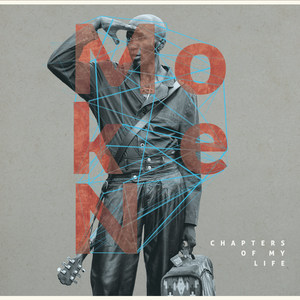
The Unusual World Sound of Moken Nunga on Chapters of My Life

Moken: Chapters of My Life  Bantu Records
What a strange and, in musical terms, a somewhat beautiful journey the Cameroonian Moken Nunga has made. From his coastal hometown Victoria, now called Limbe, in Africa’s Cameroon to Detroit, Michigan and now onto his first musical offering. In Detroit, with the help of his American father, the young man attended design college at the College of Creative Studies and after his share of hardships he ultimately prevailed and graduated, a lifelong ambition. Along the way the talented storyteller was able assimilate some life experiences that, while at times challenging, never dampened his generally upbeat spirit. The result is a wonderfully vivid musical accounting Chapters of My Life his debut cd on Atlanta’s Bantu records.

This slender almost spindly man has a captivating voice that ranges from bellowing baritone to piercing falsetto. His modulating delivery is somewhat reminiscent of the Avant- garde sound of jazz singer Leon Thomas, although it is more warbling than Thomas’s yodel style. He speaks of being influenced by Van Morrison and Nina Simone, and attributes some influence to the jazz funk, Cameroonian saxophonist Manu Dibango, famous for his hit song “Soul Makoosa.” I can hear some Bob Marley in him also. Simply put Moken possesses a very real World sound, a fiercely original sound that has an almost universal appeal made particularly compelling by the man’s unforgettable voice.

From the opening bars of his “Wild Wild Ways” you are swept up in Moken’s musical personae. He has an easy lilting manner in his delivery, with infectious beats and soothing rhythms that simply draw you in. His vocals are mesmerizing and the music is hypnotic with guitar work by Pascal Danae and fellow Cameroonian Blick Bassy. The rhythm section is made up of Jean Lamoot on bass and Baptiste Brondy on drums, with overdubbed background vocals by Moken himself, Bassy and Roselyne Belinga. Together the album is non stop groove.

“Malinga” is a compelling repeated vamp over a rolling rhythmic groove. Moken’s warbling voice is joyful celebration of song and the background vocals just add to the chant-like call.

Moken certainly demonstrates his sense of humor with his playful lyrics on “A Bone to Grind with Einstein” where he humorously suggests that the famous mathematician stole his look, his hair and his mustache.

The infectious rhythm of “A Bato Bam” proclaims “we are all travelers in this world,” sung as a vocal background chant as Moken musically speaks about the struggles of human existence and how we all must travel through our lives with courage.

In a proclamation of his own struggle to achieve, Moken offers the haunting “The Man Who Never Gives Up.” The depth of his melodious baritone is featured on the Sengalese sourced mbalax-inspired “Ma Masse.” With his quirky vocals modulating between the deep timbre of his speaking voice and a falsetto cry he employs, we are introduced into the mechanistically driven “Machine Man” the most futuristic of his offerings. Starting with a simple finger picked guitar and splashing cymbals Moken’s quivering voice exclaims how easy it was for him to have become a machine in his actions despite having the heart of a human being. Brondy’s syncopated beat is introduced, creating an automated feel as an electric guitar screeches in distorted defiance.

One of the most memorable melodies that Moken creates on this album is surely his musical “Walking Man” an autobiographical reference to his own travails, where he found himself car-less, walking everywhere, at times to near exhaustion. With the catchy repeated refrain “Homeless, food-less, shoe-less, sleepless, careless,” he commands his more fortunate brethren to never look down on the walking man, for as Moken discovered himself, the walking man might well one day be you. At his best Moken is a melodic troubadour who tells his compelling story with a rhythmic vamp and a most unusual voice.

“Jerusalem” opens with a gentle acoustic guitar refrain before going into a classic African inspired rhythmic vamp with its finger picked guitar lines that remind me of some of Lionel Loueke’s work. Some inspired vocal choral work singing the title “Jerusalem” frames Moken’s own exploratory vocals. The words are not always easy to distinguish for me, but the voice is so compelling and the rhythms so moving that you don’t really need to know what he is saying to enjoy the music.

The finale is “Waiting for the Day” a cheerful romp that declares everyone will have their day and that it is worth waiting for.  There is a sixties rock sensibility to this one, sounding vaguely like Traffic’s “Light Up and Leave Me Alone,” but no one would confuse Moken’s strange falsetto with Jim Capaldi’s rasp.

Moken Nunga has reportedly moved to Atlanta where he hopes to pursue his predilection to creative design. He hopes to employ his skills with leather and cloth and open a shoe atelier. With such a promising debut album we can only hope that this artist has more chapters of his life to share.

You can sample this album by clicking  here.


Sunday, May 24, 2015

The Atlanta Jazz Festival: Top Artists & Free Jazz for the Masses

Banda Magda

On a gorgeous evening, with a cloudless sky above, throngs of Atlantans swarmed over the rolling hills of beautiful Piedmont Park to participate in this year’s Atlanta Jazz Festival. The grass lawns, so carefully designed by Fredrick Law Olmsted and sons many decades before, offers the perfect vantage for the mass of spectators that come to listen to the music.  The venue offers three stages, operating at times simultaneously, where artists were performing to grateful crowds. The main stage was set in the Meadow just outside the tenth street entrance off Monroe. The International stage is placed just South Lake Clara Meer in a hollow off Oak Hill. The stage featuring local talent was located northeast along the path closer to the Park Drive entrance.

The park was teeming with visitors who strolled, sat on blankets, pitched tents or sat on folding chairs, all there to enjoy the park, the excitement and the music that makes up the Atlanta Jazz Festival. The Festival is one of the largest free open air festivals in the country and it is a major event for the City of Atlanta.

This year’s music was a cornucopia of aural delights and our hats should go off to the organizers, generous sponsors and volunteers that make this mammoth event happen so smoothly.
I arrived at about 6 pm and made my way to the International stage where the group Banda Magda was performing to an attentive crowd. Banda Magda hails from New York by way of Athens, Greece. The lead singer/composer  is a pixie like character Magda Giannikou who captivated the crowd with here impish energy and sweet vocals. She sang predominantly in French and the music was an amalgam of Latin, Brazilian, French Pop, and world music. At times she reminded me of the Polish singer Basia  (Trezetrzelewski) who had a successful career as a Latin-inflected, jazz crossover artist in the late eighties.  While Ms. Magda’s voice does not compare to the three-octave range of Basia, she did show an impressive ability to stir the crowd, both with her syncopated accordion playing and the easy sway of her fluent French lyrics. The band is an international affair with  Argentinean guitarist Ignacio Hernandez, who donned a tiger mask for Ms. Magda’s telling of a fairy tale inspired song, hand drummer and Tabla player Marcelo Woloski,  Japanese percussionist Keita Ogawa and multi-instrumentalist and electric bassist fellow Greek, Petros Klampanis.
 
Making my way across the park, it was astonishing how many people had come to this event. Many of the people just parked themselves along the many pathways or fields, content enough to listen from a distance to the sounds emanating from the various stages.   I came to the main meadow, the site of the main stage, and was amazed at the vast sea of humanity that had set up camp to enjoy the festivities. Despite the throngs at no time was the crowd so overwhelming as to be oppressive and you could move easily from venue to venue. People were uniformly in festive but respectful spirits.
The stage was setting up for the next act drummer Otis Brown III’s Quintet. Unfortunately I didn’t arrive early enough to see talented saxophonist Marcus Strickland’s group who made up one of the preceding act. The sun was shining, but it was dry and seasonable as a single hawk circled surveying the mass of humanity from above.  Mr. Brown is a powerful drummer who has worked with some many of jazz’s elite including the trumpeter/composer Terrence Blanchard, the saxophonist Oliver Lake and singer Kurt Elling. He has also collaborated with Grammy award winning pianist/composer Robert Glasper ,the new lion of crossover neo-soul/rap/jazz , who was featured on Mr. Brown’s latest release. 
Terry Brewer ,Marquis Hill, John Ellis, Alan Hampton and Otis Brown II
On this evening Mr. Brown was joined by the trumpeter Marquis Hall, the masterful saxophonist John Ellis, bassist Alan Hampton and pianist and B3 player Terry Brewer.  The group started the set with “The Way (Truth & Life)” from Mr. Brown’s latest release The Thought of You,   which featured the tight dual horn playing of Mr. Hall and Mr. Ellis in the Blue Note tradition. I am an unabashed fan of Mr. Ellis’s playing and he didn’t disappoint with some fine soloing that was measured but spot on. Mr. Hall is a effusive player with a strong sound and a clear tone. Mr. Brewer offered some interesting albeit brief solos and Mr. Brown and bassist Hampton laid down the bottom.  The group played Herbie Hancock’s    “ I Have  A Dream: which Mr. Brown later spoke of as an anthem for him of the continued struggles facing Black people in this country. Mr. Brown introduced Ms. Christie De Shield to the stage where she sang  ”Your Still the One,” a song sang on Mr. Brown’s album by Gretchen Parlato.  Ms. De Shield’s does not have the wispy quality of Ms. Parlato’s, but she had no trouble using her own instrument to great effect.

Alfredo Rodriguez, Peter Slavov and Henry Cole


I decided to return to the International stage for a chance to see the great Cuban piano sensation Alfredo Rodriguez. Mr. Rodriguez was famously plucked from Cuba through the efforts of the great musician/ arranger Quincy Jones, who once he heard the energetic player, moved heaven and earth to see him get into the United States.  Mr. Rodriguez was already in full swing when I got to the International Stage, joined by his trio of Henry Cole on Drums and Peter Slavov on bass.
The crowd was mesmerized by the kinetic Cuban. One of the things you cannot fake in a live performance is enthusiasm and joy and Mr. Rodriguez has ample supply of both of these precious commodities. Originally trained as a classical pianist he was given a copy of Keith Jarrett’s famous 
The Koln Concert record and as he has said it changed his life.


There is doubt that Mr. Rodriguez is a prodigious talent and he showed he could dazzle with spectacular runs, pounding percussive dynamics and a sensitive side that brought the grateful crowd to their feet by virtue of its pure aesthetic, despite having some technical difficulties with the piano.
He is a joy to behold.

Alfredo Rodriguez


To be able to see this kind of talent for free in the spectacular surroundings of Piedmont Park is a true treat not to be missed. Today’s venue will feature among others Arturo O’Farrill’s marvelous Latin Jazz band, the fantastic Dianne Shurr, guitar wizard Stanley Jordan’s Trio and the iconic Pharoah Sanders with guitarist extraordinaire  Kurt Rosenwinkel . If you’re in Atlanta don’t miss this opportunity to see these great artists.