Showing posts with label Ambrose Akinmusire. Show all posts

Wednesday, May 24, 2023

Energy and elegance: Billy Childs' "The Wind of Change"

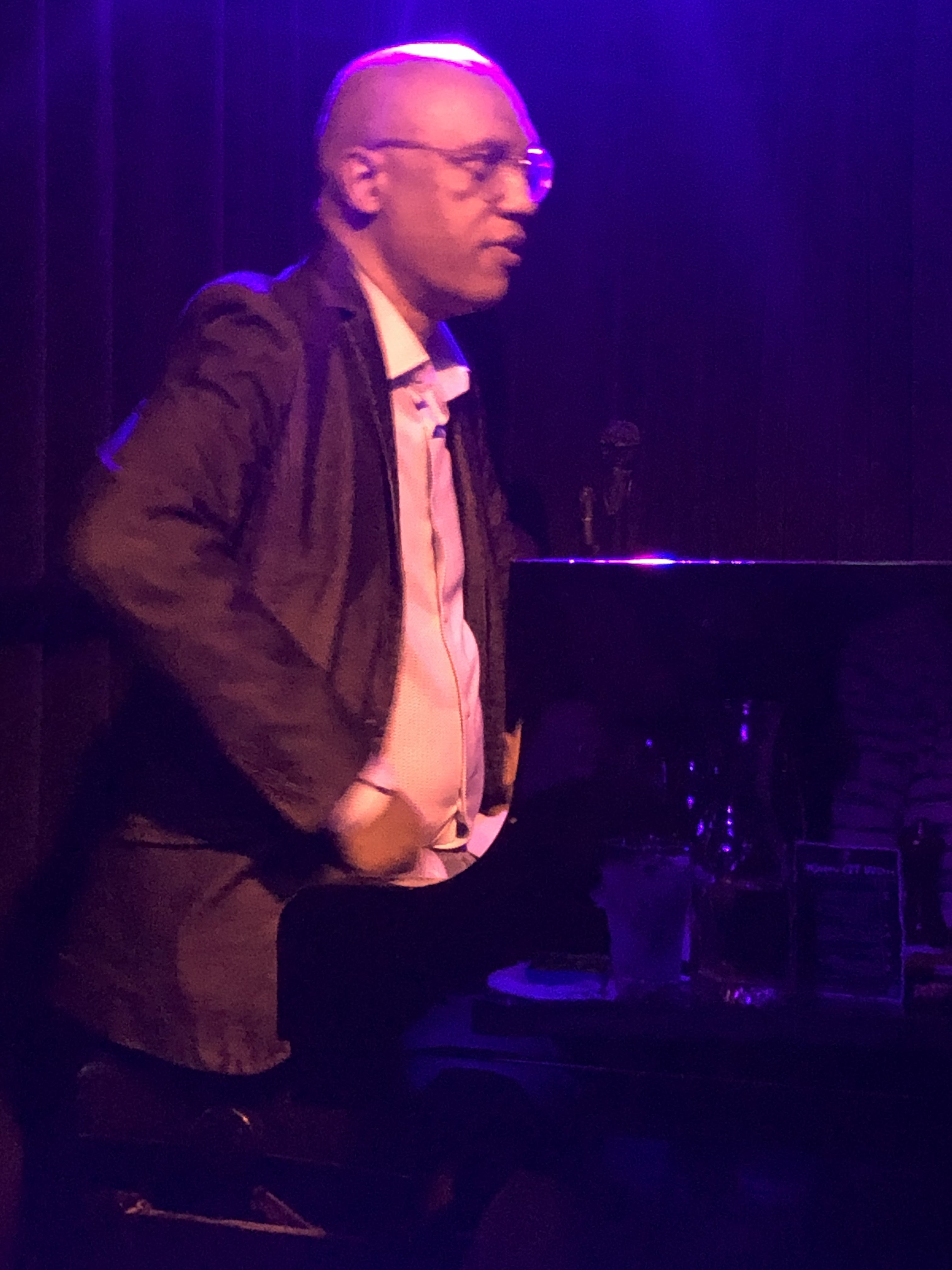
Billy Childs at 1905 in Portland May 4, 2023

I've seen the pianist Billy Childs perform live recently at Portland's 1905 jazz club. He is an elegant musician who is always dressed impeccably and with style and he always brings that same elegance and sophistication to his music. For his Portland gig, Childs brought with him the fiery trumpeter Sean Jones, the bassist Hans Glauswig and the drummer Chris Eumon. More about this at a later date.

BillyChilds with Sean Jones at Portland's 1905 Jazz Club May 4, 2023

I have admired the artist's works over the last several years and his release Rebirth from 2017 was, to my way of thinking, one of the best jazz releases of that year. 


Childs's new releases are always anxiously anticipated, as was his latest The Winds of Changewhich was released in March of 2023. The album is a compilation of seven beautiful and inspired vehicles of expression. They include a hallowed and gorgeous version of the late Chick Corea's haunting "Crystal Silence," "Black Angel," a Kenny Barron composition first heard as Freddie Hubbard's title cut from the 1970 album of the same name and five of Childs' own narrative and cinematically inspired musical compositions. 

The pianist/composer assembled a superbly intuitive group for the recording of this album. The excellent bassist Scott Colley and brilliant colorist Brian Blade on drums set the rhythmic pulse. The trumpet chameleon Ambrose Akinmusire is Childs' main front-line foil and collaborator.  The band on The Winds of Change is emotive, flexible, and possesses a telepathic sensitivity to executing Childs' musical demands and the results are spectacular.

On "Crystal Silence," after a beautifully thought-out piano intro, Childs utilizes Akinmusire's plaintive, slurring trumpet sounds to spell out the familiar melody in an expressive, humanistic way. Bassist Colley offers a moving resonant, deep-toned solo of his own and Blade adds the colors of his soft rhythmic brushes to the mix. There was a lot of reverence in the way Childs et al presents this song, a heartfelt dedication to the past composer.

Childs' ballad "I Thought I Know" was played as a trio. The contemplative melody had a swaying feel with Colley offering a moving bass solo and Blade's tight snare accompaniment setting the mood.  "Masters of the Game" Childs reunites with Akinmusire. The two are excellent foils, with Childs' sensitive, classically inspired pianistic thoughts countered by Akinmusire's fluttery, often slurring accents that add excitement and slight disruption to the beautifully inspired formality of Childs' composition.

"The Black Angel" is a dynamic vehicle to include here. The tune invites comparison of the language differences between how Hubbard once played this with Barron, the composer, on the original, and how Akinmusire interprets Childs' vision of the same composition. Childs chooses a more angular, less lilting, more cadenced approach and the trumpeters have two distinct approaches to how they deliver the melody. Hubbard is brighter, lyrical, more athletically dynamic, and precise- softened by Spalding's flute- and Akinmusire's trumpet feels organic, elastic, and more liquid. Childs' playing is dynamic, gorgeously developed with inherent beauty flowing from within, accented precisely by Colley and Blade's intuitive accompaniment. This one is just an example of how in-tune this band is here.

The album includes the captivating, "The End of Innocence" which could easily be seen as a cinematic score. Childs, a lifetime LA resident, claims to have been inspired by some of the great scorers of film like Michel Legrand and Jerry Goldsmith and you see the link. The music is beautifully played by Childs-inspired story-telling piano and his band. Akinmusire's trumpet lingers on long sustained tones that he slurs and screechers to great effect. His playing has an earthy, primal sense sound and what would be more representative of  what Childs is expressing in his "The Ending of Innocence."

Following in the film noir tract and cinematic approaches to music, Childs composed his "The Great Western Loop" with the scenery it evokes in mind. At the Portland gig, Childs spoke of this Pacific Northwest trail several hundred miles long that inspired this song. With a staccato intro, Childs' piano fills the room with a sense of urgency. The group then plays a synchronic serpentine line in unison that demands precision and is executed with razor sharpness. His piano serves up copious lines that flow out of him like an eruption of spring-fed ideas. Blade is particularly propulsive during the statements of repeated lines in unison. The colorful drummer is perhaps the present-day Monet of the era on his kit. 

The album ends with the title cut "The Winds of Change." In my mind, this is the jewel of the album. Childs related that the tune was originally written for the late trumpeter Roy Hargrove and an orchestra. The film influence here seems strongest. I am reminded of Michel LeGrand's work on the theme of The Thomas Crown Affair or perhaps Jerry  Goldmsith's work on the theme to Chinatown that featured Uan Rasey's celebrated trumpet work. Memorable movie music has been permanently tattooed into our cerebellum and rightfully so!

Childs' playing can be so elegant, emotive, and resplendent. The music is a feast of sounds and emotions and I am particularly drawn to the tumultuous tom work by Blade at several apex moments, Akinmusire's superbly emotive trumpet work, Colley's buoyant bass, and Childs' superlative piano and compositional work here. If you are drawn to the majesty that film score work can bring to you, this one is just breathtaking!

Billy Child' The Winds of Change is clearly one of this year's best albums.


Sunday, January 29, 2012

Jack DeJohnette celebrates his musical concept of oneness on “Sound Travels”


As virtuoso drummer Jack DeJohnette approaches his seventieth birthday-he will turn seventy on August 9th of this year- he can look back at an extensive body of work that speaks for itself. Interestingly he started out as a pianist, only later to be convinced by the saxophonist Eddie Harris to concentrate on drums, because as Harris said he had a natural affinity for the skins. Perhaps it is his understanding of the piano that is the basis for his long time collaboration with pianist Keith Jarrett and bassist Gary Peacock in one of the most durable and influential piano trios of the last nearly thirty years. As DeJohnette recently said in a Wall Street Journal interview with Larry Blumenthal (click here to view ) "Keith and I clicked instantly," he said. " We never had to discuss anything, not to this day."

DeJohnette was recently honored with the NEA Jazz Masters award which is the nation’s highest honor in jazz. With such achievements the man can afford to make music his way and on Sound Travels he does precisely that. From the beginning track “ Enter Here” he comes full circle playing a marvelously light introduction on unaccompanied acoustic piano with a resonating bell’s lingering chime book ending the delicate piece. Mr. DeJohnette finds his piano voice on several of the album’s compositions as he demonstrates the “oneness” of piano and drums.

He enlists the young bassist phenom Esperanza Spalding to add her lilting voice to the Latin inspired composition “ Salsa for Luisito” where he and percussionist Luisito Quintero parry and play together in joyous rhythmic synchronicity. The fiery young trumpeter Ambrose Akinmusire brings his formidable chops to this Latin feast with a sound that let’s us know he has listened to Dizzy Gillespie, Mario Bauza and Arturo Sandoval. DeJohnette again ends the piece with some overdubbed piano.

Perhaps the biggest surprise of the album is Mr. DeJohnette’s collaborative composition with the more mainstream pianist/ singer Bruce Hornsby. The gritty “Dirty Ground,” while clearly not mainstream jazz, is a pure musical joy. Hornsby’s down home country vocal adds a feel-good spirit to the Levon Helm inspired song. DeJohnette again takes on the dual role of playing piano with maintaining groove inspired drumming. He employs considerably younger artists from various backgrounds throughout the album. Besides the previously mentioned Spalding on bass, Akinmusire on trumpet and Quintero on percussion, on this song we find the West African, Lionel Loueke playing an impressively authentic delta blues style guitar that is perfectly complimented by the weightless soprano sound of Tim Ries. I applaude Mr. DeJohnette for unabashedly recording a song that could easily crossover to a wider audience without concern for offending the purists.

Speaking of purists “New Muse” should satisfy them quickly enough. With a front line of Mr. Akinmusire on trumpet and Mr. Ries on soprano, a solid bass line by Ms. Spalding and the propulsion of Mr. DeJohnette’s drums and piano comping, this one should fit any purest’s requirements. Mr.Ries is particularly slithery on soprano in a snake charmer sort of way. Mr. Akinmusire continues to show his penchant for unusual melodic lines that despite confounding direction are perfectly relevant.

Mr.Loueke’s West African rhythms are explored on a tribute piece to the saxophone colossus Sonny Rollins, the breezy “Sonny Light”. Mr. Loueke delicately plucks his nylon strings as Mr. DeJohnette’s deftly comps on piano. Tim Ries lilting tenor solo is perfectly complimented by Quintero’s infectious congas.

“Sounds Travel” is a short rhythmically driven vamp that has a West African vibe provided by Mr. Loueke’s nylon strings, Mr. Quintero’s congas and Mr. DeJohnette’s piano and cymbals all working in time to create a tap your feet beat.


The singer Bobby McFerrin is featured on this version of Mr. DeJohnette’s ”Oneness,” first heard on his Gateway Homecoming album with John Abercrombie and Dave Holland from 1995.
Mr. DeJohnette’s ruminative piano is followed in sync by Mr. McFerrin’s amazingly expressive voice and seems to pay homage to Brazilian vocalist Milton Nasciemento’s haunting vocals from his work with Wayne Shorter on the seminal Native Dancer without plagiarizing him. The two virtuosos pull off a masterful duet by any measure.

“Indigo Landscapes” features the young and talented pianist Jason Moran. Interestingly it is the only song on the album where DeJohnette relinquishes the piano chair. Moran’s piano solo cascades in beautifully undulating waves of sound. Spalding’s pliant bass lines are pleasantly out front and Tim Ries tenor is full throated, warm and caressingly sensual. DeJohnette, freed from piano duties, creates a sustained syncopated beat that drives the tune pleasantly forward and is complimented nicely by Quintero’s congas. The interplay at the coda is quite impressive between Spalding, Ries and Moran.

The ending piece is another piano solo titled simply “Home.” The song leaves the impression of a peaceful sense of comfort and belonging that only comes from one's home. It identifies a man who is content with his music and has come full circle. While the album is not obviously thematic it should be relished for the diversity and its musical breadth.

Musicians: Jack DeJohnette, drums, piano compositions; Esperanza Spalding, acoustic and electric bass, vocals; Lionel Loueke, electric and nylon guitar; Luisito Quintero, percussion; Ambrose Akinmusire, trumpet, Tim Ries, tenor and soprano saxophone; Bruce Hornsby , vocal and composition on track 3, Jason Moran piano on track 8; Bobby McFerrin, vocals and percussion on track 7.

Recorded : Avatar Studios, NYC; The Clubhouse, Rhineback, NY and Bass Hit Studios, NY 2010

Wednesday, December 7, 2011

My list of best of Jazz 2011

My list of some of the best Jazz in 2011

The year 2011 was an inspirational year. I was privileged to listen to, and in some cases experience “live”, some of the best and most varied musical performances that I have seen in many a year. With all the discussion of jazz dying and the graying and shrinking of the jazz audience, what I have personally witnessed is that this improvisational music that we paint with the expansive brush we call “jazz” is flourishing and experiencing a renaissance of creativity that is nothing short of breath taking.

People love lists and fans often relish in picking their favorites. Often people revel in finding their choices being validated by inclusion in lists made by critics at the end of the year. But music is subjective and there will always be room for outliers in taste. This year I am going to list my picks for the best music I have heard this year, trying to be as inclusive as possible for the deserving music that has been created. I stress some very worthy albums will undoubtedly be missing from my list simply because I  haven’t had the opportunity to listen to them, but of the many I have listened to these are some of my favorites.

Contemporary big band music had a  resurgence
this year.Ninety–three year old Gerald Wilson had 
an exquisite offering  with his brilliant “Legacy” .
(See you tube video here)
Another big band album that could equally be placed in  the best of Latin Jazz  category  was the cooking Manhattan School of Music Afro-Cuban Jazz Orchestra under the direction of Bobby Sanabria and their marvelous
 "Tito Puente Masterworks Live" . This band of young artists just keeps getting better and better. 


The Westchester Jazz Orchestra under the direction of Mike Holber is certainly a seasoned group. This year they offered their take on the music of Herbie Hancock on their "Maiden Voyage Suite".  I was fortunate enough to catch this polished orchestra "live" this year,, with the powerhouse tenor saxophonist Joe Lovano as a guest soloist. This is a talent packed group of professional musicians who take playing tight arrangements and turn it into an art form.


Another fine "live" performance was the spectacular mulit-media show  composed and conducted by the talented D'arcy James Argue and illustrated by the artist Danijel Zezelj titled "Brooklyn Babylon".
 (see video here).


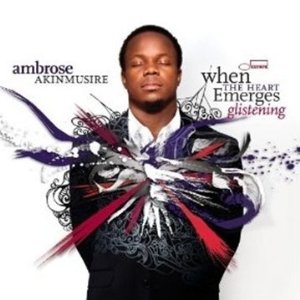
Trumpeters offered some compelling music this year. One of my  favorites included the fresh sound of the young Ambrose Akinmusire  and his quintet on his impressive  "When the Heart Emerges Glistening".  (see video here).


"The Talented Mr.Pelt" was a showcase of fine contemporary music by trumpeter Jeremy Pelt and his fine quintet. Pelt has a matured tone that is wonderful to behold.


The electric Tim Hagans demonstrated his compositional acumen as well as his instrumental virtuosity on his 
 " The Moon is Waiting".  Under appreciated guitarist  
Vic Juris was a standout on this outing. I caught Tim live at the WJO show where he was featured in a piece with saxophonist Joe Lovano on a song he arranged for the orchestra .


The trumpeter Tom Harrell came to the table with his own  quintet on his ethereal  "The Time of The Sun" . 


With so many fine pianist offerings this year it was a daunting task to pick and choose a handfull. In the solo category Denny Zeitlin's remarkable "Labyrinth" , brilliantly recorded live at Ernie Shelton's house in California, was a standout. Denny's performance with drummer Matt Wilson and bassist extraordinaire Buster Williams at the Kitano this fall was a wonderful display of mature but daring virtuosity  that I was fortunate enough to attend..


The pianist Michael Cain's release, simply titled "Solo", was a unique combination of solo acoustic piano and electronics that I found intriguing. His "Prayer"  is an evocatively spiritual piece of music that is very meditative. ( see video here)


A delicious duet was served in Italy by masters Chick Corea  and Stefano Bollani. Titled "Orvieto"this demonstration of magical interplay was recorded live at the Umbria Winter Jazz Festival in 2010.


The pianist Benny Green, who was schooled  with stints in bands led by Ray Brown, Art Blakey and Freddie Hubbard to name a few,  blew my socks off with his swinging album "Source" a pianistic joy.


Two terrific trio recordings by pianists Sam Yahel with his 
 "From Sun to Sun" 


and Ted Rosenthal's
"Out of this World"  were both strong outings in a crowded field of exemplary performances. (see video here)


The pianists Aaron Goldberg and composer/pianist Guillermo Klein, ably assisted by drumming phenon Eric Harland and bassist Matt Penman,.produced one of my favorite albums of the year "Bienestan. a musical trip to an imaginary country of the same name. I was able to see them perform this enchanting music "live" at the the Jazz Standard with the fabulous altoist Miguel Zenon,  who was also featured on the album. The live performance did not disappoint with the hypnotic original composition "Human Nature" capturing my attention.
(listen here)


At the wonderful Caramoor festival this year Joshua Redman's
new super group, which featured Aaron Parks on piano, Matt Penman on bass and the ubiquitous Eric Harland on drums, blew away the audience. There self titled album James Farm features original music composed by each of these talented players and is another must listen. ( see video here)


Alto saxophonist David Binney composed an unusual  suite of cinematic-like music titled "Graylen Epicenter" featuring some of today's most hip musicians on the New York jazz scene.
New York based tenor saxophonist Donnie McCaslin introduced the dynamic
"Perpetual Motion"   and caught my ear earlier this year.


Bassists were fully engaged this year with some creative outings.Ben Allison continues to show a rare ability to create new music by deconstructing contemporary songs from recent times and presenting them in  new and exciting ways. Allison's  Action-Refraction was inspired by  the music of composers as varied as Neil Young, P.J.Harvey, Thelonious Monk  and Donny Hathaway. ( see video here)


Bassist Sean Smith had a quiet and joyful gem with his album "Trust" , with notable support from guitarist John Hart and a superb outing by the saxophonist John Ellis.


The ubiquitous Christian McBride had a busy year with his big band performance at the Caramoor festival being a real crowd pleaser. This big band music was released as "The Good Feeling" , but his recent release "Conversations with Christian"  was the real McBride standout to me. It showcased his  virtuoso playing in some really intimate musical conversations with various artists. His duets  with the astute Dr.Billy Taylor on the composition "Spiritual" and the marvelous  Hank Jones on the song "Alone Together" , both recently passed giants of this music, were pure gold. A  duet with the soulful guitarist Russell Malone on "Sister Rosa"  demonstrated why Mr.Malone is a first call guitarist of exquisite taste. 


Bassist Jay Anderson  and fellow members of the band named BANN, drummer Adam Nussbaum , saxophonist Seamus Blake and guitarist Oz Noy, produced and played on an quirky but satisfying album from earlier in the year titled 
"As you Like".  I especially enjoyed their re-creation of the David Crosby tune "Guinnevere". (see video here)


Guitarist Jonathan Kriesberg came out with a fusion infused album that I really grooved on titled "Shadowless". It featured some impressive playing and composition by the talented guitarist and some penetrating saxophone by Will Vinson. Just listen to the lead track 
"Twenty-one" and you will be hooked. (see video here)


"Gladwell" by guitarist Julian Lage offers a musical journey, this time through a fictional town of the same name. Lage weaves a convincing picture of this place, its people and the vibes he experiences there. It is a fascinating musical trip worth taking the time to experience it through Gage's talented fingers.


The so called "Third Stream" of music  as described by Gunther Schuller was alive this year with a beautiful offerring from Carlos Franzetti and his wife Allison Brewster Franzetti titled "Alborada". It combined elements of  classical and South American folk music with the music of contemporary jazz artists like Herbie Hancock, Bill Evans and Milton Nascimento.


Drummers had some important offerings this year with special mention of Eric Harland's work on Bienestan and James Farm. I was fortunate enough to see Mark Guiliana's kinetic drum work when he played an unrehearsed electronic set of pure improvisation with pianist Brad Mehldau at Tony Falco's club The Falcon in Marlboro, .NY. back in September
( see video here) . 


The drummer Ralph Peterson had a take no prisoners offering titled  
"Outer Reaches" that featured organist Pat Bianchi and  absolutely shredding guitar solos by Dave Fiuczynski on Woody Shaw's "Zoltan" and John McLaughlin's "Spectrum". Also checkout Peterson's version of the Christmas classic "We Three Kings".

Drummer Adam Cruz had an auspicious year. I caught him recently with the talented saxophonist Chris Potter and the amazing John Patitucci at Smoke in NYC. Cruz released his latest "Milestone" and indeed it was just that. With a brilliant supporting cast that included the aforementioned Potter, along with fellow saxophonists Miguel Zenon and Steve Wilson, guitarist Steve Cardenas, pianist  Edward Simon and  bassist Ben Street this one packs a punch.


Vocalists that piqued my interest this year Giacomo Gates fine tribute to the late Gil Scott Heron titled 
"The Revolution Will Be Jazz".  With Gates successfully pulling off some of the poet's most poignant music.


Gretchen Parlatto was again impressive with her latest
album "The Lost and Found" where her wispy voice continues to defy convention. Taylor Eigsti's piano work was inspired.


Two artists who were new to me this year were the violinist Majid Khaliq with his impressive "Basilisk" , a surprisingly stirring
 album from a rising talent.
(see video here)


A second surprise was the discovery of the talented saxophonist from Utah, Chaise Baird on his impressive debut album "Crosscurrent".
For those who question Jazz in Utah? Check this kid out.


Two recently recieved albums that deserve honorable mentions are the baritone saxophonist Brian Landrus' "Traverse"  and Canadian trombonist William Carn's 
"Run Stop Run"


So there you have it, my exhaustive list of the best I have heard in jazz this year.I am sure some will scratch their heads in confusion, others will nod in agreement and others will be pleasantly surprised,  but one thing is for sure jazz is alive and thriving in 2011 and I for one predict that based on the trend 2012 will be an even better year for this music we call "jazz".

Sunday, July 17, 2011

Review of Ambrose Akinmusire “When the Heart Emerges Glistening”


At the tender age of twenty-nine, trumpet player Ambrose Akinmusire, has garnered a plethora of accolades and acknowledgements this year for his recent work. He captured both trumpet of the year and best "up and coming new artist" of the year at the Jazz Journalist Association 2011 awards and has been lauded in articles in Downbeat and the New York Times to mention just a few. His latest release is titled 
“ When the Heart Emerges Glistening” , his first for the venerable Blue Note label. You would be hard pressed to find a record that was so aptly titled, for Mr. Akinmusire’s musical heart has surely emerged radiant and glistening on this one. This is a daring, challenging and musically provocative collection of songs, all compositions but one were written by Mr. Akinmusire.  The single exception is the 1939 Johnny Burke and Bob Haggert song “What’s New”, which Mr. Akinmusire plays as a duet with his pianist Mr. Clayton. A tribute of sorts to an idol, the late trumpet player Clifford Brown. Even here, Clayton and Akinmusire seem to include the standard as a testament to their thorough knowledge of the tradition. In doing so they inject new life into the well worn composition. It's like they're saying " we can play this but here is what we think about how it should be played today."  

Part of Mr. Akinmusire’s success stems from his notion of the primacy of the band over the individual performer as the ultimate entity capable of producing his musical message.To that end he has assembled an complimentary group of talented musicians, most part of his working band, for this album. The pianist Gerald Clayton, the bassist Harish Raghavan and the drummer Justin Brown add immeasurably to the total package. Perhaps the most symbiotic relationship is with the talented saxophonist Walter Smith III with whom he shares the front line. To paraphrase Mr. Akinmsuire, the two men often finish each other’s phrases and intuitively know precisely where each other is heading.This special interplay is apparent and on full display on tunes like 
“Confessions to My Unborn Daughter” or “ Jaya” where they intertwine beautifully, conversing in high register squeals and slurs, always melding their sounds seamlessly when they return to playing in unison.

IIIHarish Raghavan’s facile bass is featured on the short intro to the hypnotic “Henya”. This composition is destined to become a jazz classic as it has already hauntingly appeared on Walter Smith” III’s “III” 

 and Gretchen Parlatto’s 
 The Lost and Found

both fine outings, each artist offering their own special interpretation. On his own version, Mr. Akinmusire plays the celesta with its chime like “heavenly” sound. He overdubs himself on trumpet, creating emotionally charged phrasing interspersed with some of the most unusual and creative use of slurs that I have heard on the instrument in some time. Mr. Akinmusire has a unique vision of what he wants his music to sound like and is certainly stretching the boundaries of his instrument to achieve that vision.

On “With Love” Mr. Brown’s drums are used to create the weaving percussive patterns that move the song along so beautifully. Mr. Smith’s tenor solo is particularly lyrical as is Mr. Cleaver’s probing piano musings.

On “Regret (No More)” , a high point of the album, Mr. Clayton plays a heart wrenching duet with Mr. Akinmusire, whose delicately played solo jumps with an impressive intervallic slur that is perfectly controlled and has the emotional impact of a desperate human cry.

“Ayneh (Cora)” is one of two interludes, the other being the finale 
"Ayneh ( Campbell) " that are dedicated to Mr. Akinmusire’s mother. They are musical plays on the song “Henya” with the name cleverly spelled backwards to indicate their musical affinity.

“My Name Is Oscar” is a spoken poem of sorts, with Akinmusire’s voice recorded over the rhythmic drumming of Brown. The song commemorates the life of Oscar Grant a young man who was shot to death in Oakland by a transit official. Not a protest, more of an affirmation of the man’s existence and a realization that this could have happened to any of us.

“The Walls of Lechuguilla” is the result of Akinmusire’s watching a show on television about the New Mexcian caves of Lechuguilla and their hidden beauty. It is a free piece with the trumpeter playing what sounds like what one might hear as echoes in the caves, eventually leading into a free form jaunt by the band.
The Caves of Lechuguilla
On “Tear Stained Suicide Manifesto” we find the pianist and fellow Manhattan School of Music alumni Jason Moran, playing piano. His solo is brooding and reverential with flourishes of classical undertones. Moran is credited as co-producer of this album with Akinmusire. Despite Moran’s influence, this album is clearly Akinmusire’s vision.

As Akinmusire relates, at the age of nineteen he was challenged by the saxophonist Steve Coleman as to how he wanted his music to be perceived.  For the last ten years Mr. Akinmusire has made a concerted effort to extricate himself from all influences and conventions that might compromise his musical vision. If his efforts on " When the Heart Emerges Glistening"   is any indication he is well on his way to acheiving that quest.

Musicians:
Ambrose Akinmusire , trumpet and compositions; Walter Smith III, saxophones; Gerald Clayton, piano; Harish Raghavan, bass; Justin Brown, drums; Jason Moran, producer and piano on “Tear Stained Suicide Manifeto”.

Tracks: Confessions to My Unborn Daughter; Jaya;  Henya Bass Intro; Henya; Far But Few Between; With Love; Regret ( No More); Ayneh ( Cora);
My Name is Oscar; The Walls of Lechugilla; What’s New; Tear Stained Suicide Manifesto; Ayneh (Campbell).

Tuesday, August 3, 2010

Review of Walter Smith III "Live in Paris" The Magic of Chemistry

Live In ParisArtist: Walter Smith III

CD: Walter Smith III “Live in Paris”

Recorded:  “Live” at Sunset-Sunside Jazz Club, Paris, France July 2008


The soon to be thirty, Walter Smith III is a maturing voice on tenor saxophone who seems to be at his best when in the accompaniment of a fine trumpet player. He has front lined with some notables including the prolific Terrence Blanchard, as well as the up and coming Christian Scott, and the fiery Sean Jones all with laudable results, but it is with the prodigious Ambrose Akinmusire where he seems to have found a true kindred spirit.

On “Live in Paris”, Smith’s second album as a leader, the interplay with Akinmusire is visceral and palpably energetic. This set was recorded in July of 2008 in the club Sunset-Sunside in Paris and subsequently was released in October 2009. Ben Ratliff of the New York Times did a favorable review back in March of this year (click here to read Ratliff’s review). A friend recently turned me on to this powerful performance.

The opening salvo, “Blues” is an extended session on the blues with some fine individual moments On the introduction Smith delves deeply into a thoughtful solo exploration on his tenor. He has a strong, clear, deep-throated tone. He creates his own landscape of sounds, using a combination of slowly brewed tonal ideas that he intersperses with rapid crescendos of free flowing notes. He and Akinmusire take a brief but rousing duet at the head, showing a strong, unified symbiosis that has roots in some of the stellar sax/trumpet front lines of Art Blakey’s Jazz Messengers but with a modern edge.

This band is a fully integrated unit that plays with the precision of a Swiss timepiece. Ambrose Akinmusire’s trumpet is beautifully emotive on this cd. He employs soft, demurred passages, slickly slurred lines and poignant punctuations that show great sensitivity and impeccable timing. It is hard to say who spurs on whom on this frontline since both Smith and Akinmusire seem to be invigorated by each other’s solo work.

The rhythm section is an essential part of this wonderful chemistry. Aaron Goldberg has a tremendous ear for picking up fragments of ideas from his fellow musicians and expanding on them. He uses these fleeting thoughts to prod both Smith and Akinmusire in a continuous flow of rapid-fire dialogue and as a source of inspiration for his own solo explorations.

An introductory solo by Matt Brewer aptly titled “Bass Solo” leads into the breezy “Aroca”. Aaron Goldberg’s solo work is particularly lyrical and moving as he dances with a light touch that has a crystalline quality at times. Smith takes this cue during his own thoughtful solo, undulating his way through the armature of the song like the gentle ebb and flow of an incoming tide. Akinmusire’s solo is a model of restraint, deftly accompanied by Brewer and Marcus Gilmore’s timely accents.

Another highlight is the group’s take on Benny Golson’s “Stablemates”. The song’s jagged lines offer the two frontline horns a chance to do a bit of a dance around each other before they each go solo. Akinmusire muses over Brewer’s wandering bass lines. Smith takes flight with a fluid tenor solo before Goldberg adds a magical interlude that sets the stage for some wonderful conversational work between the three members of this potent rhythm section.

Goldberg starts the intoxicating sway of the rhythm on “Shed” on solo piano before the frontline play the exotic melody in unison. Smith is at his most sensual here using delicate slurs and sonorous screeches to accentuate the anguish he feels from the melody line. The inventive Goldberg takes you on his own journey maintaining the ostinato of the bass line with his left hand as his right hand flourishes off a series of unexpected sidebars. Akinmusire enters using thoughtful, measured phrases that glide across the melody, slowly building tension with ever increasing intensity in a sustained, controlled manner. He chooses not to use firebrand pyrotechnics on his trumpet (more Miles than Freddie) but is nonetheless very effective.

The final song of the set is Sam Rivers' “Cyclic Episode” which has become a staple of Smith’s repertoire. The driving force of Brewer and Gilmore create the atmosphere where Goldberg, Smith and Akinmusire can shine during their individual solos. Smith is particularly flowing here with Gilmore spurring him on with timely crashes and rolls.

This is a top notch ensemble that has the magic of great chemistry on their side. Hopefully we will be able to hear more from them while the magic is still alive..


Musicians: Walter Smith III (tenor saxophone), Ambrose Akinmusire (trumpet), Aaron Goldberg (piano), Matt Brewer ( bass), Marcus Gilmore (drums).


 Here is Walter Smith III with Ambrose Akinmusire's Quartet Live at the Jazz Standard